All published articles of this journal are available on ScienceDirect.

Investigating Mobile Gaming Addiction and Musculoskeletal Pain: A Cross-Sectional Study Among Medical Students in Jordanian Universities
 iD
Ala'a M. Shurrab1
iD
Balsam Adnan Alsaify2
iD
Aya Al-Badarneh1
iD
Shukry Hani Shukry Masoud1
iD
Shawkat Al Tamimi3
iD
Ala'a M. Shurrab1
iD
Balsam Adnan Alsaify2
iD
Aya Al-Badarneh1
iD
Shukry Hani Shukry Masoud1
iD
Shawkat Al Tamimi3
Authors Info & Affiliations
Abstract
Introduction
Mobile gaming gained significant popularity among university students, with increasing evidence associating excessive usage with psychological and physical health disorders, most significantly musculoskeletal pain. Although there is rising global interest, there are insufficient studies examining this phenomenon among medical student populations that are particularly vulnerable due to academic pressures and extended device usage.
The purpose is to investigate the prevalence of mobile gaming addiction among medical students in the universities of Jordan to determine how it correlates with musculoskeletal pain, as well as explore relevant demographic and behavioral factors.
Methods
In this cross-sectional study, 364 medical students filled out an online questionnaire that contained personal data, gaming patterns, the 7-item Gaming Addiction Scale (GAS), and the Nordic Musculoskeletal Questionnaire. Ethical approval was obtained from the Ethics Committee of Al-Balqa Applied University. Statistical analysis included descriptive statistics, chi-square tests, and binary logistic regression, all conducted using SPSS v27.
Results
9% of participants identified as having a mobile gaming addiction. An association was identified between addiction and musculoskeletal pain, particularly in the neck (85.3%), upper back (64.7%), elbows (41.2%), and wrists (41.2%) (p < 0.05). Logistic regression recognized elbow pain as a predictor of gaming addiction (AOR =4.64; CI 95%:2.13 – 10.07). Addicted students had more functional limitations and increased frequency of healthcare visits. The results show an association between mobile gaming addiction and upper-body musculoskeletal pain among medical students. These findings indicate the need for early preventive measures focused on digital health practices, especially within academically pressured groups. Awareness initiatives, posture training, and behavioral adjustment may reduce risks.
Discussion
These findings indicate that mobile gaming addiction is associated with a higher burden of upper-body musculoskeletal pain, particularly in regions subjected to prolonged handheld device use, such as the neck, upper back, elbows, and wrists. This relationship, consistent with international evidence, suggests that gaming behavior may serve as an early physical marker of ergonomic stress among medical students, highlighting the need for targeted preventive and behavioral interventions.
Conclusion
Mobile gaming addiction and musculoskeletal disorders are associated among Jordanian medical students, particularly in the upper body regions, such as the neck, upper back, elbows, and wrists. Elbow pain, in particular, may serve as a potential physical marker of problematic gaming behavior in this population and highlights the need for ergonomic and behavioral interventions as well as targeted awareness campaigns to prevent the health risks associated with mobile gaming in educational facilities.
1. INTRODUCTION
Mobile gaming has become a prevalent source of entertainment among university students, providing accessibility, mobility, and captivating content. The number of young individuals engaging in mobile gaming has markedly increased in recent years, potentially leading to a substantial public health issue [1]. However, this rising trend has generated concerns regarding its adverse effects on both physical and mental well-being [2]. Excessive gaming activity has been linked to several adverse effects, including poorer academic achievement and reduced study efficiency [3], as well as psychological distress, and, notably, physical discomfort.
An increasing volume of international literature underscores the association between mobile gaming addiction and pain in particular anatomical areas, including the neck, upper back, and wrists. An investigation conducted in Bangladesh revealed a notable correlation between mobile gaming and musculoskeletal pain, highlighting a greater incidence of addiction among male students [4]. Further study indicates that extended gaming periods and inappropriate posture when using devices significantly increase the likelihood of chronic pain and ergonomic stress [5]. A recent systematic review found that, of 16 observational studies, 11 reported a negative impact of video game play time on the musculoskeletal system, particularly affecting the neck, shoulders, and back (ORs up to 5.2) [6]. Due to its clinical significance, the World Health Organization formally recognized gaming disorder as a mental health condition in the 11th Revision of the International Classification of Diseases (ICD-11) [1], Beyond gaming, university students have been shown to be vulnerable to a broader spectrum of digital addictions, including smartphone overuse, nomophobia, and online gambling, which reflects a general pattern of maladaptive digital engagement in this age group [7], as well as recent evidence from university settings demonstrates that prolonged smartphone use is significantly associated with pain in the neck, shoulders, and upper extremity joints [8]. This accumulated evidence suggests that medical students, who frequently rely on mobile devices for both academic and recreational purposes, may be particularly at risk.
Given these findings, a significant gap persists in research on mobile gaming and its health implications for specific high-risk populations, especially medical students, who appear particularly vulnerable, with recent research demonstrating a high prevalence of neck and upper back pain associated with prolonged digital device use [9]. Medical students at Jordanian institutions constitute a distinctive demographic potentially susceptible to the adverse effects of mobile gaming. This risk arises from their academic demands and prolonged study hours. Recognizing the correlation between mobile gaming addiction and musculoskeletal pain in the present group is crucial for guiding focused therapies and health promotion programs.
This study seeks to evaluate the prevalence of mobile gaming addiction and its association with musculoskeletal discomfort, as no prior research has examined this relationship among Jordanian medical students and has not assessed detailed musculoskeletal regions. In addition, the study aims to explore demographic and behavioral factors that may contribute to addiction, assess its impact on academic performance and daily functioning, and determine the body regions most commonly affected. Based on the existing literature, we hypothesized that: (1) the prevalence of musculoskeletal pain, especially in upper body regions, would be significantly higher among students classified as mobile gaming addicts compared with non-addicts; and (2) greater duration and frequency of mobile gaming would be associated with increased odds of being classified as addicted.
2. MATERIALS AND METHODS
2.1. Study Design and Sampling
This cross-sectional study was conducted among medical students enrolled at Jordanian universities in April 2025. We used a convenience sampling strategy, recruiting participants via online announcements distributed through faculty channels, student social media groups, and email lists. Approximately 560 students were invited, of whom 364 completed the questionnaire (response rate: 65%).
2.2. Study Approval and Ethical Considerations
Before implementing the study, ethical approval was obtained from the Faculty of Medicine at Al-Balqa Applied University. To ensure complete adherence to ethical research standards, the university's Scientific Research and Ethics Committee granted formal confirmation. The study was approved in April 2025 under IRB No. 2632561.
2.3. Informed Consent
Prior to participation, all respondents granted informed consent using an online consent form. This research, including human subjects, strictly adhered to the requirements of the Al-Balqa Applied University Scientific Research and Ethics Committee and the Declaration of Helsinki (2013 revision). The approach provided a comprehensive explanation of the study's aims, methodologies, data use, confidentiality protective measures, and participants' rights, in alignment with institutional ethical requirements.
2.4. Questionnaire Design and Data Collection
The research included an established, self-administered questionnaire assembled by the research team with the following essential elements:
(1) Consent and Participant Information: A clear explanation of the study's objective and an agreement of confidentiality were presented. This part explicitly states ethical approval.
(2) Sociodemographic and Behavioral Characteristics: Data were collected on age, gender, academic year, place of residence, and study habits. Furthermore, inquiries concerning mobile gaming habits were included, including average daily gaming hours, length of gaming experience (in years), and financial practices associated with gaming (frequency of mobile data purchases and spending on online games).
(3) Gaming Addiction Scale (GAS): Mobile gaming addiction was assessed using the 7-item Gaming Addiction Scale developed by Lemmens et al. [10]. Each item was evaluated on a five-point Likert scale (1 = never to 5 = very often), yielding a total score of 7 to 35. Participants were classified as “addicted” according to the original validation study if an individual meets the threshold for gaming addiction when they endorse “often” or “very often” on four or more of the seven GAS items, reflecting the presence of multiple addiction components. Participants who did not meet this criterion were classified as “not addicted.” This scale is a verified and reliable instrument widely used among adolescents and university populations.
(4) Musculoskeletal Pain Assessment: Participants were first asked if they had encountered any pain throughout the preceding seven days. Upon a positive response, the Nordic Musculoskeletal Questionnaire was employed to evaluate pain distribution over nine anatomical regions: neck, shoulders, upper back, elbows, wrists/hands, lower back, hips/thighs, knees, and ankles/feet. The Nordic questionnaire is a validated tool with confirmed reliability for recognizing work- and behavior-related musculoskeletal conditions [11].
To ensure accessibility and cultural relevance, the research team initially drafted the questionnaire in English and then translated it into Arabic. Responses were later retranslated into English during data transcription and analysis to preserve original terminologies.
2.5. Sample Size Calculation
The required sample size was determined using Epi Info™ software (Centers for Disease Control and Prevention [12]), assuming a prevalence of mobile gaming addiction of 40% with a 95% confidence level and a margin of error of 5%. This yielded a minimum required sample size of 358 participants, which we achieved.
2.6. Inclusion and Exclusion Criteria
The study included current medical students from Jordanian universities who were at least 18 years old, willing to give informed consent, and had access to a mobile device with internet access to complete the online survey.
Exclusion criteria included students from non-medical fields, individuals under 18 years of age, incomplete survey responses, and those who refused to provide informed consent.
2.7. Survey Validation and Administration
Since both instruments employed (GAS and the Nordic Musculoskeletal Questionnaire) have been previously validated in other studies, no additional content validation was conducted. The initial survey was distributed electronically via Google Forms. All questions have been marked as “mandatory,” preventing missing responses among included participants. The study was carried out in April 2025.
2.8. Data Analysis
All data were analyzed using SPSS software, version 27. Descriptive statistics (means, standard deviations, frequencies, and percentages) were used to summarize participant characteristics and response distributions. Categorical variables (e.g., gender, academic year, pain presence, addiction status) were analyzed using chi-square tests or Fisher’s exact test, where appropriate, to assess associations between variables. Binary logistic regression was performed to identify independent predictors of mobile gaming addiction. Variables that showed significant associations with addiction in bivariate analyses, together with clinically relevant covariates (e.g., age, gender), were entered into a multivariable binary logistic regression model to identify independent predictors of mobile gaming addiction. Musculoskeletal pain in the nine body regions was entered as separate dichotomous variables.
A significance threshold of (p < 0.05) was used for all inferential statistical tests.
3. RESULTS
A total of 560 medical students were invited to participate in the survey, of whom 364 completed the questionnaire and were included in the final analysis (response rate: 65%) (Fig. 1). Among the respondents, females constituted 56.3% (n = 205) and males 43.7% (n = 159). The mean age was 20.3 years (SD = 1.3), with an average weight of 68.5 kg (SD = 15.3) and a mean height of 169.2 cm (SD = 9.4). Nearly all participants (98.6%, n = 359) reported owning a mobile device (Table 1).
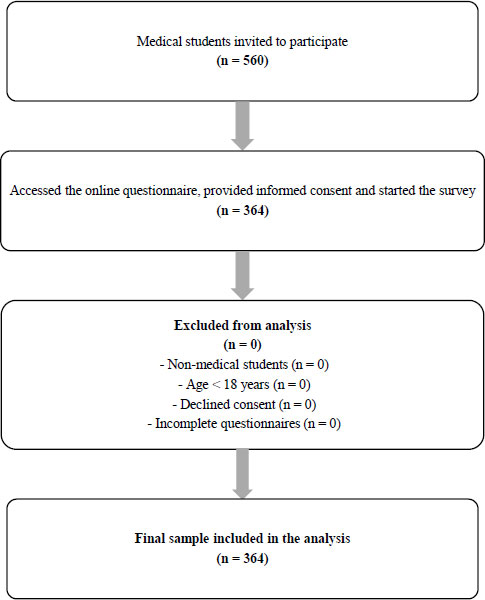
Participant recruitment flow diagram (STROBE-compliant).
(Participant recruitment flow diagram showing the number of invited students and those included in the final analysis (n = 364).
| - | Mean | SD |
|---|---|---|
| Males | 159 | 43.7% |
| Females | 205 | 56.3% |
| Age | 20.3 | 1.3 |
| Weight | 68.5 | 15.3 |
| Height | 169.2 | 9.4 |
| Owns mobile | 359 | 98.6% |
| Hours per day playing video games | ||
| - | N. | Percentage % |
| 1-4 hours | 97 | 26.6% |
| Less than 1 hour | 228 | 62.6% |
| More than 4 hours | 39 | 10.7% |
| How long have been playing video games | ||
| 1-2 years | 30 | 8.2% |
| 3-5 years | 42 | 11.5% |
| I don’t play mobile games | 155 | 42.6% |
| Less than 1 year | 29 | 8.0% |
| More than 5 years | 108 | 29.7% |
| How often do you buy mobile data to play games? | ||
| Never | 252 | 69.2% |
| Often | 10 | 2.7% |
| Rarely | 56 | 15.4% |
| Sometimes | 30 | 8.2% |
| Very Often | 16 | 4.4% |
| How often do you spend money on online games? | ||
| Never | 254 | 69.8% |
| Often | 17 | 4.7% |
| Rarely | 53 | 14.6% |
| Sometimes | 35 | 9.6% |
| Very Often | 5 | 1.4% |
| Do you have pain in your body? | ||
| No | 182 | 50.0% |
| Yes | 182 | 50.0% |
Concerning gaming habits, the predominant number of participants (62.6%, n = 228) indicated engaging in mobile gaming for less than one hour daily, whereas 26.6% (n = 97) played for 1–4 hours, and 10.7% (n = 39) exceeded four hours of gameplay per day. Upon inquiry on the duration of mobile gaming engagement, 42.6% (n = 155) reported no participation in mobile gaming, while 29.7% (n = 108) indicated engagement for over five years. A small proportion indicated gaming experience of 3–5 years (11.5%, n = 42), 1–2 years (8.2%, n = 30), or less than one year (8.0%, n = 29). Furthermore, expenditure trends related to gaming were assessed. A majority (69.2%, n = 252) have never purchased mobile data specifically for gaming, while 69.8% (n = 254) reported that they have never spent money on online games. Nonetheless, 30.8% of students acknowledged occasionally acquiring data, while 30.2% stated spending money on games at least seldom. Ultimately, 50.0% of participants (n = 182) reported experiencing musculoskeletal pain in the prior 7 days.
Musculoskeletal pain was seen in numerous regions of the body, and it was far more common in those who were addicted to mobile gaming than in people who weren't (Fig. 2). The most pronounced differences were observed in the neck (85.3% vs. 65.0%), upper back (64.7% vs. 55.0%), and elbows (41.2% vs. 12.5%). Addicted students also reported more wrist/hand pain (41.2% vs. 34.0%). Lower back pain was common in both groups, but remained more frequent in addicts (73.5% vs. 57.4%). Although differences in the hips (29.4% vs. 21.0%), knees (41.2% vs. 35.0%), and ankles/feet (29.4% vs. 22.8%) were smaller, addicted students consistently showed higher symptom prevalence across all regions. Overall, the pattern indicates that gaming addiction is associated with greater musculoskeletal discomfort, particularly in body areas stressed by prolonged handheld device use.

(1-9) Comparison of musculoskeletal pain prevalence in various body regions among gaming addicts and non-addicts.
(Prevalence of musculoskeletal pain in nine body regions among students classified as mobile gaming addicts (n = 34) and non-addicts (n = 330).
Figure Clarification:
x-axis: body regions.
y-axis: prevalence (%).
Legend: “Addicts” vs. “non-addicts”.
3.1. Association between Sociodemographic Variables and Mobile Game Addiction
We investigated how several sociodemographic characteristics were related to developing an addiction to mobile games. There was no statistically significant difference in gender between the addicted and non-addicted participants (p = 0.757), even though 58.8% of the addicted people and 56.3% of the overall sample were women. Additionally, even though most of the addicted students (61.8%) were in their third year, there was no statistically significant association between addiction status and academic performance (p = 0.494) (Table 2).
| Variables | Addicted | Not Addicted | Total | P-value |
|---|---|---|---|---|
| Gender | ||||
| female | 20 (5.5) | 185 (50.8) | 205 (56.3) | 0.757 |
| Male | 14 (3.8) | 145 (39.8) | 159 (43.7) | |
| Level of education | ||||
| 1st year | 2 (0.5) | 28 (7.7) | 30 (8.2) | 0.494 |
| 2nd year | 4 (1.1) | 84 (23.1) | 88 (24.2) | |
| 3rd year | 21 (5.8) | 159 (43.7) | 180 (49.5) | |
| 4th year | 5 (1.4) | 37 (10.2) | 42 (11.5) | |
| 5th year | 1 (0.3) | 7 (1.9) | 8 (2.2) | |
| 6th year | 1 (0.3) | 15 (4.1) | 16 (4.4) | |
| Ownership of the device | ||||
| No * | 0 (0.0) | 5 (1.4) | 5 (1.4) | 0.611 |
| Yes | 34 (9.3) | 325 (89.3) | 359 (98.6) | |
| How many hours per day (approximately) do you play games? | ||||
| 1-4 hours | 15 (4.1) | 82 (22.5) | 97 (26.6) | <0.001 |
| Less than 1 hour | 7 (1.9) | 221 (60.7) | 228 (62.6) | |
| more than 4 hours | 12 (3.3) | 27 (7.4) | 39 (10.7) | |
| How long have you been playing mobile games in years? | ||||
| 1-2 years | 6 (1.6) | 24 (6.6) | 30 (8.2) | 0.003 |
| 3-5 years | 7 (1.9) | 35 (9.6) | 42 (11.5) | |
| I don’t play mobile games | 5 (1.4) | 150 (41.2) | 155 (42.6) | |
| less than 1 year | 5 (1.4) | 24 (6.6) | 29 (8.0) | |
| more than 5 years | 11 (3.0) | 97 (26.6) | 108 (29.7) | |
| How often do you buy mobile data to play games? | ||||
| Never | 14 (3.8) | 238 (65.4) | 252 (69.2) | <0.001 |
| Often | 3 (0.8) | 7 (1.9) | 10 (2.7) | |
| Rarely | 5 (1.4) | 51 (14.0) | 56 (15.4) | |
| Sometimes | 7 (1.9) | 23 (6.3) | 30 (8.2) | |
| Very Often | 5 (1.4) | 11 (3.0) | 16 (4.4) | |
| How often do you spend money on online games? | ||||
| Never | 13 (3.6) | 241 (66.2) | 254 (69.8) | <0.001 |
| Often | 2 (0.5) | 15 (4.1) | 17 (4.7) | |
| Rarely | 11 (3.0) | 42 (11.5) | 53 (14.6) | |
| Sometimes | 7 (1.9) | 28 (7.7) | 35 (9.6) | |
| Very Often | 1 (0.3) | 4 (1.1) | 5 (1.4) | |
| Do you have pain in your body? | ||||
| No | 10 (2.7) | 172 (47.3) | 182 (50.0) | 0.012 |
| Yes | 24 (6.6) | 158 (43.4) | 182 (50.0) | |
Note: *Fisher’s exact test was used for the “Ownership of device” variable due to small cell counts.
Almost all of the participants had a mobile device (98.6%, n = 359), and there was no significant difference in device ownership across groups (p = 0.611, Fisher's exact test). There were significant associations between gaming activity and addiction. The number of hours spent playing games each day was strongly correlated with the level of addiction (p < 0.001). Students who were addicted were more likely to say they played games for 1 to 4 hours (44.1%) or more than 4 hours (35.3%) per day. Non-addicts mostly played for less than 1 hour (67.2%).
There was a significant correlation between the duration that someone spent playing games and how addicted they were (p = 0.003). A higher number of addicted students (32.4%) said they have been gaming for more than five years than non-addicted students (29.5%). About 14.7% of addicts said they don't play mobile games, while 45.6% of non-addicts said they do. This is a considerable disparity. Students who were addicted were substantially more likely to spend money on mobile data for gaming (p < 0.001), with 35.3% doing so at least occasionally for a while, compared to about 16.4% of students who weren't addicted. The same thing happened with online gaming purchases (p < 0.001). 61.8% of addicts said they spent at least some money on games, but only 33.8% of non-addicts did.
Musculoskeletal pain was substantially more common among addicts than among non-addicts (p = 0.012), with 70.6% of addicts reporting pain compared to 48.0% of non-addicts. This shows a strong link between gaming addiction and physical pain.
Overall, addiction was more closely associated with gaming intensity variables (hours per day, years playing, spending) than with sociodemographic variables such as gender or academic year.
3.2. Association between Mobile Gaming Addiction and Musculoskeletal Pain: Symptom Occurrence, Functional Limitation, and Healthcare Seeking Behavior by Body Region
We employed chi-square analysis to look at the correlation between mobile gaming addiction and musculoskeletal pain in several methods, such as the number of occasions symptoms happened in the last 12 months and the last 7 days, how much pain limited activities, and how often people sought medical help (Table 3A-D). Over the course of twelve months, only elbow discomfort was linked to gaming addiction in a way that was statistically significant (χ2 = 19.7, p < 0.001), with a modest effect size (Φ = 0.233). During this time range, there were no significant associations between other body parts, such as the neck, shoulders, upper back, and lower limbs (p > 0.05).
| A: In the past 12 months, have you experienced musculoskeletal trouble (ache, pain, discomfort) in this area? | |||||
|---|---|---|---|---|---|
| Body Area | Chi-Square | p-value | Phi | Cramér's V | p-value |
| Neck | 5.7 | 0.170 | 0.125 | 0.125 | 0.170 |
| Shoulders | 1.2 | 0.279 | 0.570 | 0.570 | 0.279 |
| Upper Back | 2.4 | 0.121 | 0.081 | 0.081 | 0.121 |
| Elbows | 19.7 | <0.001 | 0.233 | 0.233 | <0.001 |
| Wrist/Hands | 0.7 | 0.405 | 0.044 | 0.044 | 0.405 |
| Lower Back | 3.3 | 0.070 | 0.095 | 0.095 | 0.070 |
| Hips | 1.3 | 0.256 | 0.060 | 0.060 | 0.256 |
| Knees | 0.5 | 0.471 | 0.038 | 0.038 | 0.471 |
| Ankles/Feet | 0.8 | 0.386 | 0.460 | 0.460 | 0.386 |
| B: In the past 7 days, have you experienced musculoskeletal trouble in this area? | |||||
| Body Area | Chi-Square | p-value | Phi | Cramér's V | p-value |
| Neck | 2.7 | 0.100 | 0.860 | 0.860 | 0.100 |
| Shoulders | 5.9 | 0.015 | 0.128 | 0.128 | 0.015 |
| Upper Back | 5.5 | 0.019 | 0.123 | 0.123 | 0.019 |
| Elbows | 6 | 0.014 | 0.128 | 0.128 | 0.014 |
| Wrist/Hands | 4.6 | 0.032 | 0.112 | 0.112 | 0.032 |
| Lower Back | 1.5 | 0.222 | 0.064 | 0.064 | 0.222 |
| Hips | 4.2 | 0.040 | 0.108 | 0.108 | 0.040 |
| Knees | 11.8 | <0.001 | 0.180 | 0.180 | <0.001 |
| Ankles/Feet | 4 | 0.045 | 0.105 | 0.105 | 0.045 |
| C: In the past 12 months, has this trouble prevented you from carrying out normal activities (e.g., work, study, hobbies)? | |||||
| Body Area | Chi-Square | p-value | Phi | Cramér's V | p-value |
| Neck | 0.611 | 0.435 | 0.041 | 0.041 | 0.435 |
| Shoulders | 3.5 | 0.063 | 0.098 | 0.098 | 0.063 |
| Upper Back | 3.7 | 0.055 | 0.101 | 0.101 | 0.055 |
| Elbows | 9.4 | 0.002 | 0.161 | 0.161 | 0.002 |
| Wrist/Hands | 4.8 | 0.029 | 0.115 | 0.115 | 0.029 |
| Lower Back | 1.1 | 0.303 | 0.054 | 0.054 | 0.303 |
| Hips | 3.8 | 0.052 | 0.102 | 0.102 | 0.052 |
| Knees | 8.6 | 0.003 | 0.154 | 0.154 | 0.003 |
| Ankles/Feet | 6 | 0.014 | 0.128 | 0.128 | 0.014 |
| D: In the past 12 months, have you sought medical attention for this trouble? | |||||
| Body Area | Chi-Square | p-value | Phi | Cramér's V | p-value |
| Neck | 1.2 | 0.271 | 0.058 | 0.058 | 0.271 |
| Shoulders | 0.028 | 0.867 | -0.009 | 0.009 | 0.867 |
| Upper Back | 1.3 | 0.249 | 0.060 | 0.060 | 0.249 |
| Elbows | 3.2 | 0.070 | 0.094 | 0.094 | 0.070 |
| Wrist/Hands | 4.8 | 0.029 | 0.115 | 0.115 | 0.029 |
| Lower Back | 0.553 | 0.457 | 0.039 | 0.039 | 0.457 |
| Hips | 6.2 | 0.013 | 0.131 | 0.131 | 0.013 |
| Knees | 15.9 | <0.001 | 0.210 | 0.210 | <0.001 |
| Ankles/Feet | 2.6 | 0.108 | 0.084 | 0.084 | 0.108 |
Musculoskeletal symptoms reported in the last seven days, on the other hand, showed a wider pattern of relevance. Gaming addiction was significantly associated with increased reports of pain in the shoulders (χ2 = 5.9, p = 0.015), upper back (χ2 = 5.5, p = 0.019), elbows (χ2 = 6.0, p = 0.014), wrists and hands (χ2 = 4.6, p = 0.032), hips (χ2 = 4.2, p = 0.040), knees (χ2 = 11.8, p < 0.001), and ankles and feet (χ2 = 4.0, p = 0.045). These results show that mobile gaming addicts are more likely to have short-term pain in their muscles and joints, especially in the upper and lower extremities.
Additionally, addicted people were far more likely to have musculoskeletal discomfort that made it hard to perform regular activities like studying or engaging in hobbies. This interference was most noticeable in the elbows (χ2 = 9.4, p = 0.002), wrists and hands (χ2 = 4.8, p = 0.029), knees (χ2 = 8.6, p = 0.003), and ankles and feet (χ2 = 6.0, p = 0.014). This shows that pain often leads to functional impairment in this group of people.
In addition to having trouble moving, people who went to the doctor for musculoskeletal problems were far more likely to be addicted. Individuals who were addicted were more likely to have seen a doctor for pain in their wrists and hands (χ2 = 4.8, p = 0.029), hips (χ2 = 6.2, p = 0.013), and knees (χ2 = 15.9, p < 0.001). These results demonstrate how excessive mobile gaming can be harmful to your well-being and highlight the need for specific behaviors to mitigate its physical effects.
Binary logistic regression analysis was conducted to identify independent predictors of musculoskeletal pain across body regions (Table 4). After adjusting for age, gender, weight, and height, mobile gaming addiction remained significantly associated with pain in two regions: the neck and the elbows. Students classified as addicted had more than three times the odds of reporting neck pain (AOR = 3.22, 95% CI: 1.19–8.76, p = 0.022), and more than four times the odds of reporting elbow pain (AOR = 4.64, 95% CI: 2.13–10.07, p < 0.001). No significant associations were found between addiction and pain in the shoulders, upper back, wrists/hands, lower back, hips, knees, or ankles/feet (p > 0.05 for all). The wide confidence interval for neck pain suggests estimation instability, likely due to the relatively small number of addicted participants.
| Body Region | Adjusted OR (AOR) | 95% CI | p-value |
|---|---|---|---|
| Neck | 3.22 | 1.19 – 8.76 | 0.022 |
| Shoulders | 1.35 | 0.62 – 2.94 | 0.447 |
| Upper back | 1.67 | 0.78 – 3.57 | 0.187 |
| Elbows | 4.64 | 2.13 – 10.07 | <0.001 |
| Wrists/Hands | 1.25 | 0.60 – 2.61 | 0.546 |
| Lower Back | 1.93 | 0.86 – 4.32 | 0.110 |
| Hips | 1.51 | 0.68 – 3.37 | 0.313 |
| Knees | 1.11 | 0.53 – 2.33 | 0.783 |
| Ankles/Feet | 1.42 | 0.64 – 3.15 | 0.384 |
4. DISCUSSION
This study investigated the association between mobile gaming addiction and musculoskeletal pain among medical students in Jordan. Our findings indicate that higher levels of gaming addiction were associated with an increased prevalence of pain in several upper-body regions, particularly the neck, upper back, elbows, and wrists/ hands. These results align with previous studies, suggesting that prolonged mobile gaming may contribute to musculoskeletal pain. Consistent with our observations, students who reported playing for more than four hours per day were more likely to experience pain across multiple anatomical regions.
The results of this study are supported by international findings. In 2024, Ahmed et al. [4] reported that students addicted to mobile games were two to three times more likely to experience musculoskeletal symptoms, particularly in the upper body. Similarly, in 2022, Ahmed et al. [13] identified strong associations between smartphone addiction and pain in the neck, shoulder, elbow, and hand. In 2025, Parra-Fernandez et al. [14] also observed that adolescents with higher dependence on mobile devices exhibited more frequent complaints, particularly in the upper back. Collectively, these studies strengthen the idea that repetitive device use can place considerable strain on vulnerable regions of the upper body.
However, some inconsistencies exist in the literature. Phuah et al. (2021) [15] reported that posture, rather than gaming duration, was more strongly associated with lower back pain, a finding that contrasts with our results, in which lower back pain showed no significant association with gaming addiction. Such differences may reflect variations in study populations, cultural habits, patterns of device use, or analytical methods. Additional research, such as that by Hakala et al. (2012) [16] and Sirajudeen et al. (2020) [17], has also demonstrated that frequent screen use increases the risk of neck, shoulder, and wrist pain. Lam et al. (2022) [18] further showed that prolonged gameplay among professional e-sports players can lead to fatigue and musculoskeletal conditions, highlighting the physical burden associated with prolonged device use. In mobile gaming contexts, prolonged non-ergonomic postures and repetitive upper-limb movements are recognized as risk factors for musculoskeletal issues among skilled gamers (Kurniawan et al., 2024) [19].
Notably, our regression analysis revealed that elbow pain had the strongest association with gaming addiction. This finding is biomechanically possible. Prolonged handheld device use with static postures may lead to repetitive gripping, altered forearm biomechanics, and increased joint loading, as shown by Banadaki et al. (2024) in smartphone users reporting thumb/wrist joint inflammation [20]. These positions increase the load on the forearm extensor muscles and may compress the ulnar nerve at the cubital tunnel, leading to localized discomfort. This suggests that certain ergonomic patterns specific to handheld gaming may disproportionately affect the elbow region (Dandumahanti, et al. 2024) [21]. A recent study found that certain elbow and wrist positions during smartphone use were significantly associated with pain and discomfort in individuals with smartphone addiction (Depreli et al., 2024) [22].
Despite these insights, the association between gaming addiction and pain may also be influenced by unmeasured factors. Body posture during study or gaming, physical activity level, academic stress, sleep habits, and the type of device used are all potential confounders (Gorce, et al. 2023) [23]. Since these factors were not assessed in the present study, we cannot exclude the possibility that they partly explain the observed associations. Future studies incorporating objective measurements such as posture tracking, ergonomic assessments, or activity monitoring would help clarify these associations.
The implications of these findings extend beyond the immediate physical symptoms. Medical students are future healthcare professionals, and persistent musculoskeletal discomfort may affect both their academic performance and their future clinical duties, which often require prolonged standing, fine-motor tasks, and physical endurance (Epstein, et al., 2019) [24]. Musculoskeletal pain has been shown to negatively impact academic functioning and practical clinical skills among health sciences students (Alonso et al., 2023) [25]. Early recognition and management of gaming-related musculoskeletal strain may therefore contribute to preserving their long-term occupational health.
Practical interventions addressing this issue should be multidimensional. Educational programs can emphasize the risks of prolonged gaming and promote ergonomic practices, such as maintaining a neutral posture, taking regular breaks, and performing stretching exercises. In addition, behavioral and cognitive approaches may be beneficial. Student counselling services could help individuals identify incorrect coping strategies, such as excessive gaming in response to stress, and adopt healthier alternatives that support both mental and physical well-being.
This study has several limitations. Its cross-sectional design prevents conclusions about causality; it remains unclear whether gaming contributes to musculoskeletal pain or whether students who already experience pain may be more inclined to engage in sedentary activities such as gaming. The reliance on self-reported measures introduces the possibility of recall and social desirability bias. The sample consisted exclusively of medical students from Jordan, limiting generalizability to other academic or cultural contexts. Additionally, objective ergonomic or posture-related measurements were not collected, restricting our ability to examine potential mediating pathways. Future longitudinal, multi-center studies incorporating device-based or clinical assessments are needed to clarify causal mechanisms and determine whether reducing problematic gaming improves musculoskeletal outcomes.
5. LIMITATIONS
Several limitations should be considered when interpreting the results of this study. First, the cross-sectional design does not allow for the establishment of causal relationships between mobile gaming addiction and musculoskeletal pain. Longitudinal studies are required to explore the temporal direction and potential causality of these associations.
Second, the data were collected through self-reported measures, which may have introduced recall bias or social desirability bias, as participants may have under- or over-reported their gaming behaviors or physical symptoms.
Third, the sample was restricted to medical students from Jordanian universities, which may limit the generalizability of the findings to students from other academic disciplines or cultural settings. Future research involving larger, more diverse populations from various educational and geographical contexts would enhance external validity.
Finally, this study did not include objective assessments of posture, device type, ergonomic setup, or physical activity levels, factors that may play an important intermediate role in the relationship between gaming behavior and musculoskeletal outcomes. Incorporating clinical evaluations or wearable tracking technologies into future studies would help verify self-reported symptoms and provide deeper insight into the mechanisms underlying gaming-related musculoskeletal discomfort.
CONCLUSION
This study indicates that medical students in Jordan who demonstrate mobile gaming addiction are more susceptible to musculoskeletal pain, particularly in the neck, upper back, elbows, and wrists. Elbow pain emerged as a notable associated indicator, reflecting the potential physical pain exerted during prolonged handheld device use. These findings highlight the importance of equipping students with education and awareness related to ergonomics and gaming-related health issues. The study offers valuable insights that may guide future preventive strategies and support the development of policies promoting safe and healthy mobile phone use among university students.
AUTHORS’ CONTRIBUTIONS
The authors confirm their contribution to the paper as follows: A.A.T. and S.A.T.: Conceptualization was done; S.H., S.M. and A.A.: Data curation was performed; A.S.: Formal analysis was carried out; B.A.A and S.H. S.M.: Investigation was conducted; A.S., A.A.T. and S.A.T.: Methodology was developed; A.A.T: Project administration was managed; S.A.T;: Resources were provided; A.S.: Software was handled; S.A.T.: supervision was provided; A.A.B. and B.A.A.: Validation was performed; B.A.A. and A.A.B.: Visualization was conducted; and A.A.T., A.S, and S.H, S.M.: Writing of the original draft was completed.
LIST OF ABBREVIATIONS
| GAS | = Gaming Addiction Scale |
| SPSS | = Statistical Package for the Social Sciences |
| AOR | = Adjusted Odds Ratio |
| CI | = Confidence Interval |
| IRB | = Institutional Review Board |
ETHICS APPROVAL AND CONSENT TO PARTICIPATE
Ethical approval was obtained from the Scientifi c Research and Ethics Committee, Faculty of Medicine, Al-Balqa Applied University, Jordan, in April 2025 (IRB No. 2632561).
HUMAN AND ANIMAL RIGHTS
All procedures performed in studies involving human participants were in accordance with the ethical standards of institutional and/or research committee and with the 1975 Declaration of Helsinki, as revised in 2013.
CONSENT FOR PUBLICATION
Informed consent was obtained electronically from all participants prior toparticipation. All data were collected anonymously, and no personally identifi able information was recorded.
AVAILABILITY OF DATA AND MATERIALS
The data supporting the fi ndings of this study are available fromthe corresponding author [A.AT] upon reasonable request.
ACKNOWLEDGEMENTS
All scientific content and interpretations were fully developed and approved by the authors, who retain complete responsibility for the manuscript.