All published articles of this journal are available on ScienceDirect.

Smoking Cessation Knowledge among Community Pharmacists in Saudi Arabia
 Abdulmajeed A. Alqasoumi1
Muhammad K. Rasheed1
Abdulrhman I. Mohana2
Amal S. Alharbi3
Mohammad S. Alshammari4
Abdulmajeed A. Alqasoumi1
Muhammad K. Rasheed1
Abdulrhman I. Mohana2
Amal S. Alharbi3
Mohammad S. Alshammari4
Authors Info & Affiliations
Abstract
Introduction
Tobacco use remains one of the most pressing global public health challenges, contributing substantially to the incidence of preventable diseases and premature mortality. In Saudi Arabia, tobacco consumption continues to rise, with an estimated 21.4% of adults identified as smokers and approximately 70,000 tobacco-related deaths reported annually.
Methods
This cross-sectional quantitative study was conducted in accordance with the Strengthening the Reporting of Observational Studies in Epidemiology (STROBE) guidelines developed by the National Institute for Health. A structured questionnaire comprising 26 items was administered and divided into two main sections: Section A focused on participants’ demographic characteristics, while Section B assessed the knowledge and attitudes of community pharmacists regarding the provision of smoking cessation services. A total of 206 community pharmacists participated in this study.
Results
The findings revealed that 89.8% (n = 185) of the respondents felt confident in advising customers who smoke to quit, indicating a high level of professional self-assurance in delivering smoking cessation counseling. Moreover, approximately 80% (n = 166) of the pharmacists reported awareness of the availability of smoking cessation clinics in Saudi Arabia and acknowledged the possibility of referring smokers to these specialized facilities for further treatment.
Discussion
Most pharmacists (89.8%) felt confident in advising smokers to quit, and about 80% were aware of smoking cessation clinics in Saudi Arabia and could refer smokers for further treatment.
Conclusion
Overall, the study demonstrated that community pharmacists in Saudi Arabia possess considerable knowledge and confidence in promoting smoking cessation initiatives. Nonetheless, the results also suggest that further evaluation and enhancement of pharmacists’ understanding of smoking cessation therapies are necessary to optimize their role in tobacco control and patient support.
1. INTRODUCTION
Tobacco use remains a global public health challenge, contributing significantly to the burden of preventable diseases and premature mortality [1]. According to the World Health Organization (WHO), tobacco use is estimated to cause over 8 million deaths worldwide, including 1.3 million second-hand smokers [2]. Consumption of tobacco is rising in Saudi Arabia, with an estimated 21.4% adult smokers and 70,000 tobacco-related deaths per year [3].
Saudi Arabia has witnessed notable progress in healthcare infrastructure and services, with an increasing emphasis on preventive measures to address lifestyle-related diseases [4, 5]. The government of Saudi Arabia has taken various smoking cessation initiatives, like public awareness campaigns and offering smoking cessation counseling services to help individuals quit smoking [4]. Regular public health advertisements via official media and internet platforms, which inform smokers about the dangers of smoking and point them in the direction of quitting programs, supplement these initiatives. In addition, the Ministry of Health has implemented tobacco control policies, for example, regulations on tobacco advertising, smoking in public places, and packaging requirements [5]. In order to offer complete cessation assistance, Saudi Arabian smoking cessation clinics usually use a multidisciplinary strategy that includes doctors, clinical pharmacists, nurses, and behavioral specialists.
Community pharmacists play a pivotal role in public health initiatives, serving as accessible healthcare providers and often being the first point of contact for individuals seeking assistance in smoking cessation [6].
Behavioral counseling continues to be the mainstay of smoking cessation therapies, even if medication may occasionally be beneficial for nicotine dependency. In developed countries, community pharmacists provide personalized counseling to individuals who want to quit smoking, explain the benefits of quitting, and develop strategies for successful cessation, which include nicotine replacement therapies and prescription medications [6, 7]. Nicotine replacement therapy (NRT) includes various formulations such as patches, gum, lozenges, nasal spray, and inhalers. In addition, community pharmacists also provide behavioral and motivational support, like identifying triggers, coping strategies, and commitment to cessation goals [6, 7].
Understanding the knowledge and practices of community pharmacists regarding smoking cessation is crucial for enhancing the effectiveness of public health interventions in combating tobacco use in Saudi Arabia [8]. Despite the importance of community pharmacists in facilitating smoking cessation, there is a limited body of research that specifically explores their knowledge, attitudes, and practices in Saudi Arabia.
This research work aims to bridge this gap by conducting a comprehensive assessment of smoking cessation knowledge among community pharmacists in Saudi Arabia. The study will explore various facets of pharmacists' knowledge, including familiarity with available smoking cessation medications, counseling techniques, and awareness of current guidelines and recommendations. By shedding light on the existing knowledge base, the research seeks to identify potential areas for improvement and inform targeted interventions to enhance the role of community pharmacists in supporting individuals who wish to quit smoking.
The findings of this research hold significant implications for both public health policy and pharmacy practice in Saudi Arabia. Improving the knowledge and skills of community pharmacists in smoking cessation may contribute to the overall success of tobacco control initiatives, leading to a healthier population and reduced healthcare costs associated with smoking-related diseases. Additionally, understanding the challenges faced by pharmacists in providing smoking cessation services can guide the development of tailored training programs and resources to address specific needs within the Saudi Arabian context.
2. MATERIALS AND METHODS
This cross-sectional quantitative study follows STROBE guidelines, developed by the National Institute for Health [9]. Due to logistical feasibility and the study team's local access, a convenience sample strategy was used, focusing on the Qassim region.
This study used a self-reported cross-sectional questionnaire, distributed among practicing community pharmacists in Saudi Arabia, in 2022. The calculated sample size was 367 community pharmacists, considering a population size of approx. 11,000 community pharmacists in Saudi Arabia, with a 5% margin of error and a 95% confidence interval.
Community pharmacists working in the Qassim region were qualified to participate. Both direct visits to pharmacies and local WhatsApp professional groups were used for recruitment. 206 of the 450 pharmacists who were contacted finished the survey (45.8% response rate). The analysis did not exclude any responses. The participant recruitment and study selection process is illustrated in Fig. (1).
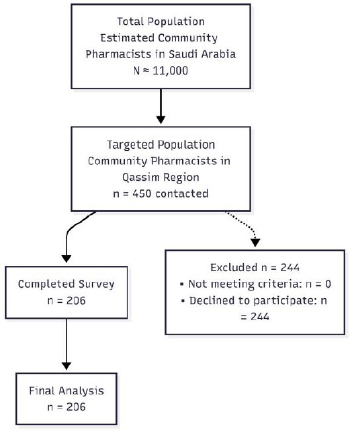
Flowchart of participant recruitment and inclusion process.
The study used the “Smoking Cessation In Pharmacy (SCIP)” questionnaire, which was developed by an Australian study [10]. 22 multiple-choice and true/false questions that were modified from the validated SCIP questionnaire and divided into sections A and B were used to evaluate knowledge. Participants' demographics were included in Section A, while community pharmacists' expertise in offering smoking cessation treatments was covered in Section B. Total knowledge scores ranged from 0 to 22, with each right response earning one point. Current clinical recommendations (e.g., WHO, Saudi MOH smoking cessation programs) were used to establish the correct responses.
Section B of the questionnaire assessed the pharmacologic, epidemiologic, and pharmacotherapeutic knowledge of community pharmacists toward smoking. This part has statements with “true” and “false” responses. Some questions were added to the original questionnaire, based on the recommendation from experts, including a smoking cessation expert and a clinical pharmacist. The face and content validation of the survey was performed by smoking cessation experts, clinical pharmacists, and academic pharmacists specializing in the field of respiratory pharmacotherapy and healthcare. All experts gave a good assessment of the questionnaire regarding clinical sensibility. To ensure the validity of the questionnaire, twenty community pharmacists who were not included in the research population were asked to complete a pilot test. The pharmacists were asked to evaluate the tool in terms of its relevance, flow, layout, convenience of use, and the question stem that was difficult to understand. Subsequently, changes were made to the questionnaire after feedback was received from professionals and pharmacists. The questionnaire has an acceptable reliability of Cronbach's alpha 0.63.
The questionnaire was made using Google Forms and distributed to community pharmacists online through their WhatsApp groups. Individual community pharmacies were visited personally by the researchers to give them the online survey link. The consent form was included at the beginning of the questionnaire, where all the participating pharmacists agreed to be part of this study.
The study was approved by the regional research ethics committee of the Qassim province of Saudi Arabia. The study confirms that the Helsinki Declaration has been followed in involving human subjects in the study.
All online questionnaires were coded by the lead authors, re-verified for correctness, and placed into a database in SPSS for descriptive and inferential statistical analysis. Descriptive analysis, including study participant demographic data, was measured using frequencies and percentages for categorical variables. For the comparison of categorical variables, we used the Chi-square test. A p-value of 0.05 was considered statistically significant.
3. RESULTS
3.1. Demographic Data and Smoking Cessation Knowledge among Community Pharmacists
A total of 206 pharmacists were involved in this study; 111 (53.9%) of them were male, and 95 (46.1%) were female. Only 6.8% (n= 14) of the pharmacists were aged above 40 years old, while the majority were between 20-29 years, 59.2% (n= 122), and 30 – 39 years old, 34% (n= 70). Around one-third, 33.5% (n= 69) of pharmacists live in Arrass, 28.2% (n= 58) live in Buraydah, 21.8% (n= 45) live in Unayzah, while 6.8% (n= 14) of them live in Albada’a.
Work experience varied, 28.6% (n=59) have been working for less than a year, 37.9% (n=78) have been working for 1-5 years, and only 6.8% (n=14) have been working for more than 10 years. Table 1 shows the demographic characteristics of all participating pharmacists (questions no. 1-4).
| Demographic Data | Items | Frequency (n = 206) | Percentage (%) |
|---|---|---|---|
| Gender | Male | 111 | 53.9% |
| Female | 95 | 46.1% | |
| Age (in years) | 20-29 | 122 | 59.2% |
| 30-39 | 70 | 34% | |
| >40 | 14 | 6.8% | |
| City | Buraydah | 58 | 28.2% |
| Unayzah | 45 | 21.8% | |
| Arrass | 69 | 33.5% | |
| Albada’a | 14 | 6.8% | |
| Albukayriyah | 10 | 4.9% | |
| Others | 9 | 4.9% | |
| Work Experience | Less than a year | 59 | 28.6% |
| 1-5 years | 78 | 37.9% | |
| 5-10 years | 55 | 26.7% | |
| More than 10 years | 14 | 6.8% |
Note: Values expressed as numbers (n) and percentage (%).
Overall, most of the participants 91.7% (n= 189) agreed that there has been an increase in the smoking rate in Saudi Arabia in the last decade. The majority (8.7%, n= 18) also believe that smoking can cause cancer in various organs such as the bladder, intestines, and cervix besides the pulmonary adverse effects. Almost all the participants (96.1%, n=198) think that passive smoking is harmful. Also, the majority (82%, n=169) believe that neonatal deaths can occur because of smoking in pregnant mothers. Table 2 shows pharmacists’ responses to Question No. (5-10). Nicotine was misidentified by around half of participants (47.6%) as the most dangerous ingredient in cigarettes. The main cause of smoking-related illnesses, formaldehyde, benzene, cadmium, arsenic, and tobacco-specific nitrosamines (TSNAs), are among the many hazardous and potentially hazardous constituents (HPHCs) found in cigarette smoke.
| Questions (5-10) | Answers | Frequency (n=206) | Percentage (%) |
|---|---|---|---|
| In the last decade, smoking rates in Saudi Arabia have increased significantly. | True* | 189 | 91.7% |
| False | 17 | 8.3% | |
| Besides the pulmonary adverse effects, smoking causes cancer in various organs such as the bladder, intestines, and cervix. | True* | 188 | 91.3% |
| False | 18 | 8.7% | |
| Passive smoking is not harmful to health. | True | 8 | 3.9% |
| False* | 198 | 96.1% | |
| In smoking mothers, neonatal death may occur secondary to tobacco smoke exposure. | True* | 169 | 82% |
| False | 37 | 18% | |
| Nicotine damages nearly all organ systems. | True | 98 | 47.6% |
| False* | 108 | 52.4% | |
| Nicotine is the most addictive substance in cigarettes | True* | 170 | 82.5% |
| False | 36 | 17.5% |
Note: * correct answers.
Most of the participants (93.2%, n=192) are convinced that the hubble-bubble is not a safer way to smoke, while only 6.3% (n=13) believe that it will be safer if you roll the cigarettes on your own. A total of 93.2% (n=192) of pharmacists think that the most reliable test for nicotine dependence is measuring CO levels. Approximately, half of the participants (45.1%, n= 93) identified a heavy smoker as a person who smokes more than 15 cigarettes/day. Table 3 illustrates pharmacists’ responses to question no. (11-16).
| Questions (11-16) | Answers | Frequency (n=206) | Percentage (%) |
|---|---|---|---|
| The hubble-bubble, which uses the water mechanism, is a safer way to smoke nicotine. | True | 14 | 6.8% |
| False* | 192 | 93.2% | |
| Rolling your cigarettes is safer than the packaged industrial brands. | True | 13 | 6.3% |
| False* | 193 | 93.7% | |
| Measuring CO levels is one of the most reliable tests of nicotine dependence. | True* | 192 | 93.2% |
| False | 14 | 6.8% | |
| Nicotine dependence is a chronic relapsing disease | True* | 175 | 85% |
| False | 31 | 15% | |
| A heavy smoker is defined as someone who smokes a total of 15 or more cigarettes/day. | True | 93 | 45.1% |
| False* | 113 | 54.9% | |
| Younger smokers find it easier to quit than older smokers who have been smoking for a longer time. | True | 95 | 46.1% |
| False* | 111 | 53.9% |
Note: * correct answers.
In terms of pharmacists’ knowledge regarding smoking cessation, 46.6% (n= 96) of them believe that the effectiveness of combining behavioral and pharmacological therapy is equal to using each one separately. Most of the pharmacists (85%, n= 175) are convinced that the smoker can smoke even while using NRT. More than two-thirds (71.8%, n= 148) said that Varenicline is not safe to be used by smokers under the age of 18 years old. Finally, only 6.3% (n= 13) believe that antidepressants and antihypertensives cannot be used in the process of quitting. Table 4 shows the responses to question no. (17-22) of the questionnaire.
| Question (17-22) | Answer | Frequency (n=206) | Percentage (%) |
|---|---|---|---|
| The combination of behavioral and pharmacological therapy is as effective as each alone. | True | 96 | 46.6% |
| False* | 110 | 53.4%% | |
| One should never smoke if he/she is on nicotine replacement therapy (NRT). | True | 31 | 15% |
| False* | 175 | 85% | |
| Varenicline (Champix®®) is considered safe for smokers younger than 18 years. | True | 58 | 28.2% |
| False* | 148 | 71.8% | |
| Some antidepressants and anti-hypertensives can be used as smoking cessation therapeutic options. | True* | 193 | 93.7% |
| False | 13 | 6.3% | |
| Relapse is uncommon if patients comply with their optimal smoking cessation plan. | True | 64 | 31.1% |
| False* | 142 | 68.9% | |
| Combining different forms of NRTs is contraindicated. | True | 32 | 15.5% |
| False* | 174 | 84.5% |
Note: * correct answers.
The results showed that 89.8% (n= 185) of participants are confident enough to advise smoker customers to quit. Approximately 80% (n= 166) stated that they were aware of the presence of smoking cessation clinics in Saudi Arabia and that smokers can be referred to these specialized clinics for treatment. Table 5 shows pharmacists’ responses to the question no. (23-24) of the questionnaire.
| Question (23-24) | Answer | Frequency | Percentage (%) |
|---|---|---|---|
| As a community pharmacist, are you confident in advising about smoking cessation? | Yes | 185 | 89.8% |
| No | 21 | 10.2% | |
| Do you know that in Saudi Arabia, smokers can be referred to specialized smoking cessation clinics for treatment? | Yes | 166 | 80.6% |
| No | 40 | 19.4% |
Note: Values expressed as numbers (n) and percentages (%).
Questions no. 25 and 26 of the questionnaires investigated the pharmacists’ knowledge regarding the most common medications used for smoking cessation (Table 6).
| Questions (25 and 26) | Answers | Frequency (n=206) | Percentage (%) |
|---|---|---|---|
| Which of the following is contraindicated in patients with severe renal and hepatic impairment | NRT | 3 | 1.5% |
| Bupropion | 23 | 11.2% | |
| Varenicline | 28 | 13.6% | |
| None of the above | 140 | 68% | |
| All of the above* | 12 | 5.8% | |
| The development of suicidal ideation is a common side effect of smoking cessation therapy for patients on: |
NRT | 6 | 2.9%% |
| Bupropion | 41 | 19.9% | |
| Varenicline* | 131 | 63.5% | |
| None of the above | 20 | 9.7% | |
| All of the above | 8 | 3.9% |
Note: * correct answers.
According to Table 7, an independent t-test analysis was conducted to investigate any significant association of gender variables with questionnaire variables. The table shows that there was no significant association, as the p-value is > 0.05.
| Questions | Response | Male | Female | p-value | ||
|---|---|---|---|---|---|---|
| n | % | n | % | |||
| In the last decade, smoking rates in Saudi Arabia have increased significantly | TRUE* | 103 | 92.79 | 86 | 90.53 | 0.556 |
| FALSE | 8 | 7.21 | 9 | 9.47 | ||
| Besides the pulmonary adverse effects, smoking causes cancer in various organs such as the bladder, intestines, and cervix | TRUE* | 100 | 90.09 | 88 | 92.63 | 0.520 |
| FALSE | 11 | 9.91 | 7 | 7.37 | ||
| Passive smoking is not harmful to health. | TRUE | 4 | 3.60 | 4 | 4.21 | 0.822 |
| FALSE* | 107 | 96.40 | 91 | 95.79 | ||
| In smoking mothers, neonatal death may occur secondary to tobacco smoke exposure | TRUE* | 90 | 81.08 | 79 | 83.16 | 0.699 |
| FALSE | 21 | 18.92 | 16 | 16.84 | ||
| Nicotine is the most addictive substance in a cigarette | TRUE | 91 | 81.98 | 79 | 83.16 | 0.825 |
| FALSE* | 20 | 18.02 | 16 | 16.84 | ||
| Nicotine is the most harmful substance in a cigarette | TRUE* | 48 | 43.24 | 50 | 52.63 | 0.179 |
| FALSE | 63 | 56.76 | 45 | 47.37 | ||
| The hubble-bubble, which uses the water mechanism, is a safer way to smoke nicotine | TRUE | 9 | 8.11 | 5 | 5.26 | 0.419 |
| FALSE* | 102 | 91.89 | 90 | 94.74 | ||
| Rolling your own cigarettes is safer than the packaged industrial brands | TRUE | 8 | 7.21 | 5 | 5.26 | 0.567 |
| FALSE* | 103 | 92.79 | 90 | 94.74 | ||
| Measuring CO levels is one of the most reliable tests of nicotine dependence | TRUE* | 104 | 93.69 | 88 | 92.63 | 0.763 |
| FALSE | 7 | 6.31 | 7 | 7.37 | ||
| Nicotine dependence is a chronic relapsing disease | TRUE* | 90 | 81.08 | 85 | 89.47 | 0.093 |
| FALSE | 21 | 18.92 | 10 | 10.53 | ||
| A heavy smoker is defined as someone who smokes a total of 15 or more cigarettes/day | TRUE | 47 | 42.34 | 46 | 48.42 | 0.382 |
| FALSE* | 64 | 57.66 | 49 | 51.58 | ||
| Younger smokers find it easier to quit than older smokers who have been smoking for a longer time | TRUE | 52 | 46.85 | 43 | 45.26 | 0.820 |
| FALSE* | 59 | 53.15 | 52 | 54.74 | ||
| The combination of behavioral and pharmacological therapy is as effective as each alone | TRUE | 51 | 45.95 | 45 | 47.37 | 0.838 |
| FALSE* | 60 | 54.05 | 50 | 52.63 | ||
| One should never smoke if he/she is on nicotine replacement therapy (NRT) | TRUE | 17 | 15.32 | 14 | 14.74 | 0.908 |
| FALSE* | 94 | 84.68 | 81 | 85.26 | ||
| Varenicline (Champix®) is considered safe for smokers younger than 18 years | TRUE | 29 | 26.13 | 29 | 30.53 | 0.484 |
| FALSE* | 82 | 73.87 | 66 | 69.47 | ||
| Some anti-depressants and anti-hypertensives can be used as smoking cessation therapeutic options | TRUE* | 103 | 92.79 | 90 | 94.74 | 0.567 |
| FALSE | 8 | 7.21 | 5 | 5.26 | ||
| Relapse is uncommon if patients comply with their optimal smoking cessation plan | TRUE | 34 | 30.63 | 30 | 31.58 | 0.883 |
| FALSE* | 77 | 69.37 | 65 | 68.42 | ||
| Combining different forms of NRTs is contraindicated | TRUE | 17 | 15.32 | 15 | 15.79 | 0.925 |
| FALSE* | 94 | 84.68 | 80 | 84.21 | ||
| As a community pharmacist, are you confident in advising about smoking cessation? | YES | 103 | 92.79 | 82 | 86.32 | 0.126 |
| NO | 8 | 7.21 | 13 | 13.68 | ||
| Do you know that in Saudi Arabia, smokers can be referred to specialized smoking cessation clinics for treatment? | YES | 91 | 81.98 | 75 | 78.95 | 0.583 |
| NO | 20 | 18.02 | 20 | 21.05 | ||
| Which of the following is contraindicated in patients with severe renal and hepatic impairment |
Nicotine Replacement Therapy. | 1 | 0.90 | 2 | 2.11 | 0.942 |
| Bupropion. | 13 | 11.71 | 10 | 10.53 | ||
| Varenicline (Champix®). | 16 | 14.41 | 12 | 12.63 | ||
| None of the above. | 75 | 67.57 | 65 | 68.42 | ||
| All of the above. | 6 | 5.41 | 6 | 6.32 | ||
| The development of suicidal ideations is a common side effect of smoking cessation therapy for patients on | Nicotine Replacement Therapy. | 3 | 2.70 | 3 | 3.16 | 0.112 |
| Bupropion. | 18 | 16.22 | 23 | 24.21 | ||
| Varenicline (Champix®). | 69 | 62.16 | 62 | 65.26 | ||
| None of the above. | 16 | 14.41 | 4 | 4.21 | ||
| All of the above. | 5 | 4.50 | 3 | 3.16 | ||
Note: *Correct answers.
Table 8 also presents an independent t-test analysis of the association between the work experience of participants and questionnaire variables from 5 to 26. There was a significant relation between work experience and question # 22 “combining different forms of NRTs is contraindicated” [t (206) =8.132, p=0.043]. There was no association between the work experience and other questionnaire variables.
| Questions | Response | <1 year | 1-5 years | 5-10 years | >10 years | p-value | ||||
|---|---|---|---|---|---|---|---|---|---|---|
| n | % | n | % | n | % | n | % | |||
| In the last decade, smoking rates in Saudi Arabia have increased significantly | TRUE* | 52 | 88.14 | 72 | 92.31 | 51 | 92.73 | 14 | 100 | 0.49 |
| FALSE | 7 | 11.86 | 6 | 7.69 | 4 | 7.27 | 0 | 0 | ||
| Besides the pulmonary adverse effects, smoking causes cancer in various organs such as the bladder, intestines, and cervix | TRUE* | 53 | 89.83 | 69 | 88.46 | 54 | 98.18 | 12 | 86 | 0.19 |
| FALSE | 6 | 10.17 | 9 | 11.54 | 1 | 1.82 | 2 | 14 | ||
| Passive smoking is not harmful to health. | TRUE | 2 | 3.39 | 3 | 3.85 | 3 | 5.45 | 0 | 0 | 0.80 |
| FALSE* | 57 | 96.61 | 75 | 96.15 | 52 | 94.55 | 14 | 100 | ||
| In smoking mothers, neonatal death may occur secondary to tobacco smoke exposure | TRUE* | 47 | 79.66 | 67 | 85.90 | 43 | 78.18 | 12 | 86 | 0.63 |
| FALSE | 12 | 20.34 | 11 | 14.10 | 12 | 21.82 | 2 | 14 | ||
| Nicotine is the most addictive substance in a cigarette | TRUE | 54 | 91.53 | 62 | 79.49 | 41 | 74.55 | 13 | 93 | 0.06 |
| FALSE* | 5 | 8.47 | 16 | 20.51 | 14 | 25.45 | 1 | 7 | ||
| Nicotine is the most harmful substance in a cigarette | TRUE* | 32 | 54.24 | 34 | 43.59 | 24 | 43.64 | 8 | 57 | 0.49 |
| FALSE | 27 | 45.76 | 44 | 56.41 | 31 | 56.36 | 6 | 43 | ||
| The hubble-bubble, which uses the water mechanism, is a safer way to smoke nicotine | TRUE | 1 | 1.69 | 6 | 7.69 | 5 | 9.09 | 2 | 14 | 0.23 |
| FALSE* | 58 | 98.31 | 72 | 92.31 | 50 | 90.91 | 12 | 86 | ||
| Rolling your own cigarettes is safer than the packaged industrial brands | TRUE | 3 | 5.08 | 3 | 3.85 | 4 | 7.27 | 3 | 21 | 0.09 |
| FALSE* | 56 | 94.92 | 75 | 96.15 | 51 | 92.73 | 11 | 79 | ||
| Measuring CO levels is one of the most reliable tests of nicotine dependence | TRUE* | 55 | 93.22 | 73 | 93.59 | 52 | 94.55 | 12 | 86 | 0.70 |
| FALSE | 4 | 6.78 | 5 | 6.41 | 3 | 5.45 | 2 | 14 | ||
| Nicotine dependence is a chronic relapsing disease | TRUE* | 53 | 89.83 | 66 | 84.62 | 46 | 83.64 | 10 | 71 | 0.36 |
| FALSE | 6 | 10.17 | 12 | 15.38 | 9 | 16.36 | 4 | 29 | ||
| A heavy smoker is defined as someone who smokes a total of 15 or more cigarettes/day | TRUE | 26 | 44.07 | 36 | 46.15 | 23 | 41.82 | 8 | 57 | 0.77 |
| FALSE* | 33 | 55.93 | 42 | 53.85 | 32 | 58.18 | 6 | 43 | ||
| Younger smokers find it easier to quit than older smokers who have been smoking for a longer time | TRUE | 30 | 50.85 | 33 | 42.31 | 24 | 43.64 | 8 | 57 | 0.61 |
| FALSE* | 29 | 49.15 | 45 | 57.69 | 31 | 56.36 | 6 | 43 | ||
| The combination of behavioral and pharmacological therapy is as effective as each alone | TRUE | 28 | 47.46 | 33 | 42.31 | 26 | 47.27 | 9 | 64 | 0.50 |
| FALSE* | 31 | 52.54 | 45 | 57.69 | 29 | 52.73 | 5 | 36 | ||
| One should never smoke if he/she is on nicotine replacement therapy (NRT) | TRUE | 11 | 18.64 | 11 | 14.10 | 6 | 10.91 | 3 | 21 | 0.60 |
| FALSE* | 48 | 81.36 | 67 | 85.90 | 49 | 89.09 | 11 | 79 | ||
| Varenicline (Champix®) is considered safe for smokers younger than 18 years | TRUE | 16 | 27.12 | 23 | 29.49 | 14 | 25.45 | 5 | 36 | 0.87 |
| FALSE* | 43 | 72.88 | 55 | 70.51 | 41 | 74.55 | 9 | 64 | ||
| Some anti-depressants and anti-hypertensives can be used as smoking cessation therapeutic options | TRUE* | 56 | 94.92 | 72 | 92.31 | 54 | 98.18 | 11 | 79 | 0.05 |
| FALSE | 3 | 5.08 | 6 | 7.69 | 1 | 1.82 | 3 | 21 | ||
| Relapse is uncommon if patients comply with their optimal smoking cessation plan | TRUE | 19 | 32.20 | 24 | 30.77 | 15 | 27.27 | 6 | 43 | 0.72 |
| FALSE* | 40 | 67.80 | 54 | 69.23 | 40 | 72.73 | 8 | 57 | ||
| Combining different forms of NRTs is contraindicated | TRUE | 14 | 23.73 | 10 | 12.82 | 4 | 7.27 | 4 | 29 | 0.04* |
| FALSE* | 45 | 76.27 | 68 | 87.18 | 51 | 92.73 | 10 | 71 | ||
| As a community pharmacist, are you confident in advising about smoking cessation? | YES | 49 | 83.05 | 71 | 91.03 | 52 | 94.55 | 13 | 93 | 0.20 |
| NO | 10 | 16.95 | 7 | 8.97 | 3 | 5.45 | 1 | 7 | ||
| Do you know that in Saudi Arabia, smokers can be referred to specialized smoking cessation clinics for treatment? | YES | 47 | 79.66 | 60 | 76.92 | 47 | 85.45 | 12 | 86 | 0.62 |
| NO | 12 | 20.34 | 18 | 23.08 | 8 | 14.55 | 2 | 14 | ||
| Which of the following is contraindicated in patients with severe renal and hepatic impairment |
Nicotine Replacement Therapy. | 1 | 1.69 | 1 | 1.28 | 1 | 1.82 | 0 | 0 | 0.11 |
| Bupropion. | 4 | 6.78 | 15 | 19.23 | 3 | 5.45 | 1 | 7 | ||
| Varenicline (Champix® | 10 | 16.95 | 9 | 11.54 | 9 | 16.36 | 0 | 0 | ||
| None of the above. | 37 | 62.71 | 50 | 64.10 | 40 | 72.73 | 13 | 93 | ||
| All the above. | 7 | 11.86 | 3 | 3.85 | 2 | 3.64 | 0 | 0 | ||
| The development of suicidal ideations is a common side effect of smoking cessation therapy for patients on | Nicotine Replacement Therapy. | 4 | 6.78 | 2 | 2.56 | 0 | 0.00 | 0 | 0 | 0.222 |
| Bupropion. | 8 | 13.56 | 22 | 28.21 | 9 | 16.36 | 2 | 14 | ||
| Varenicline | 39 | 66.10 | 44 | 56.41 | 36 | 65.45 | 12 | 86 | ||
| None of the above. | 6 | 10.17 | 8 | 10.26 | 6 | 10.91 | 0 | 0 | ||
| All the above. | 2 | 3.39 | 2 | 2.56 | 4 | 7.27 | 0 | 0 | ||
Note: *statistically significant.
4. DISCUSSION
Nicotine addiction is considered a major risk factor for many health issues and diseases. To the best of our knowledge, this is the first study investigating smoking cessation-related knowledge in community pharmacists across Saudi Arabia, specifically in the Al-Qassim region. The study results showed that the majority of the surveyed community pharmacists showed a high knowledge and awareness about smoking cessation services. Although the study sample covered only the Qassim region, it can give an idea about the perspective and ability of community pharmacists towards smoking cessation practices in Saudi Arabia.
The results of this study showed that community pharmacists in Al-Qassim are in line with global practices and efforts to reduce smoking hazards and the greater health risks to the population. However, some community pharmacists do prescribe all NRTs at the same time, which shows that they need detailed educational programs, which might be beneficial for smoking cessation initiatives taken by community pharmacists. The study anticipated that work experience would correlate positively with knowledge levels, a hypothesis supported by study findings. It was also observed that recent graduates and younger pharmacists may have received inadequate education and training on nicotine cessation, which is consistent with previous research findings [11, 12]. Conversely, gender was an unforeseen factor influencing knowledge variance, revealing that male pharmacists tended to exhibit slightly higher, albeit statistically insignificant, levels of knowledge compared to their female counterparts.
Of all participants, only 14 (6.8%) pharmacists were over the age of 40 years and had more than 10 years of experience, with approximately similar distribution among other age and experience categories. However, this diversity has not significantly affected their knowledge and awareness about smoking cessation. Exploring the literature, a similar study to ours was conducted in Australia, where about 25.5% of the community pharmacists know contraindications to smoking cessation aids [10]. whereas in this study, about 80% of the community pharmacists know and understand the contraindications of smoking cessation therapies in special populations (renal and hepatically impaired patients).
In Poland, a study identified an underestimation and low confidence by the general population toward the community pharmacists in providing cessation service, 44% (n= 145) mentioned that they don’t believe that the pharmacists are qualified for such service [13]. In the current study, 89.8% (n= 185) of community pharmacists mentioned that they are willing and confident in providing this service. Referring smokers to specialist clinics gives them access to a multidisciplinary team that may improve their success in quitting by combining behavioral, pharmaceutical, and medical treatment.
In addition, we found that a high percentage of community pharmacists believe they are ready to provide cessation support to their smoking clients. These findings are like other studies of community pharmacists in Thailand and the United States [14, 15].
A cross-sectional study was performed in Irbid City, Jordan, and included 150 community pharmacists, who were asked if they were confident enough to provide tobacco cessation advice to smokers, only 17 (11.3%) of them agreed that they were confident to do so. Also, in the same study, they were asked if they think that tobacco use is an addiction, and 66.7% (n=100) mentioned that they agree [16]. While in our study, 82.5% (n=170) mentioned that nicotine is the most addictive substance in cigarettes, which shows a higher level of awareness among community pharmacists as compared to other developed countries.
Nearly half of the respondents believed that nicotine was the most dangerous ingredient in cigarettes, indicating a lack of awareness of cigarette toxicity. Although nicotine is extremely addictive, smoking-related illnesses are also caused by a variety of other smoke elements such as formaldehyde, benzene, cadmium, arsenic, and tobacco-specific nitrosamines (TSNAs). As reported in the results section, nicotine is the ingredient that damages nearly all organ systems of the body, and therefore, in this context, the questionnaire specifically included this chemical toxin. This emphasizes how important it is for pharmacist training programs to include instruction on the composition of tobacco harm.
In this study, community pharmacists’ knowledge about the side effects of smoking cessation therapies was assessed using two questions. Around 63% of our participants were aware of suicidal ideations of Varenicline. On the other hand, 19% of the participants thought that Bupropion is associated with side effects. Some pharmacists also failed to correctly answer several questions about basic information on smoking cessation. This could be explained by the fact that little is known about smoking cessation aids beyond what is provided on the pack by the manufacturers of products. Moreover, it may be attributed to a couple of potential reasons. The first is that community pharmacists might be in a rush to fulfill the survey. Secondly, they understood these questions in an inexact way, so they made their decision based on their understanding. A local study targeting primary healthcare physicians at military hospitals (a governmental sector) was included, and they were asked if they were confident to advise smokers to quit, and 24.7% (n=18) of them reported that they agreed [17].
Interventions by pharmacists can be performed during patients’ counseling when dispensing the medications. Evidence-based counseling methods should be the main focus of pharmacists' treatments, with medication acting as a supplement for appropriate patients.
It was found that even a short intervention (3 minutes) can increase the smokers’ interest and chance of success in quitting. Cessation success was found to be directly associated with the increased number of counseling interventions; therefore, smokers may require multiple attempts for successful cessation [18, 19]. In addition to behavioral counseling, pharmacists’ intervention should also include pharmacotherapy management and solving any identified barriers [20]. In the end, a smoker's ability to successfully stop rests on their personal decision to do so; once that decision is made, healthcare professionals may help by providing tools, knowledge, and support.
Our study has a few As; the number of participating pharmacists is relatively low compared to the national number of practicing pharmacists in community pharmacies in Saudi Arabia. In addition, the study did not investigate whether there are any differences between the pharmacists in chain community pharmacies and local ones in terms of their level of knowledge and awareness. This study also did not investigate the impact of the pharmacists’ education and training on their knowledge and practice towards smoking cessation. Therefore, further studies with a higher sample size should be conducted, including practicing community pharmacists from multiple regions. Also, future studies could investigate the effect of the educational and training programs provided to pharmacists on tobacco cessation services. Additionally, the extent of interventions delivered by community pharmacists in aiding nicotine cessation and the public acceptance of them could be measured.
Future directions should focus on developing, implementing, and evaluating pharmacist-led smoking cessation educational programs. These programs should target areas where there is a need for improvement. They should cover a range of topics, including how nicotine affects the body, the science of addiction, and how medications can help, ways to assess dependence, like using carbon monoxide tests, behavioral strategies to support quitting, and the latest clinical guidelines on medications. Additionally, integrating smoking cessation education into the curriculum for pharmacy and medical students is recommended [18].
In addition to augmenting the competency of community pharmacists in managing smoking cessation efforts, expanding their involvement in this domain hinges on raising public awareness about the availability of cessation services at local pharmacies. An initial strategy involves community pharmacies prominently displaying information on smoking cessation services and products, signaling the readiness of pharmacists to offer additional assistance to individuals committed to quitting. Furthermore, practicing community pharmacists who have undergone continuing education in smoking cessation could denote their specialized training through visible signage or designated credentials within the pharmacy setting [13, 20].
5. STUDY LIMITATIONS
There are several limitations to this study. First, pharmacists may overstate their confidence or accurate knowledge in self-reported knowledge due to social desirability bias. Second, the modest response rate (45.8%) suggests the potential of non-response bias, wherein pharmacists who were more informed or driven would have been more inclined to engage. Third, the convenience sample's regional (Qassim-only) nature restricts its applicability to other parts of Saudi Arabia. Lastly, causal conclusions cannot be drawn due to the cross-sectional design.
A small or non-representative sample size may limit the generalizability of the study’s findings. Additionally, resource limitations, such as time constraints, funding limitations, or access to participants across Saudi Arabia, may also be present. Data may have influenced the scope and overall quality of the research.
Convenience sampling may result in selection bias since respondents may have greater knowledge or a greater desire to quit smoking than non-respondents. This could overstate the general level of expertise among local community pharmacists.
CONCLUSION
This study showed an increased level of knowledge and confidence among community pharmacists towards providing smoking cessation services. However, the pharmacists’ knowledge about smoking cessation therapies needs further assessment and may be improved. Future studies should focus on the extension of interventions delivered by community pharmacists in aiding nicotine cessation, and public acceptance of these interventions could be measured. Future studies could also focus on developing and implementing pharmacist-led smoking cessation services and required educational programs.
AUTHORS’ CONTRIBUTIONS
The authors confirm contribution to the paper as follows: W.M.A., M.K.R.: Study conception and design; A.S.A., A.A.A.: Data collection; W.M.A., M.K.R., A.I.M.: Analysis and interpretation of results; A.A.A., M.S.A.: Draft manuscript preparation. All authors reviewed the results and approved the final version of the manuscript.
LIST OF ABBREVIATIONS
| WHO | = World Health Organization |
| SCIP | = Smoking Cessation in Pharmacy |
ETHICS APPROVAL AND CONSENT TO PARTICIPATE
The ethical approval of the study was obtained from the Qassim Region Research Ethics Committee, Saudi Arabia (No. 607‐43‐793).
HUMAN AND ANIMAL RIGHTS
All procedures performed in studies involving human participants were in accordance with the ethical standards of institutional and/or research committee and with the 1975 Declaration of Helsinki, as revised in 2013.
CONSENT FOR PUBLICATION
Each respondent was informed about the objective of the study before receiving the questionnaire and provided their informed consent. The Committee has agreed that completing the questionnaire implies consent.
AVAILABILITY OF DATA AND MATERIALS
All the data and supporting material are available within the article.
ACKNOWLEDGEMENTS
The researchers would like to thank the Deanship of Graduate Studies and Scientific Research at Qassim University for financial support (QU-APC-2026).