All published articles of this journal are available on ScienceDirect.

Impact of Armed Conflicts on Neonatal Health: A Scoping Review

Abstract
Introduction/Objective
Armed conflicts threaten maternal and neonatal health, yet evidence on neonatal outcomes remains fragmented. This scoping review mapped evidence on armed conflict’s impact on neonatal health and identified pathways influencing outcomes.
Methods
This scoping review followed Arksey and O’Malley’s framework and PRISMA-ScR guidelines. MEDLINE/PubMed, Web of Science, Embase, Global Health (CABI), and CINAHL were searched, supplemented by Google Scholar and reference-list screening. Articles published from 2006 to 2025 reporting neonatal health outcomes (0-28 days) in conflict-affected settings were included. Maternal and pregnancy-related factors were considered when linked to neonatal outcomes. Twenty-nine articles were synthesized thematically.
Results
Four overarching themes emerged: (1) war-driven neonatal adversity, (2) health system collapse impact, (3) risks associated with alternative and non-formal care practices, and (4) stress-associated biological and epigenetic changes. Armed conflict was associated with increased neonatal mortality, preterm birth, low birth weight, congenital anomalies, and neonatal morbidity. Pathways included violence exposure, healthcare disruption, displacement, food insecurity, environmental hazards, and maternal psychological stress.
Discussion
Conflict affects neonatal health through interconnected biological, social, environmental, and health system pathways. Health system disruption, reduced access to skilled care, unsafe care practices, and maternal stress may compound adverse outcomes. Emerging evidence of epigenetic changes suggests potential longer-term consequences and underscores the need for integrated humanitarian and health system responses.
Conclusion
Priorities include strengthening health system resilience, ensuring continuity of maternal-newborn services, and integrating context-appropriate maternal mental health and psychosocial support. Further research should identify feasible, culturally responsive, and scalable interventions in underrepresented and protracted conflict settings.
1. INTRODUCTION
Armed conflicts are increasingly affecting populations worldwide, with devastating consequences for vulnerable groups, particularly mothers and newborns. The International Committee of the Red Cross (ICRC) defines armed conflict as sustained armed violence involving state military forces or organized armed groups, occurring either between states or within a single state [1]. Since 2008, conflicts such as civil wars, insurgencies, tribal violence, and interstate wars have become more frequent, prolonged, and complex, intensifying humanitarian crises and placing substantial pressure on already fragile health systems [2, 3]. These conflicts often destroy critical infrastructure, disrupt healthcare delivery, and force large-scale population displacement, thereby placing maternal and neonatal health at considerable risk.
Armed conflict also severely restricts access to essential resources, including food, clean water, shelter, and healthcare services [4]. Women and children are disproportionately affected, with evidence showing a significant rise in their exposure to conflict-related violence since 2000 [5]. Beyond direct violence, attacks on healthcare facilities and healthcare personnel further weaken public health systems, limiting the availability of essential maternal and newborn services and compromising the ability of healthcare professionals to provide timely and adequate care [4, 5].
Newborns are particularly vulnerable to the direct and indirect consequences of armed conflict, with risks beginning during fetal life through maternal exposure to conflict-related disruptions and continuing through the neonatal period. Maternal exposure to armed conflict during pregnancy may compromise access to antenatal care, essential investigations, maternal immunization, nutritional supplementation, adequate food and rest, and appropriate obstetric services, while conflict-related psychological stress may further affect maternal and fetal well-being. These disruptions can contribute to adverse birth outcomes, including preterm birth, intrauterine growth restriction, low birth weight, and perinatal complications [6]. Following birth, newborns remain highly dependent on caregivers, healthcare services, adequate nutrition, and safe and hygienic living conditions. Displacement, overcrowding, inadequate sanitation, suboptimal infant feeding, interrupted immunization, and limited access to timely healthcare may further increase newborn vulnerability to infections, impaired growth and development, and other adverse health outcomes [4, 6]. The neonatal period, defined as the first 28 days of life, therefore represents a particularly critical stage for survival, growth, and neurodevelopment in conflict-affected settings. During the Syrian civil war, neonatal mortality increased dramatically from 19 per 1,000 live births in 2010 to a peak of 47 per 1,000 live births between 2011 and 2017, illustrating the profound impact of armed conflict on neonatal survival [7]. These vulnerabilities arise through multiple interconnected pathways involving maternal health, birth-related care, household and environmental conditions, nutrition, and access to essential neonatal and emergency healthcare services [4, 8].
Given these significant vulnerabilities, understanding the impact of armed conflict on neonatal health is essential for informing policy, strengthening humanitarian responses, and guiding evidence-based interventions aimed at protecting mothers and newborns in crisis settings. Although previous studies have examined specific dimensions of this issue, the evidence remains fragmented across diverse contexts and outcomes. Therefore, this scoping review aims to systematically map and synthesize the existing literature on the impact of armed conflicts on neonatal health, with particular attention to the pathways through which conflict compromises neonatal survival, development, and overall well-being.
2. METHODS
This scoping review was conducted using the methodological framework developed by Arksey and O’Malley [9] and reported in accordance with the Preferred Reporting Items for Systematic Reviews and Meta-Analyses Extension for Scoping Reviews (PRISMA-ScR) guidelines. The review aimed to systematically identify, map, and synthesize the existing literature examining the impact of armed conflict and war on neonatal health across diverse geographical and humanitarian settings.
2.1. Inclusion and Exclusion Criteria
Articles were eligible for inclusion if they reported neonatal health outcomes among neonates (0-28 days old) in conflict-affected settings. Studies involving pregnant women or mothers were eligible when maternal or pregnancy-related factors were reported in relation to, or provided relevant content for, neonatal health outcomes. The review focused on articles published between 2006 and 2025 to capture evidence from a period marked by increasing frequency, intensity, and protracted nature of armed conflicts globally. Since the mid-2000s, armed conflicts and humanitarian crises have escalated substantially, resulting in widespread displacement, destruction of healthcare infrastructure, and growing threats to maternal and neonatal health. Restricting the review to this timeframe ensured the inclusion of literature reflecting contemporary conflict contexts and healthcare challenges.
Eligible literature examined the effects of armed conflict, civil war, armed violence, military attacks, or conflict-related displacement on neonatal health outcomes. A broad range of study designs was considered, including qualitative, quantitative, mixed-methods, descriptive, retrospective, analytical studies, and systematic reviews, provided they were published in English. Articles were excluded if they focused solely on maternal, toddler, or child health outcomes without reporting neonatal outcomes. Articles involving populations not exposed to armed conflict, war, or armed violence were also excluded. In addition, grey literature, editorials, opinion papers, commentaries, conference abstracts, and letters to the editor were not included in this review.
2.2. Literature Search and Shortlisting
A comprehensive electronic search strategy was developed to identify relevant peer-reviewed studies. Searches were conducted in MEDLINE/PubMed, Web of Science, Embase, CABI Global Health, and CINAHL. Google Scholar was also searched to identify additional potentially relevant records. Additional records were identified through manual screening of the reference lists of included articles. The database and supplementary searches were conducted on December 31, 2025. Thus, the review included studies published from January 1, 2006, through December 31, 2025.
Search terms included combinations of keywords and subject headings related to neonatal health and armed conflict, such as neonatal health, newborn, armed conflict, war, civil war, violence, internally displaced persons, and health outcomes. The search strategy was adapted for each database to maximize sensitivity and relevance. All retrieved records were initially exported into reference management software Zotero for duplicate removal. Following removal of duplicates, records underwent a multi-stage screening process conducted independently by two reviewers according to the predefined eligibility criteria. Titles and abstracts were screened for relevance, followed by full-text assessment of potentially eligible records. Articles that met all inclusion criteria were included in the final review. Any disagreements between reviewers were resolved through discussion and consensus. The study selection process was conducted in accordance with PRISMA-ScR guidelines and is presented in Fig. (1).
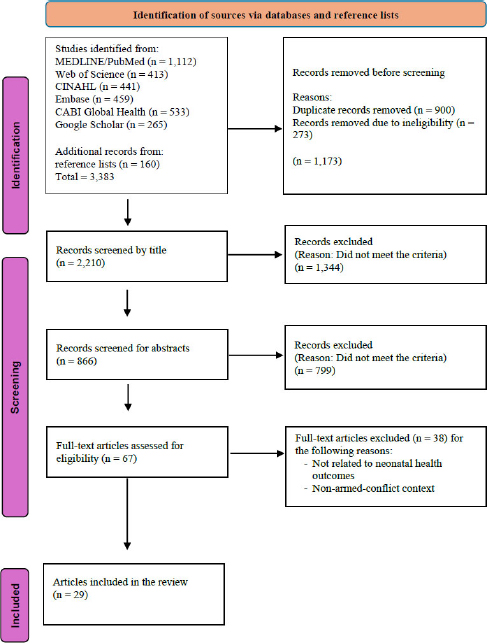
PRISMA-ScR flow diagram of the source selection process.
2.3. Data Extraction
A standardized data extraction form was developed and pilot-tested using a subset of included studies to ensure consistency and comprehensiveness. Extracted data included author(s), publication year, country or setting, study design, study population, type of conflict, neonatal health outcomes, maternal and pregnancy-related factors relevant to neonatal health, and key findings related to the impact of armed conflict on neonatal health. Maternal and pregnancy-related information was extracted when it described conflict exposure, maternal health or healthcare access, psychosocial stress, pregnancy-related factors, or other pathways relevant to neonatal outcomes. Maternal clinical outcomes such as abortion, postpartum hemorrhage, gestational diabetes, eclampsia, and maternal mortality were not treated as separate primary outcomes of this review. Data were extracted independently by two reviewers, and any discrepancies were resolved through discussions and consensus.
2.4. Data Analysis and Synthesis
Extracted data were analyzed using descriptive and thematic synthesis approaches. Descriptive analysis was used to summarize study characteristics, geographical distribution, conflict types, study populations, and reported neonatal health outcomes. For the qualitative synthesis, the key findings and relevant outcome-related information extracted from each included study were reviewed systematically by two reviewers to identify recurring concepts, patterns, and relationships across studies. An inductive thematic analysis approach was used, whereby codes were generated from the findings reported in the included literature rather than being imposed a priori.
The synthesis proceeded iteratively through several stages. First, both reviewers independently reviewed the extracted findings and identified preliminary codes representing recurring neonatal outcomes, conflict-related exposures, contextual factors, and pathways affecting neonatal health. Second, related codes were compared, grouped, and organized into broader categories. Third, categories with conceptual similarities were examined across studies and consolidated into candidate themes and subthemes. The reviewers then independently reviewed the emerging thematic structure against the extracted data to assess whether the themes adequately represented the evidence across the included studies. Differences in coding, categorization, or interpretation were discussed between the reviewers and resolved through discussion and consensus. Through this iterative process, four overarching themes were agreed upon: (1) war-driven neonatal adversity, (2) health system collapse impact, (3) alternative practices-related risks, and (4) stress-associated epigenetic changes. Thematic synthesis was used to integrate findings across the heterogeneous study designs and settings while preserving the contextual characteristics of the evidence.
3. RESULTS
3.1. Characteristics of the Included Sources
The database and supplementary searches identified 3,383 records, including 3,223 records retrieved from electronic databases and Google Scholar and 160 additional records identified through reference-list screening. Before screening, 1,173 records were removed, including 900 duplicate records and 273 records removed for other reasons, leaving 2,210 records for screening. Following title and abstract screening, 1,344 records were excluded because they were not relevant to the review topic. The remaining 866 records underwent further abstract screening, of which 799 records were excluded. Subsequently, 67 full-text articles were assessed for eligibility, and 38 articles were excluded because they were not related to neonatal health outcomes or were not conducted in an armed conflict context. A total of 29 sources met the inclusion criteria and were included in the final review. The complete study selection process is presented in Fig. (1).
Across the 29 included articles published between 2006 and 2025, evidence was drawn from a wide range of conflict-affected settings spanning the Middle East, Africa, Latin America, Asia and Europe. The literature represented countries and territories including Afghanistan, Colombia, Ethiopia, Iraq, Mexico, Nepal, Nigeria, Palestine/Gaza, the Democratic Republic of Congo, Türkiye, South Sudan, Syria, and Yemen. Most articles focused on low-and middle-income countries experiencing prolonged armed conflict, civil war, political violence, or displacement crises.
The included literature employed diverse methodological approaches, reflecting the complexity of examining neonatal health in humanitarian and conflict settings. These included retrospective and cross-sectional studies, cohort studies, mixed-methods studies, quantitative descriptive analyses, regression analyses, retrospective analyses, qualitative studies, household surveys, case studies, and review articles. Retrospective and cross-sectional approaches were among the most frequently used designs, commonly drawing on hospital records, birth registries, national datasets, and household surveys.
The populations represented across the included literature included newborns, pregnant women, mothers, refugee populations, healthcare professionals, and community members living in conflict settings. The included sources examined a broad range of neonatal health outcomes, including low birth weight, congenital anomalies, preterm birth, neonatal mortality, neonatal intensive care unit admissions, immunization coverage, neonatal infections, neonatal service utilization, and developmental vulnerabilities. Table 1 summarizes the characteristics of the included sources.
Table 1.
|
Author(s) Year [citation] |
Country/ territory | Study Design | Population | Neonatal Health Outcomes | Conflict Context | Key Findings |
|---|---|---|---|---|---|---|
| Abol-Gaith et al. 2019 [19] | Yemen | Retrospective comparative study | Medical records of newborns | Congenital anomalies | Yemen war | After the war, the rate of congenital anomalies was about twice as high as it was before. The difference in risk was 20.32 for 10,000 people per year. |
| Ahuka et al. 2006 [20] | Democratic Republic of Congo | Retrospective study | Newborns | Congenital anomalies |
Armed conflict | Thirty-six of the 8,824 babies born during the armed conflict had congenital malformations. |
| Aktoz et al. 2023 [18] | Türkiye | Cross-sectional comparative study | 303 Turkish women and Syrian refugee women |
Birth weight, | Syrian war |
There was no difference between Syrian and Turkish newborns in birth weight. |
| Baraquoni et al. 2020 [17] | Palestine | Quantitative longitudinal comparative study | Cohorts of babies born in 2011, 2015, 2016, 2018-2019 | Birth weight | Gaza armed attacks | The newborns born in 2015 who were subjected to armed attacks in 2014 while they were still in the womb demonstrated a link between high levels of arsenic in the mother's blood and low birth weight in the baby, and high levels of barium and molybdenum in the newborn and stunted growth. |
| Bayo et al. 2021 [30] | South Sudan | A multimethod study | Pregnant women and neonates | Newborn health services | Renewed conflict | Neonatal health services significantly decreased during the armed conflict. |
| Brown 2018 [14] | Mexico | Longitudinal observational study | Births/children born to women in the Mexican family life survey | Birth weight | Drug war | The exposure to armed violence in early pregnancy led to a reduction in birth weight. |
| Çelik et al. 2019 [27] | Türkiye | Retrospective study | 18 Syrian, 136 Iraqi, 32 Afghani, and 21 of other refugees | Neonatal outcomes | Armed conflict | Several refugee newborns were admitted into the neonatal intensive care unit (NICU) due to morbidities. |
| Cetorelli 2015 [35] | Iraq | A quasi-experimental | 64,141 Neonatal polio vaccination histories from the 2000, 2006, and 2011 | Neonatal polio immunization | Iraq war | The study found newborns exposed to the Iraqi War were 21.5 percentage points (95% CI -0.341 to -0.089) less likely to receive neonatal polio immunization than newborns not exposed to war. |
| Demirci et al. 2017 [11] | Türkiye | A retrospective study | 545 Syrian refugees and 545 Turkish citizens | Birth characteristics | Armed conflict | Median neonatal birth weight was higher for Turkish newborns than for Syrian refugee newborns. |
| Eze et al. 2020 [22] | Yemen | A retrospective study | 976 newborns | Neonatal morbidities and outcomes | Civil war | Preterm babies have a higher risk of neonatal morbidity and mortality. |
| Gee et al. 2018 [33] | South Sudan | Multi-method qualitative study | 18 key informants | Newborn health | Civil war | It was common for mothers to adopt traditional methods that could be hazardous to newborns, such as mixed feeding, herbal infusions to cure ailments in newborns, and putting ash and oil on the newborn's umbilicus. |
| Gopalan et al. 2017 [34] | Asia and Middle East countries (Nepal, Afghanistan, Iraq, Yemen and Palestine Territories) | Systematic review | Mothers and newborns | Neonatal service usage and determinants | Armed conflicts | Untrained traditional birth attendants and non-professional advice on newborn health were observed. |
| Inal and Inal 2023 [12] | Türkiye | Quantitative descriptives | Syrian refugees: 3579 and Turkish women: 14,418 | Birth weight | Armed conflict | Low birth weight was higher among Syrian newborns than Turkish newborns. |
| Jawad et al. 2021 [23] | Data of 181 countries (Global) | Regression analysis of data from 181 countries | Population-level country-year data/births | Neonatal mortality | Armed conflict | Neonatal mortality was higher in armed conflict zones than in non-conflict areas. |
| Kasoniaet al. 2024 [10] | Democratic Republic of Congo | Systematic review | Newborns | Birth weight, Neonatal mortality, and Preterm birth |
Armed conflict | Commonly observed neonatal health outcomes included low birth weight, preterm birth, and neonatal mortality. |
| Kertes et al. 2016 [36] | Democratic Republic of Congo | Quantitative observational study | 24 mother-newborn dyads | Neonatal cord blood and placenta | Armed conflict in eastern region | Maternal war stress negatively influenced newborns by altering DNA methylation patterns in key genes that regulate anxiety and development. |
| Kertes et al. 2017 [37] | Democratic Republic of Congo | Quantitative observational study | 24 mothers and their newborns | Umbilical cord blood, placental tissue | Armed conflict | BDNF methylation in umbilical cord blood and placental tissue was linked to mothers who had been through war trauma and chronic stress. |
| Lembebu et al. 2025 [31] | Democratic Republic of Congo | Cross-sectional | 200 healthcare workers in North and South Kivu | Neonatal health providers | Armed conflicts | In conflict zones, poor working conditions associated with high insecurity hindered the provision of healthcare services to newborns by health providers. |
| Manduca et al. 2020 [21] | Palestine | Quantitative descriptives | Pregnant women and their babies | Neonatal health | Gaza armed violence | Data revealed a significant increase in the prevalence of congenital disabilities and preterm babies between 2011 and 2016. |
| Mugo et al. 2018 [26] | South Sudan | Quantitative descriptives | 8,125 singleton live births | Neonatal mortality | South Sudan war | Mothers who reported a previous child's death reported a significantly higher risk of neonatal |
| Munyuzangabo et al. 2021 [32] | Multiple Conflict settings | Systematic review | Newborns | Neonatal health interventions | Armed conflicts | Kangaroo mother care and infection prevention and neonatal resuscitation were observed. |
| Riquelme-Gallego et al. 2025 [6] | Multiple Conflict settings | Systematic review | Newborns | Birth weights | Armed conflict | A birth weight of less than 2,500 g was observed among newborns in conflict zones. |
| Rodríguez 2022 [15] | Colombia | Quantitative descriptives | 37,500 births from mothers | Newborn health | Colombia armed conflict | Mothers exposed to armed violence during early pregnancy gave birth to babies who weighed less and had higher odds of being underweight. |
| Sayili et al. 2022 [13] | Türkiye | A prospective cohort study | 33 Turkish women and 69 Syrian refugee women | Birth weight | Syrian civil war | Low birth weight was much higher among Syrian newborns than Turkish newborns. |
| Svallfors et al. 2025 [16] | Colombia | Fixed-effects models | Newborns | Birth weight | Armed conflict | The exposure of pregnancy to organized violence was attributed to lower birth weight. |
| Tappis et al. 2020 [29] | Yemen | Case study | Government officials, humanitarian agency staff and facility-based healthcare providers | Newborn health | Armed conflict | Conflict affected newborns through cholera and widespread severe acute malnutrition. |
| Tsadik et al. 2024 [25] | Ethiopia | A cross-sectional community-based | 189, 087 households | Neonatal mortality | War in Tigray | The neonatal mortality rate was 28.2 deaths per 1000 live births. Most of the deaths occurred at home. |
| Tyndall et al. 2021 [28] | Nigeria | A mixed-methods case study | 61 respondents | Newborn health | Internal armed conflict | Low newborn health status was observed before humanitarian intervention came on board. |
| Van Den Berg et al., 2015 [24] | Gaza Strip | Retrospective observational analysis | Newborns | Neonatal mortality | Armed conflict | Neonatal mortality increased among Palestinian refugee newborns in Gaza. |
3.2. Impact of Armed Conflicts on Neonatal Health
Analysis of the included sources using the iterative thematic synthesis process identified four overarching themes describing the multifaceted impact of armed conflict on neonatal health: (1) War-driven neonatal adversity, (2) Health system collapse impact, (3) Alternative practices-related risks, and (4) Stress-associated epigenetic changes. Across diverse geographical settings, the evidence consistently demonstrated that armed conflict adversely affects neonatal survival, growth, development, and access to essential healthcare services through interconnected biological, environmental, and health system pathways.
3.3. War-Driven Neonatal Adversity
3.3.1. Low Birth Weight
Low birth weight emerged as one of the most consistently reported neonatal outcomes associated with armed conflict and displacement. Multiple studies conducted in conflict-affected populations demonstrated significantly lower birth weights among neonates born to displaced or conflict-exposed mothers compared with non-conflict populations [10]. Several studies from Türkiye examining Syrian refugee populations reported higher rates of low birth weight among Syrian newborns compared to Turkish host populations. A retrospective study involving 545 Turkish mothers and 545 Syrian refugee mothers found significantly lower birth weights among Syrian refugee neonates [11]. Similarly, a large study involving 17,997 women reported a higher prevalence of low birth weight among Syrian newborns (11.3%) compared to Turkish newborns (9.7%) [12]. Comparable findings were reported in a cohort study involving 233 Turkish mothers and 69 Syrian refugee mothers, where Syrian newborns had lower mean birth weights (2980.2 ± 395.0 g) than Turkish newborns (3097.5 ± 501.3 g) [13]. These findings suggest that conflict-related displacement, poor living conditions, food insecurity, and barriers to maternal healthcare contribute to adverse birth outcomes.
Evidence from Latin America further reinforced the relationship between violence exposure and reduced birth weight. In Mexico, exposure to drug-related violence during early gestation was associated with a 42 g reduction in neonatal birth weight [14]. Similarly, studies conducted in Colombia found that maternal exposure to internal armed conflict during pregnancy was associated with lower birth weight and increased risk of underweight newborns [15, 16]. The timing of violence exposure appeared important, with second- and third-trimester exposure associated with greater reductions in birth weight. Specifically, each additional conflict-related casualty was associated with a 5.28 g reduction in birth weight during the second trimester and a 5.80 g reduction during the third trimester [16].
Environmental exposure to war-related toxicants also emerged as a significant contributor to adverse neonatal outcomes. In Gaza, elevated concentrations of heavy metals, including arsenic, barium, and molybdenum, were identified in newborn hair samples following prolonged military attacks. Higher toxic metal exposure was associated with reduced birth weight and impaired infant growth trajectories [17]. Although most studies reported negative associations between conflict exposure and birth weight, findings were not entirely consistent across settings. For example, one study conducted in Türkiye found no statistically significant differences in birth weight between Syrian and Turkish newborns [18], while a study from Yemen reported substantial variability in birth weight among mothers living near airstrike zones [19]. These variations may reflect contextual differences in healthcare access, humanitarian support, nutritional status, and conflict intensity.
3.3.2. Congenital Anomalies
Evidence from several studies suggested that armed conflict may increase the risk of congenital anomalies through environmental exposure, maternal stress, and disruption of maternal healthcare services. In the Democratic Republic of Congo, an analysis of 8,824 live births recorded between 1993 and 2001 identified congenital malformations in 0.41% of newborns and linked these findings to prolonged civil conflict and deteriorating living conditions [20]. Similarly, a retrospective cross-sectional study from Yemen reported shifts in both the prevalence and pattern of congenital anomalies following the onset of war [19]. While anomalies such as hydrocephalus, congenital heart disease, and cleft lip/palate were reported before and after the conflict, additional conditions, including respiratory tract atresia, meningocele, and acephaly, emerged during the post-conflict period [19]. These findings suggest that conflict-related environmental contamination, nutritional deficiencies, maternal stress, and disrupted prenatal care may contribute to adverse fetal development.
3.3.3. Preterm Birth and Associated Complications
Although fewer studies specifically examined preterm birth, available evidence demonstrated an important association between armed conflict and prematurity-related complications [10]. In Gaza, intensified military attacks and environmental exposure to remnants of war were associated with increased rates of preterm birth, low birth weight, and congenital anomalies [21]. Prematurity also emerged as a major contributor to neonatal morbidity and mortality in Yemen. A two-year retrospective study reported that 34.9% of neonatal intensive care unit admissions were related to complications of prematurity, which also represented the leading cause of neonatal deaths [22]. Additional neonatal complications included neonatal jaundice, sepsis, and perinatal asphyxia [22]. These findings underscore how armed conflict exacerbates conditions associated with poor pregnancy outcomes through disrupted antenatal care, maternal malnutrition, infection exposure, and limited neonatal intensive care services.
3.3.4. Elevated Neonatal Mortality
A strong and consistent relationship was observed between armed conflict and increased neonatal mortality across multiple settings [10]. A large multi-country analysis reported substantially higher neonatal mortality rates in conflict-affected countries (25.3 per 1,000 live births) compared with non-conflict settings (14.1 per 1,000 live births), with the highest mortality rates observed in active war zones (29.3 per 1,000 live births) [23].
Country-specific studies further reinforced these findings. In Gaza, neonatal mortality increased from 20.2 per 1,000 live births in 2008 to 22.4 per 1,000 live births during periods of intensified conflict in 2013 [24]. Leading causes of neonatal mortality included prematurity, congenital anomalies, and infections. Similarly, a community-based study conducted in the Tigray region of Ethiopia between 2020 and 2022 documented 841 neonatal deaths among 29,761 live births, corresponding to a neonatal mortality rate of 28.2 per 1,000 live births [25]. Most deaths occurred in rural areas, with more than half taking place at home due to limited access to healthcare facilities. Prematurity, infection, and birth asphyxia were identified as major contributors to mortality [25]. Similarly, in South Sudan, neonatal mortality rates reached as high as 40 per 1,000 live births among conflict-affected populations [26]. Collectively, these findings demonstrate that armed conflict substantially increases the risk of preventable neonatal deaths through disrupted healthcare systems, limited access to skilled birth attendance, displacement, food insecurity, and poor neonatal care.
3.4. Health System Collapse Impact
Armed conflict profoundly disrupted healthcare systems and significantly undermined neonatal survival and access to essential maternal and newborn services. Several studies described how prolonged conflict weakened healthcare infrastructure, reduced service availability, and intensified shortages of skilled healthcare personnel.
Studies conducted among Syrian refugee populations in Türkiye reported increased neonatal intensive care unit admissions among refugee newborns, reflecting both increased vulnerability and greater healthcare needs among displaced populations [27]. In northeastern Nigeria, evidence from mixed-methods studies showed severely compromised newborn health indicators before humanitarian interventions were implemented in conflict-affected regions [28]. Similarly, qualitative evidence from Yemen revealed that weakened healthcare systems, destruction of health facilities, and competing public health crises, including cholera outbreaks and severe acute malnutrition, diverted limited healthcare resources away from neonatal care services [29]. In South Sudan, armed violence was associated with substantial declines in facility-based deliveries and neonatal service utilization due to insecurity, poverty, damaged infrastructure, and transportation barriers [30]. Conflict also contributed to shortages of skilled healthcare professionals, increased costs of medical services, and deterioration in the quality of maternal and neonatal care.
Unsafe working conditions for healthcare providers further constrained neonatal service delivery. In the eastern Democratic Republic of Congo, neonatal healthcare providers reported exposure to violence, insecurity, and unsafe travel conditions while commuting to healthcare facilities [31]. These conditions limited workforce capacity and reduced continuity of neonatal care. Despite these challenges, several studies highlighted interventions implemented in humanitarian settings to improve neonatal outcomes. These interventions included neonatal resuscitation, kangaroo mother care, infection prevention strategies, postnatal follow-up, HIV prevention programs, and health worker training initiatives [32]. However, implementation was frequently hindered by ongoing insecurity, population displacement, limited funding, and shortages of trained healthcare personnel.
3.5. Alternative Practices Related Risks
In settings where formal healthcare services were inaccessible or disrupted, families frequently relied on alternative, traditional, or informal neonatal care practices. The available literature suggested that these practices were influenced not only by limited access to formal healthcare but also by sociocultural beliefs, established caregiving traditions, economic constraints, and the need to adapt to crisis conditions. Thus, reliance on non-formal care should be understood within the broader social and cultural context of conflict-affected families rather than solely as a consequence of individual choices or lack of health knowledge.
In South Sudan, qualitative interviews and focus group discussions with healthcare providers and refugee populations identified widespread use of harmful neonatal practices, including herbal infusions for neonatal illness, mixed feeding practices, and application of ash or oil to the umbilical cord [33]. The study also described how newborn care practices were shaped by sociocultural beliefs and prevailing community practices, while financial constraints and limited access to healthcare further influenced families' care-seeking decisions. In the context of displacement and humanitarian crisis, these practices may represent familiar and accessible approaches to newborn care when formal services are perceived as unavailable, unaffordable, difficult to reach, or inappropriate to the family's circumstances. Some practices, however, may increase the risk of neonatal infection or delay timely healthcare-seeking [33].
A systematic review examining maternal and newborn care in conflict settings also identified extensive reliance on untrained birth attendants in countries such as Yemen, Nepal, and Iraq [34]. The review described multiple barriers to formal maternal and newborn care, including geographical, financial, and social constraints, as well as established community practices. It also reported low rates of breastfeeding initiation within the first hour of birth, limited healthcare-seeking behavior, and reduced uptake of neonatal vaccination services. In Nepal and Iraq, breastfeeding initiation rates ranged from 7% to 57%, while many mothers did not seek medical assistance for newborn illnesses or complete recommended immunization schedules [34]. These findings suggest that caregiving practices during conflict are shaped by an interaction between cultural norms, household circumstances, and the availability and accessibility of formal healthcare.
Conflict-related disruption of immunization programs was particularly evident in Iraq, where armed violence contributed to declining neonatal polio immunization coverage and interruptions in routine newborn preventive services [35]. These findings highlight that reliance on alternative or informal care during conflict may reflect a complex combination of cultural beliefs, established practices, resource constraints, and health-system disruption. Interventions should therefore engage communities and understand local caregiving practices while promoting accessible, culturally responsive, evidence-based neonatal care.
3.6. Stress-Associated Epigenetic Changes
Emerging evidence suggests that maternal exposure to chronic stress and trauma during armed conflict may influence neonatal health through biological and epigenetic mechanisms. Studies from the Democratic Republic of Congo provided important insights into the intergenerational effects of conflict-related stress exposure. A study involving 24 mother-newborn dyads examined the relationship between maternal stress exposure during pregnancy and fetal development in a conflict-affected setting [36]. The study reported associations between prenatal maternal stress and alterations in DNA methylation patterns in genes involved in regulation of the hypothalamic-pituitary-adrenal axis, including NR3C1 and CRH, with methylation patterns also associated with birth weight and indicators of fetal stress regulation [36]. However, these findings should be interpreted cautiously, as the observed epigenetic differences cannot be assumed to be attributable exclusively to prenatal stress. Postnatal and perinatal environmental factors, including nutritional status, infection, socioeconomic conditions, and continued exposure to conflict-related adversity, may also influence epigenetic patterns and neonatal outcomes.
Subsequent research conducted in the same setting reported associations between maternal exposure to war trauma and BDNF methylation in mothers and newborns, including samples obtained from maternal blood, placental tissue, and umbilical cord blood [37]. Given the role of BDNF in neurodevelopment and stress regulation, these findings provide preliminary evidence of a possible biological pathway linking maternal conflict-related trauma with fetal and neonatal development. Nevertheless, the available evidence does not establish that the observed methylation changes were caused solely by prenatal stress, particularly because multiple environmental and social exposures may co-occur in conflict-affected populations.
Collectively, the evidence suggests a potential relationship between maternal conflict-related stress and epigenetic alterations during pregnancy, but the extent to which these changes are independently attributable to prenatal stress remains uncertain. The findings therefore represent an emerging biological pathway rather than definitive evidence of causal epigenetic changes from armed conflict. Further longitudinal studies that measure prenatal exposures alongside nutritional, environmental, psychosocial, and postnatal factors are needed to clarify these relationships and determine whether conflict-related epigenetic changes persist beyond the neonatal period.
4. DISCUSSION
This scoping review demonstrates that the effects of armed conflict on neonatal health are multidimensional and extend beyond direct exposure to violence. Rather than representing isolated clinical outcomes, neonatal morbidity and mortality appear to arise through interconnected pathways involving maternal vulnerability, disrupted healthcare systems, environmental exposures, displacement, and psychosocial stress. The findings therefore suggest that neonatal health in conflict settings should be understood within the broader context of maternal health, household conditions, health-system resilience, and the social and environmental consequences of war.
The association between conflict exposure and adverse fetal and neonatal outcomes may be explained by the cumulative nature of maternal exposure during pregnancy. Maternal malnutrition, psychological stress, insecurity, displacement, environmental hazards, and reduced access to antenatal care can operate simultaneously, limiting opportunities for prevention and early intervention. Evidence from Türkiye, Colombia, Mexico, Gaza, and Yemen supports the relationship between conflict-related exposures and impaired fetal growth, while evidence from refugee populations suggests that these vulnerabilities may persist following displacement [14-16, 38, 39]. This is important because displacement does not necessarily mark the end of conflict-related health risks; rather, interrupted healthcare, socioeconomic instability, and insecure living conditions may prolong maternal and fetal vulnerability beyond the period of active violence. The findings therefore support a cumulative-risk perspective in which neonatal outcomes reflect both direct and indirect consequences of conflict.
The potential contribution of environmental exposures further illustrates the complexity of these pathways. Reports of congenital anomalies and toxic metal exposure in conflict-affected populations raise concerns about the effects of environmental contamination associated with warfare, although causal relationships remain difficult to establish [17]. Previous research has similarly suggested that exposure to war-related contaminants and environmental pollutants may contribute to congenital and developmental abnormalities [40, 41]. These observations highlight an important area for future research, particularly because environmental risks may remain after active hostilities have diminished. At the same time, the available evidence should be interpreted cautiously, as differences in study design, exposure measurement, and contextual conditions limit definitive conclusions regarding causality.
Prematurity provides another pathway through which maternal exposure to conflict may influence neonatal health. Psychological stress, insecurity, inadequate nutrition, displacement, and restricted access to maternal healthcare can interact to increase vulnerability to adverse pregnancy outcomes [22, 42]. This reinforces the importance of considering maternal and neonatal health as a continuum rather than treating neonatal outcomes independently from pregnancy experiences. Because prematurity is itself associated with substantial risks of neonatal morbidity and mortality, strengthening maternal protection and antenatal care during conflict may represent an important upstream strategy for improving neonatal survival.
The findings also indicate that the consequences of conflict are mediated substantially by the resilience, or failure, of health systems. Damage to health infrastructure, interruptions in supplies and referral pathways, insecurity, workforce shortages, and reduced service utilization can transform otherwise preventable neonatal conditions into life-threatening events. This pattern is consistent with broader evidence showing that children living in conflict-affected areas experience substantially higher risks of mortality than those living in non-conflict settings [43]. Evidence from conflict-affected settings and humanitarian crises, including Ukraine, illustrates how disruption of routine and preventive services can compound the direct effects of violence [44]. This suggests that protecting neonatal health during conflict requires more than maintaining emergency neonatal interventions; it requires preservation of essential maternal and newborn health systems, including skilled birth attendance, antenatal and postnatal care, referral mechanisms, immunization, nutrition services, and continuity of care.
Humanitarian interventions such as neonatal resuscitation, kangaroo mother care, infection prevention, postnatal follow-up, and healthcare-worker training can provide critical support when routine systems are disrupted [32]. However, their effectiveness may be constrained when insecurity, displacement, inadequate funding, infrastructure damage, and workforce shortages persist. The potential of approaches such as Helping Babies Survive (HBS) to strengthen provider capacity in resource-constrained environments further supports the value of adaptable and context-sensitive interventions [45]. Importantly, these interventions should complement rather than substitute for investment in resilient local health systems. Sustainable neonatal care in conflict settings requires approaches that can function during acute crises while also strengthening continuity and recovery of essential services.
Disruption of formal healthcare also has implications for how families respond to neonatal illness and caregiving needs. When skilled services become inaccessible or unsafe, families may turn to traditional practices, informal providers, or delayed healthcare-seeking pathways. The available evidence suggests that these practices are not explained solely by the absence of formal healthcare; cultural beliefs, established caregiving traditions, economic constraints, community norms, and perceptions of healthcare accessibility may also influence families' decisions [33, 34]. Although some practices may represent adaptive responses to constrained circumstances, others may inadvertently increase neonatal risk or delay timely care [34]. The relationship between healthcare disruption and caregiving practices should therefore be interpreted within the social and cultural realities faced by families rather than solely as a matter of individual behaviour. Improving neonatal outcomes requires culturally responsive communication, community engagement, and accessible services that acknowledge existing caregiving practices while supporting safer newborn-care behaviours and timely healthcare-seeking. Housing insecurity and broader social conditions may further compound these challenges by limiting families’ ability to maintain safe newborn care practices [46-48].
An emerging dimension of the evidence concerns the possibility that maternal exposure to conflict may become biologically embedded. Findings from the Democratic Republic of Congo linking maternal war-related stress and trauma with epigenetic alterations involving NR3C1, CRH, and BDNF provide an important potential pathway between psychosocial adversity and fetal development [36, 37]. However, these findings should be interpreted cautiously. The observed methylation patterns cannot be attributed exclusively to prenatal stress because conflict-affected populations are simultaneously exposed to multiple biological and environmental stressors, including malnutrition, infection, poverty, displacement, and continued postnatal adversity. In addition, the studies included relatively small samples, and the extent to which postnatal environmental exposures were controlled for may limit interpretation of the independent contribution of prenatal stress. Thus, the available evidence supports an association between maternal conflict-related stress and epigenetic variation rather than establishing a causal epigenetic effect of prenatal conflict exposure.
Nevertheless, this evidence expands the understanding of conflict-related neonatal health beyond immediate clinical outcomes and identifies an important area for future investigation. Longitudinal studies beginning during pregnancy and extending through the neonatal and early childhood periods, with careful measurement of nutritional, environmental, psychosocial, and postnatal exposures, are needed to determine whether conflict-related epigenetic alterations are sustained and whether they are associated with subsequent developmental and health outcomes.
Taken together, the evidence suggests that neonatal vulnerability in conflict settings is produced through a chain of interconnected disruptions rather than through a single exposure or mechanism. Conflict can compromise maternal nutrition and psychosocial wellbeing, disrupt antenatal and delivery care, increase environmental and infectious risks, weaken health-system capacity, and alter family caregiving practices. These pathways may interact and accumulate, making neonatal health particularly vulnerable during prolonged crises. Consequently, maternal and neonatal health responses in conflict settings should be integrated rather than implemented as separate areas of intervention. Protecting pregnant women, maintaining essential health services, ensuring safe childbirth and newborn care, and addressing the social and environmental conditions surrounding displaced and conflict-affected families are likely to be critical components of an effective response.
4.1. Implications for Policy and Practice
The findings of this review underscore the urgent need to prioritize neonatal health within humanitarian response and conflict-recovery frameworks. Strengthening health system resilience in conflict settings is essential to ensure continuity of maternal and newborn healthcare services, improve access to skilled birth attendants, maintain neonatal intensive care capacity, and protect healthcare workers operating in insecure environments. International organizations have emphasized the importance of strengthening both facility-based and community-based newborn care in fragile settings, including improving recognition of neonatal danger signs, expanding access to essential services, and supporting female healthcare professionals working in conflict zones [49].
The World Health Organization further recommends strengthening healthcare delivery systems in conflict-affected countries by improving maternal and newborn care services, expanding surveillance systems, and addressing preventable causes of neonatal mortality [50]. Integrating maternal mental health and psychosocial support into antenatal and postnatal care is equally critical given the emerging evidence linking maternal stress exposure to adverse neonatal and epigenetic outcomes. Expanding evidence-based interventions such as kangaroo mother care, neonatal resuscitation, breastfeeding support, and Helping Babies Survive programs may further improve neonatal survival in resource-constrained humanitarian settings.
Importantly, infant and young child feeding, including the protection, promotion, and support of breastfeeding, should be explicitly incorporated into emergency preparedness and response policies for conflict and other humanitarian emergencies. WHO guidance recognizes breastfeeding and appropriate infant feeding as essential components of emergency response and recommends that national emergency policies and contingency plans include measures to protect and support breastfeeding, minimize unnecessary reliance on breast-milk substitutes, and ensure that health workers are equipped to provide appropriate infant-feeding support during emergencies [51, 52]. In armed-conflict settings, this requires integrating breastfeeding support into maternal and newborn health services, ensuring continued access to skilled breastfeeding counselling, protecting mother-infant proximity where feasible, and incorporating infant-feeding considerations into humanitarian coordination, health-worker training, and emergency supply planning. Such measures are particularly important where displacement, insecurity, disrupted water and sanitation systems, and health-system interruptions may increase the risks associated with inappropriate or unsafe infant feeding.
Future research should prioritize longitudinal and interdisciplinary studies examining the long-term developmental, neurobiological, and epigenetic consequences of prenatal conflict exposure on neonatal and child health outcomes. There is also a need for more robust evidence evaluating context-specific interventions that can effectively strengthen neonatal care in conflict settings. Expanding research in underrepresented conflict-affected regions and improving the inclusion of community-based and displaced populations will further strengthen the global evidence base on neonatal health during armed conflict.
4.2. Strengths and Limitations
This scoping review provides a comprehensive synthesis of the existing evidence on neonatal health in conflict settings using a systematic and transparent methodological approach. The inclusion of diverse methodological designs enabled a broad understanding of both clinical outcomes and contextual factors influencing neonatal health during armed conflict. The review also captured evidence from multiple geographical regions and different forms of armed conflict, including civil wars, military attacks, insurgencies, and displacement crises.
However, several limitations should be acknowledged. As a scoping review, this study aimed to map the breadth of available evidence and did not formally assess the methodological quality or risk of bias of included articles. Nevertheless, several methodological limitations were apparent across the included literature and should be considered when interpreting the findings. A substantial proportion of the studies used retrospective, cross-sectional, or routinely collected health-record data, which may be affected by incomplete documentation, selection bias, and limitations in exposure or outcome measurement. Some studies also relied on self-reported information regarding conflict exposure, maternal experiences, healthcare utilization, or neonatal care practices, which may be subject to recall and reporting bias, particularly among populations experiencing trauma or displacement. In addition, heterogeneity in the measurement of conflict exposure and neonatal outcomes, limited adjustment for potential confounding factors, and relatively small sample sizes in some studies constrained direct comparison across studies and limited causal interpretation. These limitations do not invalidate the observed associations but indicate that the findings should be interpreted as evidence of patterns and potential pathways rather than definitive causal effects of armed conflict on neonatal health. The strength of evidence for specific biological pathways, particularly the emerging epigenetic evidence, should therefore be interpreted cautiously. In particular, the epigenetic studies included in this review did not allow definitive attribution of observed DNA methylation patterns to prenatal conflict-related stress alone. Conflict-affected mothers and newborns may experience multiple overlapping prenatal, perinatal, and postnatal exposures, including malnutrition, infection, poverty, displacement, and continued psychosocial stress, which may independently or jointly influence epigenetic patterns and neonatal outcomes. The extent to which these potential confounding factors were measured or controlled for varied across the available evidence. Therefore, the epigenetic findings should be considered preliminary and associative rather than evidence of a causal effect of prenatal conflict exposure.
Moreover, only English-language articles published between 2006 and 2025 were included, which may have excluded relevant evidence published in other languages or earlier periods. Although the review included 29 sources spanning several countries and territories, the geographical distribution of the evidence remained uneven, with limited representation from some conflict-affected regions. Furthermore, variations in study design, sample size, outcome measures, and healthcare contexts limited direct comparison across articles.
Additionally, although the included studies spanned 2006 to 2025 and represented conflicts of varying duration and intensity, the review was not designed to conduct a formal temporal analysis. Differences in study designs, periods of data collection, conflict characteristics, populations, and outcome measures limited direct comparison of neonatal health impacts across older and more recent conflicts. Consequently, the review could not determine whether the magnitude or nature of neonatal health impacts has changed over time. Evidence from prolonged conflicts suggested that cumulative disruptions to healthcare systems, displacement, food security, and continuity of maternal and neonatal care may compound neonatal vulnerabilities; however, these observations should be interpreted as contextual patterns rather than evidence of a temporal trend. An additional limitation is that neonatal health cannot be considered entirely independent of the intrauterine period. Although some included studies considered maternal or prenatal exposure to armed conflict, the review was primarily structured around neonatal health outcomes and did not systematically examine the continuum from in-utero exposure through pregnancy to extrauterine neonatal health. Consequently, the complex temporal and biological pathways linking prenatal conflict exposure with subsequent neonatal outcomes may not have been fully captured.
Despite these limitations, this scoping review provides important insights into the multifaceted impact of armed conflict on neonatal health and highlights critical areas for policy, practice, and future research.
CONCLUSION
This scoping review highlights the profound, complex, and far-reaching impact of armed conflict on neonatal health across diverse humanitarian settings. The findings demonstrate that armed conflict compromises neonatal survival, growth, and development through multiple interconnected pathways, including direct exposure to violence, disruption and collapse of healthcare systems, displacement, food insecurity, environmental contamination, reliance on non-formal and potentially harmful care practices, and stress-related biological and epigenetic changes. The four identified themes, including war-driven neonatal adversity, health system collapse impact, alternative practices-related risks, and stress-associated epigenetic changes, collectively underscore the multidimensional nature of neonatal vulnerability in conflict-affected settings.
The review further demonstrates that neonatal outcomes in conflict settings are shaped not only by immediate physical dangers but also by broader structural, social, and environmental determinants of health. Across the included literature, armed conflict was consistently associated with increased risks of low birth weight, prematurity, congenital anomalies, neonatal morbidity, and preventable neonatal mortality. These findings emphasize that the consequences of conflict extend beyond acute humanitarian crises and may have long-term and intergenerational implications for child health and development. Although evidence-based neonatal interventions such as neonatal resuscitation, kangaroo mother care, infection prevention strategies, breastfeeding support, and health worker training have shown promise in improving outcomes, their implementation remains severely constrained by insecurity, displacement, damaged infrastructure, limited funding, and shortages of skilled healthcare personnel. The persistence of preventable neonatal deaths in conflict settings highlights critical inequities in access to timely, safe, and quality maternal and newborn healthcare.
Overall, this review underscores the urgent need for coordinated global, national, and humanitarian efforts to prioritize neonatal health within conflict-response and recovery frameworks. Strengthening health system resilience, ensuring continuity of maternal and newborn services, protecting healthcare workers and facilities, and integrating maternal mental health and psychosocial support into care delivery are essential to improving neonatal outcomes in fragile settings. However, the evidence identified in this review does not establish which specific psychosocial interventions are most effective for pregnant women during active armed conflict. Future research should therefore evaluate feasible, culturally responsive, and scalable approaches, including community-based psychosocial support, psychological first aid, brief counselling, and task-shifted interventions delivered by trained and supervised health or community workers, while considering the safety, accessibility, and sustainability of these approaches in active conflict settings. Furthermore, advancing context-specific and culturally responsive interventions, alongside expanding research in underrepresented and protracted conflict settings, will be critical for informing evidence-based policies and humanitarian responses. Protecting neonatal health in conflict-affected populations is not only a humanitarian imperative but also a fundamental component of advancing global health equity, child survival, and sustainable development.
AUTHORS’ CONTRIBUTIONS
The authors confirm their contribution to the paper as follows: S.A.A.H.: Conception and design; S.A.A.H. and O.N.A.: Data collection; S.A.A.H. and O.N.A.: Data analysis and interpretation of results; S.A.A.H. and O.N.A.: Draft manuscript. All authors have read and agreed to the published version of the manuscript. All authors reviewed the results and approved the final version of the manuscript.
LIST OF ABBREVIATIONS
| DHS | = Demographic and Health Surveys |
| ICRC | = The International Committee of the Red Cross |
| NGO | = Non-Governmental Organization |
| PRISMA-ScR | = Preferred Reporting Items for Systematic Reviews and Meta-Analysis Extension for Scoping Reviews |
| SBAs | = Skilled Birth Attendants |
AVAILABILITY OF DATA AND MATERIALS
All the data and supporting material is available within the article.
ACKNOWLEDGEMENTS
Declared none.