All published articles of this journal are available on ScienceDirect.

Operational Experiences and Challenges of the Iranian Red Crescent Operational Team in the Arbaeen Mass Gathering: A Qualitative Content Analysis

Authors Info & Affiliations
Abstract
Introduction
Mass Gatherings (MGs) present complex operational challenges for emergency and humanitarian responders. Operational teams of the Iranian Red Crescent Society (IRCS) play a key role in providing health, relief, and logistical services during the Arbaeen pilgrimage. However, environmental, organizational, and sociocultural factors may influence their performance. This study aimed to explore operational challenges experienced by IRCS teams during the Arbaeen mass gathering.
Methods
This qualitative study was conducted in 2025 using a conventional content analysis approach. Data were collected through purposive sampling and semi-structured in-depth interviews with 21 IRCS operational personnel involved in the Arbaeen deployment. Data were analyzed using Graneheim and Lundman’s method. Interviews continued until data saturation was achieved. Trustworthiness was ensured in accordance with Lincoln and Guba’s criteria.
Results
Data saturation was achieved after 19 interviews, followed by two additional confirmatory interviews. Analysis yielded 13 subcategories organized into 6 main categories: (1) resource limitations, (2) planning deficiencies, (3) coordination and communication gaps, (4) management system constraints, (5) safety and security challenges for personnel, and (6) sociocultural challenges.
Discussion
The findings indicate that operational challenges are multi-layered, involving structural, organizational, and contextual dimensions. These challenges interact and affect service delivery capacity during MGs.
Conclusion
This study provides qualitative evidence on operational challenges faced by IRCS teams during the Arbaeen mass gathering. Strengthening scenario-based planning, improving coordination mechanisms, and adopting more adaptive, technology-supported resource management systems are essential to enhancing operational efficiency and resilience at future MGs.
1. INTRODUCTION
Millions of pilgrims travel to Karbala in southern Iraq to commemorate the martyrdom of Imam Hussein, the grandson of Prophet Muhammad [1]. The large-scale, transnational nature of the Arbaeen pilgrimage poses significant challenges to public health and disaster management due to mass population movements, high crowd density, prolonged travel, and adverse environmental conditions. These factors impose a substantial burden on healthcare systems, prehospital emergency medical services, and relief organizations. More than 20 million pilgrims from various countries participate annually in this event in Iraq [2]. The health of participants in the Arbaeen mass gathering may be affected by a range of hazards, including psychosocial disorders, thermal illnesses such as heatstroke, overcrowding, accidents and trauma, crowd crushes, terrorist incidents, outbreaks of infectious diseases, acts of sabotage, and human stampedes. These hazards can substantially increase the workload of relief teams and adversely affect their operational efficiency and responsiveness [3].
The challenges of the Arbaeen gathering differ from those of other MGs because of its voluntary nature, specific weather and climate conditions, long walking distances, and the socio-political context of Iraq [4]. Participants in the Arbaeen pilgrimage are exposed to various health risks and hazards. According to the World Health Organization (WHO), a mass gathering is an assembly of a specified number of people in a particular place for a specific purpose and period. MGs can be planned or spontaneous, and many people have strained local, state, or national resources [5]. The Arbaeen pilgrimage is a complex mass gathering health event that requires effective Health Emergency and Disaster Risk Management (Health EDRM). Successful management of MGs requires coordinated planning, risk assessment, resource allocation, and inter-organizational collaboration before and during the event [6-8].
The scale and complexity of the Arbaeen pilgrimage make these requirements particularly important [9]. The Arbaeen pilgrimage has distinctive operational and public health features that set it apart from many other MGs, including sporting events, concerts, political gatherings, and even other major religious events such as the Hajj and the Kumbh Mela [10]. There is no central registration system for this event. Pilgrims walk voluntarily long distances for several days, increasing the risk of severe fatigue, musculoskeletal injuries, dehydration, heat-related illnesses, and other health hazards [11]. Arbaeen is a transnational event that requires coordination among numerous governmental and nongovernmental organizations in multiple jurisdictions. Health care and emergency response services operate within a complex socio-political and security environment, which poses additional logistical and operational challenges [12, 13].
The Iranian Red Crescent Society (IRCS) is one of the main organisations providing humanitarian aid, health care, and emergency services during the Arbaeen pilgrimage, and it provides rescue, emergency medical care, and humanitarian services through its operational staff and volunteers [3]. The rescuers of the IRCS are often first responders who provide immediate emergency assistance, coordinate rescue operations, and support healthcare services during MGs. Their performance is therefore critical for the safety of the participants and for the effectiveness of the overall response [5]. The Red Crescent's human resources face numerous challenges, including operating in a highly complex environment, high levels of uncertainty, time pressures, damaged infrastructure and limited transportation facilities, difficulties in accessing affected populations, high workload, resource constraints, lack of inter-organizational coordination, logistical problems, fatigue of personnel, and lack of psychological preparedness to deal with situations during their missions in MGs [10].
1.1. Literature Review
Various domestic and foreign studies have examined the challenges, opportunities, and solutions for improving health and relief services in exceptional circumstances such as the Arbaeen marches and other mass human gatherings. Molaei et al. studied health problems related to the Arbaeen pilgrimage, the factors that promote effective management of these problems, and measures to improve the health and safety of pilgrims during this large religious event. Their findings indicate that improving intersectoral coordination, strengthening health surveillance and health care systems, expanding public health infrastructure, educating pilgrims, and undertaking comprehensive planning can significantly improve pilgrim health and safety and improve the capacity of the health system to respond effectively during this large-scale event [3]. Karampourian et al. studied the challenges of health system preparedness for communicable disease control during the Arbaeen pilgrimage from the perspective of health stakeholders and managers. Major challenges included poor health infrastructure, weak control over factors contributing to the transmission of infectious diseases, low risk perception among the pilgrims, and low effectiveness of health education programmes. The authors concluded that improvements in risk management and the strengthening of health-promoting behaviours could play an important role in reducing threats to public health [14]. Yazdani et al., in their study titled Analysis of Barriers to Humanitarian Supply Chain Management in Tehran Red Crescent, concluded that cultural, managerial, and educational barriers are essential in supply chain management. This research emphasized the need to identify foreseeable disasters, requirements, and equipment needed, and define monitoring systems for policymakers [15].
Similar studies have been conducted internationally. Jahani et al., examining humanitarian aid chains, have identified challenges in coordination among the various actors in these chains. They believe that coordination mechanisms have not been implemented in humanitarian aid chains, despite their importance for effectively utilizing limited resources. The lack of effective mechanisms in this area has disrupted the efficiency of relief activities [16]. Sultan A. Alsaeed’s study examined factors affecting the performance of Red Crescent Society rescuers, including the expansion of the scope of activities, the competence of service providers, and their level of training. The findings indicate that the main challenges include a lack of public awareness, especially in critical situations, a lack of skills and information when contacting emergency medical services, and rescuers’ concerns about the crowd's reactions at the scene of the incident. This study proposes planning strategies to improve preparedness in managing MGs. The Saudi Arabian Red Crescent has also put forward a comprehensive plan to improve the quality of services, which aims to empower rescuers and support decision-makers in implementing the necessary reforms, ultimately leading to improved emergency response effectiveness and increased levels of security and public satisfaction [17].
Findings from studies conducted in Hajj contexts provide valuable insights but may be limited in their applicability to the Arbaeen pilgrimage due to differences in mobility patterns, infrastructure, and cross-border operational conditions. Previous studies have mostly concentrated on general public health and epidemiology, experience with mobile medical clinics, or humanitarian operations and emergency response systems. These studies provide valuable information, but the experiences and operational challenges of IRCS teams in the Arbaeen pilgrimage are unknown. In particular, the experiences and context-specific operational challenges of IRCS personnel, one of the main providers of emergency and healthcare services at border crossings and along the pilgrimage routes, have rarely been investigated independently through a qualitative content analysis approach.
1.2. Main Problem, Necessity and Objectives of the Study
Given the magnitude of the Arbaeen pilgrimage, the complexity of its operational environment, and the limited qualitative evidence regarding the experiences of frontline responders, a comprehensive understanding of the challenges faced by operational teams is needed. Qualitative approaches provide an opportunity to explore these experiences in depth, identify context-specific barriers, and generate practical recommendations to strengthen preparedness and response capacity [18]. To our knowledge, no qualitative study has comprehensively explored the operational challenges experienced by Iranian Red Crescent frontline teams during the Arbaeen mass gathering. This study aimed to identify and explore the challenges faced by IRCS operational teams during the Arbaeen pilgrimage and to help improve the effectiveness of relief operations. The findings may contribute to enhancing operational preparedness, strengthening organizational resilience, improving relief service delivery, and informing future managerial, educational, and policy interventions in mass gathering health management.
2. MATERIALS AND METHODS
2.1. Study Design, Setting, and Participants
This research is a qualitative study using a conventional content analysis approach to identify and explore the challenges facing the IRCS operational teams during the Arbaeen gathering in 2025. Conventional content analysis was selected as the most appropriate method for the systematic description and classification of operational challenges in this context. This approach is widely used in qualitative research, particularly when theoretical evidence is limited, when a deeper understanding of understudied or poorly understood phenomena is required, or when the aim is to explore participants’ perspectives, experiences, and perceptions regarding a specific topic [19].
This study was conducted through semi-structured interviews with key informants, using purposive sampling and maximum variation, with 21 IRCS operational personnel who had rich experience in the field of Arbaeen deployment. Maximum variation was ensured across operational roles, professional backgrounds, organizational levels, years of experience, and deployment locations. The principal investigator contacted potential participants by telephone and provided information regarding the study objectives and procedures. All 32 eligible personnel were invited to participate; 21 agreed, while 11 declined due to time constraints.
2.2. Inclusion and Exclusion Criteria
The inclusion criteria were being employed by the Red Crescent, having at least one direct experience of attending the Arbaeen mass gathering, and being willing to participate in the study. Exclusion criteria included unwillingness to participate or inability to continue participating throughout the study.
2.3. Data Collection Instruments
An interview guide comprising three general questions was developed to address the study objectives and guide the discussion. This guide was developed by the research team to facilitate data collection and guide the interviews. It consisted of three open-ended questions designed to clarify the study objectives and encourage in-depth discussion. To assess the conceptual validity, clarity, and comprehensibility of the questions from the participants’ perspective, two pilot interviews were conducted with individuals outside the main study sample. Feedback from the pilot interviews, together with comments from the research team, informed the refinement of the final interview guide. Interviews began with broad, open-ended questions, followed by probing and exploratory questions as the conversation progressed to deepen understanding of participants’ experiences and perspectives. All interviews were conducted by the first author, who was formally trained in qualitative research methods and had prior experience conducting semi-structured interviews (Fig. 1).
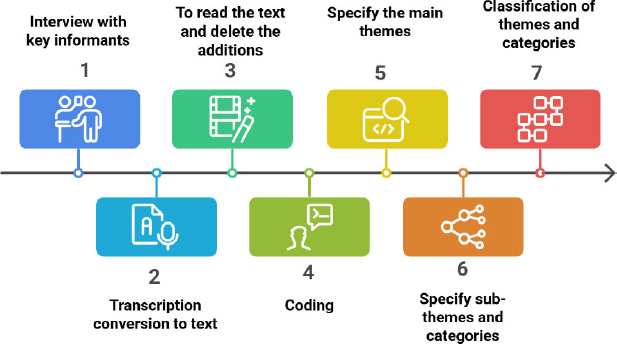
The steps of qualitative data analysis.
The main interview questions included: Please describe your experience of participating in the Arbaeen MGs. Can you describe a typical day during your deployment in the Arbaeen operation?
What operational challenges did you experience while working during the Arbaeen MGs, and how did you manage them? The time for conducting the interviews was determined in advance with the participants. The approximate duration of the interviews was between 45 and 60 minutes. Interviews were conducted from 11/01/2025 to 21/05/2025 in a location agreed upon by the participants and where they felt comfortable.
In this study, data collection continued until data saturation was reached. Although no universally accepted definition or standardized approach to determining data saturation exists, it is generally described as an iterative process in which participants are continuously added until no new information, themes, or insights emerge from the collected data [20]. Saturation was achieved by the nineteenth interview. Nevertheless, two further confirmatory interviews were performed to ensure the adequacy of the data and to verify that no additional codes emerged.
2.4. Ethical Considerations
Ethical considerations in this study included explaining the importance, objectives, and methods; providing optional participation in the study; recording the interviews; maintaining data confidentiality at all stages; obtaining written consent; and mutually agreeing on the time and place of the interview. Individuals were assured that the obtained information would only be used for research purposes, and throughout the study, researchers took steps to anonymize data, protect participants' identities, and ensure that personal information was kept secure. In qualitative research, saturation is achieved when additional data no longer yield new insights and the findings become repetitive. The purpose of reaching saturation is to ensure the validity and completeness of the categories. Consequently, the number of participants is not predetermined, and sampling continues until saturation is attained.
In this study, saturation was reached after the nineteenth interview, and two additional interviews were conducted to confirm this, neither of which generated any new codes.
2.5. Data Analysis
Data analysis was conducted in five steps, following the Graneheim and Lundman approach [21].
First, the recorded interviews were transcribed verbatim and compared with the original file to ensure accuracy. The text was read several times in the second step to obtain a general impression. In the third step, meaning units for each interview were identified and coded. Meaning units consisted of words, sentences, or paragraphs that shared related aspects of content and context. In the fourth step, codes with similar meanings were categorized into more general subcategories. In the final step, by comparing the subcategories and reflecting deeply and carefully, the latent content of the data was identified and organized into main categories. Qualitative data analysis was performed using MAXQDA 20.
The quotations selected for this manuscript were translated into English by bilingual members of the research team. The translated excerpts were then independently reviewed by a bilingual researcher for conceptual accuracy and consistency with the original Persian text. Discrepancies were resolved by discussion and consensus.
2.6. Reliability and Validity
To ensure the trustworthiness of the findings, the criteria proposed by Guba and Lincoln were applied, including credibility, dependability, confirmability, and transferability [22]. Credibility was enhanced through prolonged engagement with the study field over a four-month period, continuous observation, and purposive maximum variation sampling to ensure diversity in participants’ educational background, job position, and workplace. Member checking was performed by sharing summaries of preliminary findings and category interpretations with five participants, who confirmed that the findings accurately reflected their experiences. In addition, regular peer debriefing sessions were conducted among three members of the research team to discuss coding decisions and category development.
Dependability and confirmability were strengthened by maintaining a clear and traceable record of data collection, coding, analysis, and interpretation processes, allowing the research process to be reviewed and evaluated by other team members. Efforts were also made to minimize the influence of researcher bias and preconceptions throughout the analysis. Transferability was supported by providing rich descriptions of the study context and participant characteristics, enabling readers to assess the applicability of the findings to other settings.
3. RESULTS
3.1. Demographic Information of Participants
Most of the participants in this study were male (17 people, 81%), had a bachelor's degree (14, 67%), and had attended Arbaeen MGs at least 5 times (16, 76%). The demographic information of the interview participants is presented in Table 1.
| Characteristic | Category | n (%) |
|---|---|---|
| Gender | Male | 17 (81.0) |
| Female | 4 (19.0) | |
| Educational qualification | Bachelor's degree | 14 (66.7) |
| Master's degree or above | 7 (33.3) | |
| Years of Red Crescent service | 1–5 years | 3 (14.3) |
| 6–10 years | 7 (33.3) | |
| >10 years | 11 (52.4) | |
| Arbaeen deployment experience | <5 missions | 5 (23.8) |
| ≥5 missions | 16 (76.2) | |
| Operational role | Medical personnel | 6 (28.6) |
| Rescue and relief personnel | 5 (23.8) | |
| Logistics and support personnel | 4 (19.0) | |
| Operational coordination officers | 3 (14.3) | |
| Operational managers/supervisors | 3 (14.3) | |
| Command level | Frontline responders | 10 (47.6) |
| Team leaders and section supervisors | 7 (33.3) | |
| Operational coordinators and decision-makers | 4 (19.0) | |
| Deployment location | Western border–Iraq route | 17 (81.0) |
| Eastern border | 4 (19.0) |
3.2. Main Results
After multiple rounds of data analysis and summarization, and after considering similarities and differences, 13 subcategories were organized into six main categories: (A) Resource limitations; (B) Weakness in planning; (C) Deficiencies in coordination and communication layers; (D) Weakness in the management system; (E) Deficiencies in ensuring the security and safety of personnel; and (F) Communication and sociocultural challenges. The findings suggest a multi-layered system in which structural constraints, operational deficiencies, and contextual factors interact to shape the effectiveness of disaster response during the Arbaeen mass gathering. A summary of the difficulties is given in Table 2. The findings are presented in categories and subcategories, but the analysis aimed to go beyond descriptive coding to identify latent patterns and interrelations among organizational, operational, and contextual factors impacting disaster response performance. The identified challenges occurred in three main operational settings: Iran, border crossing points, and Iraq. Some findings were context-specific, but there were several themes that reflected cross-cutting challenges that spanned multiple stages of the health response during the pilgrimage.
Table 2.
| Categories | Subcategories | Code Examples |
|---|---|---|
| Resource limitations | - Inefficient allocation of financial resources at the right time - Weaknesses in infrastructure and service delivery resources |
- Lack of access to accommodation infrastructure - Insufficient sanitation facilities - Inadequate rest areas for personnel - Challenges in providing safe drinking water |
| Weakness in planning | - Weaknesses in preparedness and service continuity plans - Lack of preparation for worst-case scenarios |
- Absence of precise deployment planning - Insufficient training - Failure to anticipate patient surges - A one-dimensional approach to preparedness and response |
| Deficiencies in the coordination and communication layers | - Lack of an integrated communication system - Organizational incoherence at the macro level |
- Disruption of inter-team communication - Limited radio frequency access - Instability of communication networks - A shortage of SIM cards |
| Weakness in the management system | - Lack of attention to psychological support - Weakness in teamwork - Weakness in operational support processes |
- Lack of recognition and reward systems - Team demotivation - Prevailing sense of individualism among personnel |
| Deficiencies in ensuring the security and safety of personnel | - Lack of safety and protective equipment - Lack of accurate assessment for deployment of forces and ambulances |
- Insufficient safety equipment - Risk of disease transmission - Threats to staff health - Centralized accumulation of supplies and logistics in a single location |
| Communication and sociocultural challenges | - Cultural and linguistic differences - Resistance to receiving medical services |
- Absence of interpreters - Lack of a pre-departure screening system for pilgrims |
3.2.1. Category 1: Resource Constraints
Resource constraints in the Arbaeen operation refer to a set of challenges faced by the Red Crescent operational teams due to shortages, limited timely access to, or inefficient distribution of financial, equipment, human, and infrastructure resources, including the shortage or inadequacy of physical facilities, equipment, and support infrastructure required to support the Red Crescent operational teams. The challenges in this category were divided into two subcategories: inefficient allocation of financial resources at the right time and weaknesses in infrastructure and resources to provide services. Participants predominantly attributed this challenge to shortcomings in planning and inter-organizational coordination within Iran, while acknowledging that its effects extended to border operations and healthcare service delivery inside Iraq.
3.2.1.1. Subcategory 1-1: Inefficient Allocation of Financial Resources at the Right Time
Delays in resource allocation, complex and lengthy bureaucracy, and inflexibility in transferring funds between different sectors lead to inefficiencies in securing and allocating the financial resources needed for the Arbaeen operation, resulting in increased operational costs, urgency in decision-making, and a decrease in the quality of services. Regarding health service delivery inside Iraq, some participants stated:
P11: “The budget considered for us arrives when we are close to the response phase; now we are 90 days away from Arbaeen. They should give us financial credit, or allow us to use our resources, sign contracts with airline companies, and be able to purchase tickets for the deployed forces at a lower price. They let us know near Arbaeen. For example, you have to bring 20 people to the ceremony. In practice, the resources that reach us late cause our costs to increase.”
P2: “I attend the Arbaeen ceremony every year, and every year I conclude that improper cost forecasting, especially in the logistics and transportation sectors, increases the financial burden on the expedition teams and reduces the efficiency of operations.”
3.2.1.2. Subcategory 1-2: Weakness in Infrastructure and Resources to Provide Services
Lack of access to accommodation infrastructure, lack of health facilities, lack of sufficient rest space for personnel, and challenges related to providing safe drinking water are among the issues that reduce the efficiency of operational teams, increase troop fatigue, and consequently decrease the quality-of-service delivery. Neglecting to meet the basic needs of operational teams, including the lack of provision of rest areas, given the teams' working conditions, causes burnout, increased psychological stress, fatigue, decreased motivation, and reduced quality of service delivery.
P8: “In the border areas, there is no proper accommodation infrastructure, and we are often settled in large tents or shacks with minimal facilities. The toilets are limited and do not meet the population; we must queue for hours to use them. This caused many health problems. There was no restroom for us, and we were standing from morning to night.”
P5: “Another problem is the lack of proper rest areas for the teams. Our shifts sometimes last 16 hours; after that, we need to rest, but there is no quiet and suitable space for this purpose.”
3.2.2. Category 2: Weakness in Planning
Weaknesses in formulating, implementing, and evaluating operational plans, and in supporting Red Crescent teams, reduce service effectiveness, increase costs, and increase the workload on operational teams. Lack of an operational completion plan, failure to leverage past experience, failure to conduct risk assessments, failure to prepare a list of common hazards, one-dimensional planning, and teams' lack of preparedness to respond to potential incidents were notable points in this category. Weaknesses in preparedness and continuity of service plans and lack of readiness to respond to worst-case scenarios were the challenges identified in this category.
3.2.2.1. Subcategory 2-1: Weaknesses in Preparedness and Service Continuity Plans
Deficiencies in the design and implementation of the preparedness plan and challenges related to service continuity during the event were identified in this category. Lack of accurate forecasting of peak times of visits and inadequate allocation of manpower, lack of a clear and reliable plan for the dispatch and return of teams, inconsistency in the timely provision of needed drug resources, insufficient training of physicians on existing drug restrictions, and lack of a clear timetable for the collection of centers after a reduction in visits were among the issues that interviewees in this study stated, which placed additional pressure on the teams.
P3: “There was no regular check-in and check-out schedule. The person who comes on a mission must know when he (she) will leave and when he (she) will return, and what he (she) must do. The last days of Arbaeen are quiet, and we do not have that many visits, but there is an insistence on keeping the center open, while there is no motivation for the teams.”
P9: “Weak operational planning also put additional pressure on the teams. The lack of coherent plans before the Arbaeen event leads to inefficient allocation of human resources and equipment.”
3.2.2.2. Subcategory 2-2: Lack of Preparedness to Respond to Worst-case Scenarios
The lack of preventive and training programs and the implementation of exercises to prepare for critical and unpredictable situations, including terrorist attacks, natural disasters, and crowding, were among the challenges and concerns of the operational teams. Due to the lack of preparedness, the operational teams were concerned about confusion and the inability to make quick decisions. On the other hand, the one-dimensional nature of the preparedness plan for providing services leads to failure to anticipate the equipment needed to respond to potential incidents, severely reducing the organization's response capacity and endangering the health and safety of pilgrims in critical situations.
P4: “We need to define different scenarios and be prepared for the worst. If there is an explosive incident, we can respond. Currently, we are deployed one-dimensionally and only provide routine services.”
P5: “The place where the emergency response training is held during Arbaeen is empty. For example, if something like a bombing occurs in the middle of the ceremony, we don't know how to react. Even the role of each team in this situation is not defined. We are always worried about what to do if a crisis occurs.”
3.2.3. Category 3: Deficiencies in the Coordination and Communication Layers
Establishing communication and defining an appropriate communication platform during the Arbaeen mass gathering is an essential function that must be considered in the operation from two perspectives: communication between operational teams and communication with pilgrims. Weaknesses in communication systems and limitations in communication networks, lack of coordination of memorandums with partner organizations, substantial organizational incoherence, and failure to transfer approved memorandums to operational levels cause delays in service delivery, dissatisfaction, and confusion among personnel.
3.2.3.1. Subcategory 3-1: Lack of an Integrated Communication System at Different Levels
The lack of provision for an integrated and appropriate communication system between operational teams, the inadequacy of SIM cards and wireless devices distributed among teams, the failure to remove restrictions on the use of the communication system in Iraq, and the use of unstable communication devices such as mobile phones and disruptions in available communication networks due to border conditions lead to the impossibility of information-based decision-making, increased response time, and disruptions in operations.
P15: “The number of SIM cards for doctors and expedition teams is not proportional to the teams. There is no communication between the teams when we send them on pilgrimage. We need medical teams in Iraq for about twenty days. Last year, the number of SIM cards was not proportional to the teams, and because they could not easily communicate with their families, it caused dissatisfaction among them.”
P12: “We do not have wireless communication in Iraq. Frequencies are prohibited. Frequency licenses must be obtained. We are confused.”
3.2.3.2. Subcategory 3-2: Organizational Incoherence at the Macro Level
Desirable inter-organizational and intra-organizational coordination leads to improved management of MGs. Failure to coordinate in a Memorandum of Understanding between organizations and different organizational departments before implementing operations and intra-organizational incoherence during operations leads to delays in service provision, failure to provide an appropriate response, and weakness in crisis management.
P6: “Before the deployment, coordination must be made between the organization's internal departments and our other partners and colleagues in the Arbaeen operation at the macro-management level. A memorandum of understanding must be concluded, and the medicines needed must be announced. On the other side of the border, we must meet the needs of the Ministry of Health teams and the medical community. It is necessary to conclude a memorandum of understanding to determine the mechanism for supplying medicines. For example, the medicine should be purchased by medical sciences and made available to us for transfer, or the amount of medicine we are responsible for supplying must be determined.”
P9: “We had problems with the checkpoints to move the injured and patients. Coordination is being done between the two countries, but it is not transferred to the operational teams”.
3.2.4. Category 4: Weakness in the Management System
Weaknesses in supporting operations and meeting the logistical and operational needs of operational teams, ignoring the psychological and spiritual needs of personnel, lack of training programs and psychological empowerment of operational teams, and lack of training in teamwork skills lead to reduced human resource productivity and the improper use of organizational resources. Lack of attention to psychological support, weakness in teamwork, and weakness in operational support processes were identified in this category.
3.2.4.1. Subcategory 4-1: Lack of Attention to Psychological Support
Neglecting the motivational and spiritual dimensions of volunteers (such as the opportunity to make pilgrimages), the need to implement training programs for psychological preparation under challenging situations, the lack of specialized psychological services during and after operations, and weaknesses in recognition and encouragement systems lead to reduced motivation, psychological burnout, and ultimately to reduced volunteer cooperation and weakening organizational goals.
P21: “One problem I think we have is that our view of human resources is instrumental—most of the forces we bring come voluntarily. We need to motivate them to keep them in the organization. Sending them for pilgrimage is the only thing most of them want.”
P7: “There is a need for psychological support in the teams. The aid workers need a psychologist after the deployment. During the Arbaeen operation, there is a lack of psychologists. There needs to be a specialist present for psychological support.”
3.2.4.2. Subcategory 4-2: Weakness in Teamwork
Weakness in developing and effectively managing teams leads to a lack of interdepartmental cooperation, obedience to the team leader, inefficiency in dividing tasks, waste of time, and slow service delivery. Skills and knowledge alone are insufficient without effective teamwork during the large-scale Arbaeen gathering. Maintaining response speed under the high workload of the Arbaeen operation requires effective teamwork.
P13: “One of our management problems is the interference of non-specialists in treatment. A person comes in from a position of power and does not allow us to establish triage, while for us as a treatment team, we know how much triage helps reduce the burden on clients. Since we needed triage, we had to address it, which created a challenge for us to solve it.”
P17: “People like to work individually, and there is no effective communication between teams, and we have disagreements. Especially the new volunteers who are added do not have a team spirit and interfere in everything. They do not obey the team leader.”
3.2.4.3. Subcategory 4-3: Weaknesses in Operational Support Processes
Weaknesses in the provision, procurement, and management of resources and facilities needed to support operational teams, including the lack of adequate rest areas for personnel, incoordination in the provision of equipment, weakness in logistics, and the lack of sustainable and efficient mechanisms for the transfer and maintenance of equipment, lead to reduced motivation and satisfaction of personnel, a decline in the efficiency of operational teams, and ultimately a decrease in the willingness of experienced forces to participate in future operations, which threatens the sustainability and continuity of services in the long term.
P8: “Last year, when the resources were at the disposal of the peace organization, there was so much inconsistency, and I was annoyed that I told myself that if it were like this next year, I would not come to Arbaeen. I had also traveled in previous years when the medical center had resources. They would quickly give me permission to buy or buy for the center, and we had no problems with support.”
P10: “We had a hard time getting snacks for the teams. There was traffic, it was not easy to get around, we had to go by cart, whereas in previous years we used to buy with our own money, and the staff was happy. Last year, there was a lot of dissatisfaction, and they were right.”
3.2.5. Category 5: Deficiencies in Providing Safety and Security for Personnel
It is necessary to pay attention to risk assessment, use risk reduction strategies, and improve the safety and security of operations in MGs. Operational teams are exposed to many risks, including terrorist incidents, crowding, infectious diseases, etc., which, in addition to the crowd, can affect teams and equipment. This category includes two subcategories: lack of safety and protective equipment for personnel and lack of accurate assessment for deploying forces and ambulances.
3.2.5.1. Subcategory 5-1: Lack of Safety and Protective Equipment for Personnel
The lack of personal protective equipment (such as masks and disinfectants) and the provision of standard hygiene kits, especially when dealing with pilgrims with low health literacy, put personnel at risk of contracting infectious diseases. This threatens the health of Red Crescent teams and reduces the organization's operational capacity.
P14: “For training, we need to communicate closely with pilgrims. Unfortunately, some pilgrims have low health literacy. We need at least masks and disinfectants, which we were not provided”.
P17: “The hygiene kit is a necessity for us. This year, we did not have personal protective equipment, only a few masks”.
3.2.5.2. Subcategory 5-2: Lack of Accurate Assessment for the Deployment of Forces and Ambulances
Deficiencies in the location and deployment of human and logistical resources in the region, including the concentration of resources in one area and the lack of separation of operational spaces (such as locating the clinic and ambulance parking in the same area), increase the system's vulnerability and the occurrence of communication misunderstandings between clients and operational teams. In the event of an incident, operational pressure on other teams increases in addition to the loss of resources.
P13: “The ambulances were stationed in one place in Najaf. If something happens, removing and dispatching them to several places is difficult. I think ambulances should be stationed in several different places so that dispatch is easier. In case of an accident, we do not lose all the resources for several ambulances.”
P16: “The other teams were also stationed at our clinic. Even the ambulance parking lot was at our hotel and clinic. Our ambulances had been dispatched, and we needed an ambulance. Because the parking lot of other ambulances was also at our place, the patient's companions thought that we deliberately did not intend to dispatch an ambulance, and we faced a challenge.”
3.2.6. Category 6: Communication and Sociocultural Challenges
Linguistic diversity, cultural differences, variations in communication practices, and limited access to culturally appropriate health information created challenges for Red Crescent operational teams during the Arbaeen ceremony. These factors affected the effectiveness of health communication, the delivery of public health messages, and the utilization of services.
3.2.6.1. Subcategory 6-1: Linguistic and Cultural Barriers to Effective Communication
Language differences and insufficient interpreters in teams stationed in areas with high pilgrim traffic cause dissatisfaction among pilgrims, difficulty communicating for operational teams, and reduced effective message transmission.
P21: “One of the challenges we have is language. We had three translators, but now only one is in the approved chart. We were looking for a translator there.”
P19: “The language difference is a problem for us. It wasn't easy to convey the message. Even though we had a few people fluent in Urdu, we still couldn't communicate easily because the crowd was so large”
3.2.6.2. Subcategory 6-2: Resistance to Accepting Medical Services
The lack of a pre-dispatch screening system, appropriate cultural development, beliefs and convictions regarding the healing culture, and pilgrims' disregard for treatment recommendations lead to pressure on medical teams and disruption in the service delivery.
P20: “High-risk patients with high-risk neurological diseases did not bring their medications with them for healing, or left them at the border entrance. Some people with chronic diseases, such as high blood pressure and diabetes, came without medication. Medicine and insulin were unavailable in Iraq, which was a big challenge. A mechanism like the Hajj ceremony must be defined to issue permits to attend the ceremony.”
P5: “The pilgrim knows they do not have the conditions for the trip. He (she) knows that he (she) is taking special medication that is not available on the other side of the border. In that situation, he (she) endangers his (her) life and creates a challenge for himself and us. People with underlying diseases who come without medication present a problem for the transport service”.
4. DISCUSSION
The challenges identified in this study fall into six categories that function as an interconnected system. Although the identified challenges can be classified into six distinct categories, these categories operate in practice as an interconnected and interdependent system, such that a weakness in any component can affect the other components through mutual interactions. The present study explored the challenges faced by Red Crescent operational teams during the Arbaeen mass gathering. The identified challenges included “Resource limitations”, “Weakness in planning”, “Deficiencies in coordination and communication layers”, “Weakness in the management system”, “Deficiencies in ensuring the security and safety of personnel”, and “Communication and sociocultural challenges”.
4.1. Category 1: Resource Limitations
One of the most critical challenges faced by the Red Crescent operational teams in the major Arbaeen operation is resource constraints, which reduce the effectiveness of relief and support services. A fundamental condition for the success of humanitarian systems in the response phase is the delivery of appropriate supplies in sufficient quantities and at the right time and place to people [23, 24]. The environment in which humanitarian organizations provide services is fraught with complexities and challenges, including time pressure and resource shortages, due to the unpredictability of demand and sudden events. At the same time, the effectiveness of any relief effort depends mainly on the speed of resource provision [25]. In the Arbaeen operation, budget constraints and delays in allocating financial resources are among the main challenges identified by the Red Crescent teams. When financial resources are allocated late or without careful planning, providing equipment, preparing bases, and attracting specialized human resources becomes difficult. MGs require sufficient resources for response before the incident occurs [26]. Research has shown that inefficient financial decision-making and limited budgets cause delays in response and reduce the effectiveness of the operation, which is more evident in the case of multi-hazards. Lack of proper planning for allocating resources severely undermines the performance of relief teams [27]. Similar resource-related challenges have been reported for Hajj operations, with adequate financial support, reliable supply chains, and coordinated logistics systems identified as critical components of preparedness for MGs [28]. Reforming the budget allocation system to implement a dynamic budgeting mechanism for timely resource transfers and proactive item provision before the Arbaeen ceremony can significantly reduce costs.
4.2. Category 2: Weakness in Planning
Planning and organizing for MGs and adequate staff training are essential. Neglecting them can cause irreparable damage. Comprehensive planning is a necessity for gatherings that have become recurring events [29]. Human capital includes health workers' knowledge, skills, and experience to do the right things. Various studies indicate that health workers’ knowledge and skills may be inadequate [30]. In the present study, the need for training of operational teams was also identified as an essential need, especially in new volunteer teams, which was consistent with the study by Lin et al., in which the improvement of the knowledge and skills of rescue teams for managing mass casualty incidents was also recognized as a necessity [31]. Various studies emphasize the necessity of planning and holding training courses and simulation exercises [32]. The feasibility of these approaches has been demonstrated [33, 34], and they can be implemented to adequately train rescue forces to respond appropriately to such events [35]. Furthermore, international frameworks and guidelines for mass gathering management emphasize the need to identify potential hazards associated with MGs. They also stress the importance of pre-planning, Mass Casualty Incident (MCI) protocols, structured triage systems, incident command systems, and routine multisectoral simulation exercises as key elements of preparedness for complex incidents involving large numbers of casualties. Operational challenges in implementing standardized patient prioritization in high-demand settings, such as Mass Casualty Incidents (MCI), are substantial. Effective triage is a cornerstone of mass casualty management and is essential for optimizing the use of limited resources during large-scale events [34]. In their study, Klassen et al. also stated that planning deficiencies can be identified through a regular training program [36]. Therefore, holding continuous exercises to improve teams' readiness for an appropriate response in emergencies and to review the correctness of implemented plans and policies has been considered essential [37, 38]. In the present study, planning deficiencies are a critical challenge affecting the readiness and optimal performance of the Crescent operational teams during the Arbaeen ceremony. The findings support the development of a comprehensive training system to be designed and implemented by the experience and expertise of operational teams, based on a training needs assessment. Holding discussion-based and debate-based exercises to test the programs, and specialized training continuously and throughout the year, adjusting the Arbaeen operational plan based on different scenarios, and using digital and modern technologies to reduce errors are suggested.
4.3. Category 3: Lack of Coordination and Communication Layers
Another challenge that most participants in the study reported was the lack of coordination and communication layers. An integrated communication system in border areas with weak infrastructure is necessary to improve the safety and efficiency of operations in MGs. The lack of supporting infrastructure, such as communication networks, leads to the inability to have a stable communication network and affects the coordination of operations [39]. Information management is of great importance in emergencies. On the other hand, the presence of people with different languages in health crises multiplies the challenges related to communication and information. Effective risk communication is essential for reducing disparities in access to, understanding of, and use of health information during MGs. Delays or disruptions in communication in MGs hinder the identification, recovery, and evacuation of patients and exacerbate emergencies [40]. Radio and mobile communications are disrupted during MGs. Disruptions in communication networks can hinder patient identification, recovery, and evacuation and exacerbate the crisis. Therefore, planning and coordination are essential to reduce the challenges responders face on the scene [41, 42]. The lack of a clearly defined incident command structure may lead to uncertainty among participants about team roles in potential emergencies. Incident Command System-based approaches enhance communication, coordination, and information management in emergency situations. They express leadership roles and allocation of resources; thus, they address critical challenges in high-stress incident management situations [43]. The communication challenges found in this study extend beyond the lack of equipment usually mentioned in cross-border MGs. Communication is crucial for disaster response. Communication systems for MGs that cross national borders must function within a range of legal, technical, and administrative frameworks. One of the key issues is the absence of roaming capability for Public Protection and Disaster Relief (PPDR) services. To overcome these barriers, investment in communication infrastructure is required, as well as the establishment of bilateral agreements, frequency licensing mechanisms, and interoperable communication protocols between the participating organizations and host country authorities [44]. Similar communication issues have been noted at large transnational MGs such as the Hajj and the Kumbh Mela, where interoperable communication technologies, emergency information-sharing platforms, and integrated command structures have been used to improve coordination [45]. The results show the need to use different communication layers, including traditional (wireless) and modern digital tools, to include interpreters in dispatch teams, to define primary and alternative communication processes, and to train operational teams in a second language to improve information management in MGs. These findings highlight the importance of bilateral coordination mechanisms with the Iraqi authorities.
4.4. Category 4: Weakness in the Management System
Another major category identified in the study was weakness in the management system. The impact of burnout in operational teams on the quality and effectiveness of operations is undeniable. Neglect and lack of psychological support for teams due to stressful and long-term working conditions lead to reduced motivation, operational accuracy, and decision-making errors [46]. Inadequate training reduces operational efficiency. Continuous training in the technical, psychological, and communication areas and holding exercises is essential for preparing forces [47]. A study by Petrudi et al. showed that the selection of managers without considering their field experience and expertise affects the different stages of risk management (prevention, preparedness, and response). Managers’ unfamiliarity with management principles confronts the organization with challenges such as a lack of financial resources and organizational coordination [48]. Failure to use previous experiences and lessons learned and employing non-specialists in large-scale operations such as Arbaeen causes neglect of vital system resources, including human resources. Lack of sleep among service providers negatively affects their personal lives and professional performance. Fatigue leads to decreased concentration, decreased motivation, and reduced performance and efficiency of personnel [42]. A study by Mason Harrell et al. showed that if psychological and safety aspects are addressed, one can expect optimal performance from the workforce. Developing resilience skills, specialized training, and organizational reforms, such as reducing workload and improving collaboration, can help mitigate these challenges and increase their well-being [49].
Addressing the mental health of the workforce and investing in continuous training are essential requirements for improving the efficiency of rescue and relief operations. Over time, burnout and demotivation of rescue workers will lead to job abandonment, reduced recruitment of volunteers, and ultimately damage the organization's sustainability. The well-being of rescuers should also be considered an operational resource. The comprehensive framework for protecting the health of rescuers includes pre-deployment health screening, fatigue management protocols, mental health support, access to rest and recovery facilities, occupational health monitoring, and post-deployment follow-up, which should be given due attention.
4.5. Category 5: Deficiencies in Ensuring Personnel Security and Safety
Attention to safety, the presence of a safety officer to assess and identify threats, and the use of personal protective equipment are essential for operational efficiency and should not be overlooked. Another challenge that the Red Crescent operational teams face is the deficiency in ensuring personnel security and safety. Ignoring the development of a detailed plan for the deployment of ambulances and access to medical centers threatens the safety and security of operations [50-52]. Given how the Arbaeen ceremony is held outdoors, the spread of respiratory infectious diseases threatens the operational teams' health. Personal Protective Equipment (PPE) is essential to protect human resources from threats [53]. During the Arbaeen ceremony, personnel are busy providing services for long hours. Prolonged exposure to large numbers of patients, lack of Personal Protective Equipment (PPE), work pressure, and insufficient rest indirectly increase the risk of infection of healthcare personnel [52]. Increased workload and multiple tasks assigned to personnel significantly increase their occupational health vulnerability [54]. Responder safety should be considered in a comprehensive occupational health framework. The main threats to responder health at MGs have been identified as fatigue, heat-related illness, psychological distress, responder injuries, transportation hazards, and crowd-related incidents [55, 56]. Therefore, protecting operational personnel requires integrated surveillance, risk assessment, preventive interventions, and ongoing monitoring [26].
Implementing infection prevention and control programs, risk assessment and control, and ambulance deployment location models in service environments is essential to protect human resources and logistics and increase operational resilience. Designing an intelligent network for deploying forces and ambulances, comprehensive practical training and continuous practice, and facilitating access to personal protective equipment during operations are recommended.
4.6. Category 6: Communication and Sociocultural Challenges
Attending the Arbaeen ceremony is a unique and challenging situation, given the large number of participants from different countries who speak different languages and have diverse cultural characteristics, health beliefs, and customs. Finding an interpreter to communicate with the participants during the operation is a significant challenge [57]. Communication barriers arising from language and cultural differences are well-recognized challenges in MGs. Designing multilingual training systems and employing bilingual or multilingual coordinators to reduce misunderstandings and improve communication has been recommended [58]. Religious beliefs about healing, non-adherence to medication during travel, and lack of essential medicines are other factors that increase the burden of emergency room visits and challenge response efforts for medical teams in MGs [59]. The availability of interpreters, multilingual communication tools, digital platforms and applications with offline capability, staff training on cultural and religious sensitivity to facilitate communication, engagement of trusted religious and community leaders, and implementation of participatory health education strategies are essential components of health communication management during MGs.
5. LIMITATIONS AND STRENGTHS OF THE RESEARCH
One of the main strengths of this study was the use of qualitative content analysis to explore the operational challenges faced by Arbaeen response teams. Focusing on the concerns and challenges of operational personnel may help improve motivation and enhance the preparedness of the IRCS for future MG operations. Another strength was the purposive recruitment of participants with direct experience in the Arbaeen mass gathering, which enabled an in-depth understanding of real operational challenges.
This study also had several limitations. First, the findings relied primarily on participants’ recollections, which may have been affected by recall bias due to the time gap between the Arbaeen operations and the interviews. Although official reports were provided before interviews to facilitate recall, exposure to these materials may also have influenced participants’ memories or emphasis on specific events. Second, the predominance of male participants may limit the transferability of the findings. Third, because participants were affiliated with the Red Crescent Organization, social desirability bias and organizational hierarchy may have influenced their responses regarding operational strengths and weaknesses. In addition, the study relied mainly on interview data and did not triangulate findings using direct observations, incident logs, operational reports, or policy documents. Finally, the findings reflect the experiences of Iranian Red Crescent personnel and may not be fully transferable to other organizational or mass gathering contexts. The identified challenges should therefore be interpreted as interconnected components of a complex operational system rather than isolated deficiencies.
5.1. Practice and Policy Implications
This research, by identifying the key challenges of relief operations in the Arbaeen mass gathering, relies on field data to reform existing structures and move towards a resilient governance model to improve the efficiency of responsive relief systems, which comprises six principal axes. The first axis recommends developing a flexible and forward-looking resource allocation system tailored to operational needs and institutionalizing the definition of the “rapid response budget” process in national response structures. The second axis refers to developing a national roadmap for “health-oriented exercises” and designing and institutionalizing a comprehensive operational plan based on different scenarios at the macro level to improve the resilience of relief service providers. In the third axis, it is necessary to strengthen sustainable communication layers, including signing border agreements with the host country to ensure radio coverage and access to local networks, and establishing a mobile communication hub. The fourth axis considers it necessary to design a psychological support structure, hold continuous multidimensional training (technical, psychological, managerial) for effective human resource management, and define competency indicators for operational managers. The fifth axis states that at the policy level, there is a need to develop a plan to establish medical services based on scientific principles. Finally, the sixth axis suggests the need to define a cultural responsiveness framework and include it in cultural programs and design structures to attract multilingual volunteers using the capacity of immigrants and international students in the country.
5.2. Prioritization of Interventions and Feasibility
Based on the findings, prioritization should be based on the timeline for implementing the interventions needed to improve mass gathering management. Short-term priorities include improving the availability of Personal Protective Equipment (PPE), strengthening communication mechanisms, expanding multilingual support, and enhancing responder welfare services. Medium-term priorities include establishing integrated communication systems, institutionalizing responder health protection programs, and conducting multisectoral simulation exercises. Long-term priorities include developing cross-border agreements, establishing surveillance infrastructure, and reforming resource allocation mechanisms. This study identifies several recommendations that require evaluation for their political, legal, financial, and operational feasibility. The ability to communicate on the radio depends on bilateral agreements and frequency licensing mechanisms. Recruiting multilingual personnel, optimizing ambulance deployment, and establishing cross-border referral systems requires sustainable funding, a suitable workforce, and regulatory support. Further implementation research is needed to evaluate the feasibility and scalability of these interventions.
CONCLUSION
The main operational challenge of the Arbaeen mass gathering is not a single deficiency but the interaction of multiple challenges in a complex operational system. Resource allocation delays weaken preparedness planning. Poor planning leads to communication and coordination failures. The lack of communication further fragments the management structure. These collective deficiencies ultimately impact responder well-being, operational safety, and quality of care delivery. The systems perspective emphasizes that addressing the interdependencies across the entire operational system is crucial, as building individual components in isolation is likely insufficient. Therefore, these challenges should be considered system-level issues rather than isolated operational issues. Practical considerations suggest the need for a phased, prioritized strengthening of Red Crescent preparedness.
The findings also suggest that technologies should be implemented according to specific operational needs. Digital communication platforms can support interagency coordination in response operations, workforce management systems can aid in personnel deployment, and surveillance technologies can improve situational awareness and public health surveillance, provided they are supported by appropriate governance, training, and regulatory frameworks. This study provides an in-depth understanding of operational experiences, but the findings may not be fully transferable to other organizational settings or mass gathering contexts. Future research should include the perspectives of multiple stakeholders and additional data sources to further validate and extend these findings.
AUTHORS’ CONTRIBUTIONS
The authors confirm their contributions to the paper as follows: A.A. and H.F.: Conceived the presented idea; A.A.: Developed the theory and conducted the interviews; A.S. and M.S.: Verified the analytical methods; H.F.: Contributed to original draft preparation and writing, review, and editing. All authors discussed the results and contributed to the final manuscript.
LIST OF ABBREVIATIONS
| MGs | = Mass Gatherings |
| WHO | = World Health Organization |
| PPE | = Personal Protective Equipment |
| PPDR | = Public Protection and Disaster Relief |
| IRCS | = Iranian Red Crescent Society |
ETHICS APPROVAL AND CONSENT TO PARTICIPATE
This study was approved by the Ethics Committee of Kerman University of Medical Sciences (Ethics Code: IR.KMU.REC.1403.421) and was conducted in 2025.
HUMAN AND ANIMAL RIGHTS
All procedures involving human participants were conducted in accordance with the ethical standards of the committee responsible for human experimentation (institutional and national), and with the Helsinki Declaration of 1975, as revised in 2013.
CONSENT FOR PUBLICATION
Written informed consent was obtained from all participants prior to data collection. Participants were informed of their right to withdraw from the study at any time without providing a reason. To ensure confidentiality and anonymity, each participant was assigned a unique identification code, and all identifying information was removed from interview transcripts during data analysis. Information that could indirectly reveal participants’ identities, such as specific job titles, operational positions, locations, or unique experiences, was generalized or omitted in the reporting.
AVAILABILITY OF DATA AND MATERIALS
All the data and supporting material is available within the article.
ACKNOWLEDGEMENTS
The authors would like to acknowledge all the study participants.