All published articles of this journal are available on ScienceDirect.

Toward a Healthy Puberty Model for Adolescents with Intellectual Disabilities: A Qualitative Study using the PRECEDE Framework
 iD
Hardisman Dasman3
iD
Alfan Miko4
iD
Amel Yanis5
iD
iD
Hardisman Dasman3
iD
Alfan Miko4
iD
Amel Yanis5
iD
Authors Info & Affiliations
Abstract
Introduction/Objective
Adolescents with intellectual disabilities have greater challenges during puberty. These stem from cognitive limitations, poor access to disability-responsive reproductive health education, and cultural taboos around sexuality. Most studies only address one aspect at a time. Few use integrated, systematic frameworks-especially in low- and middle-income settings. This study explored the experiences, knowledge, and contextual factors related to healthy puberty for adolescents with mild and moderate intellectual disabilities. The findings aim to develop a contextualized conceptual model to guide intervention and policy.
Methods
This phase employed an interpretive qualitative design in Batam City, Indonesia. A total of 19 informants were purposively selected, comprising adolescents with intellectual disabilities, parents/caregivers, health-sector stakeholders, and community health providers. Data were collected in 2024 through semi-structured, in-depth interviews, observations, and document reviews. Interview data were analyzed using Miles and Huberman’s approach. The analysis followed the PRECEDE framework (Predisposing, Reinforcing, and Enabling Constructs in Educational/Environmental Diagnosis and Evaluation) to examine multi-level determinants of healthy puberty.
Results
Adolescent understanding of puberty was fragmented and mainly experiential. Predisposing factors included poor reproductive health knowledge, myths, cultural taboos, and cognitive limitations. Enabling factors included access to practical self-care training, visual and repetitive learning materials, reproductive health information, and disability-responsive health services. However, these resources remained limited, inconsistently available, and insufficiently coordinated across home, school, and healthcare settings. Parental communication, school-based assistance, family norms, home-school collaboration, and the involvement of health workers served as reinforcing factors. Nevertheless, their effectiveness was constrained by limited confidence, inadequate guidance, and insufficient resources.
Discussion
Adolescents with intellectual disabilities experience puberty with a fragmented, experience-based understanding due to limited structured education and sociocultural constraints. The PRECEDE framework highlights how predisposing, enabling, and reinforcing factors interact to shape preparedness and self-care. Gaps in parental capacity, school guidance, and disability-responsive health services further limit effective support. These findings emphasize the need for integrated, multi-level interventions across family, education, and health systems.
Conclusion
These determinants shaped a PRECEDE-based model. This model shows how multi-level factors impact preparedness, self-care competence, and safety during puberty. This study delivers a multi-informant qualitative analysis in an urban Indonesian setting. It introduces a PRECEDE-informed model to strengthen disability-responsive puberty education and reproductive health interventions in low- and middle-income areas.
1. INTRODUCTION
Adolescence is a critical period of major physical, psychological, and social change marked by puberty. For those with intellectual disabilities, understanding body changes, maintaining hygiene, and managing social situations present extra challenges. They are also more vulnerable to sexual exploitation. Many struggle to distinguish safe from unsafe physical contact, especially when sexuality is not openly discussed [1].
Menstruation and other pubertal changes are often especially difficult for adolescents with intellectual disabilities. Many need help managing hygiene and self-care. Poor understanding of puberty and too little guidance from parents or teachers can cause anxiety. It can also make youths rely more on caregivers, limiting their independence. Past studies show parents often feel unprepared or uneasy discussing puberty or reproductive health. This is often due to their own lack of knowledge, cultural taboos, and few educational resources [2]. Similarly, teachers and healthcare providers frequently lack structured guidelines and adequate training to deliver developmentally appropriate puberty education [3].
Worldwide, the sexual and reproductive health needs of people with disabilities are often overlooked. Adolescents with intellectual disabilities face many barriers to reproductive health services. These include communication problems, negative social attitudes, and a lack of disability-responsive programs [4-7]. Their sexual and reproductive rights are still often ignored [8]. While more research covers sexuality education for these adolescents, most studies focus on either adolescents or parents. Few look at how adolescents, families, schools, and health systems interact [9]. As a result, little is known about how these factors shape healthy puberty for this group, particularly in lower-income countries.
In Indonesia, education on sexuality and reproductive health for adolescents with intellectual disabilities is still fragmented and inconsistently provided in both family and school environments. Prior research has pointed out the limited preparedness of teachers, the absence of structured curricula, and a lack of specialized support necessary for delivering developmentally appropriate sexuality education to children with special needs [10]. National adolescent health programs mainly focus on the general population. They often do not serve the needs of those with intellectual disabilities. This group remains underserved, despite having equal rights to information and care [11]. Most Indonesian studies focus on knowledge, parent-child communication, or school-based education [12-15]. Few combine family dynamics, school setting, cultural norms, and the health system into a comprehensive framework for healthy puberty for these adolescents.
To address these complex and interrelated determinants, this study is guided by the PRECEDE model [16]. This model offers a systematic way to examine predisposing, enabling, and reinforcing factors that influence health behaviors and outcomes among adolescents with mild and moderate intellectual disabilities in an urban Indonesian context. This study also integrates perspectives from adolescents, parents, and health service providers. It seeks to identify multilevel factors influencing healthy puberty. To date, no study has developed a PRECEDE-informed model of healthy puberty for adolescents with intellectual disabilities based on multi-informant qualitative evidence from a low- and middle-income country context.
This study makes three main contributions. First, it describes puberty experiences in a setting where disability-responsive reproductive health services are still limited. Second, it advances theory by demonstrating how behavioral, family, institutional, and cultural factors align with a PRECEDE-informed framework. Third, it introduces a preliminary conceptual model for healthy puberty to guide future validation and interventions.
The present study constitutes the first qualitative phase of a multi-stage research program aimed at developing a comprehensive healthy puberty model for adolescents with intellectual disabilities. This study aims to: (1) examine how adolescents with intellectual disabilities understand and experience puberty; (2) identify individual, familial, school-based, cultural, and health-system factors influencing healthy puberty; and (3) develop a preliminary conceptual model to guide subsequent quantitative testing and intervention development. Guided by these objectives, the study addresses the following research questions:
(RQ1) How do adolescents with intellectual disabilities understand and experience puberty?
(RQ2) What multi-level determinants influence healthy puberty among adolescents with intellectual disabilities?
(RQ3) How can these determinants be synthesized into a conceptual model to guide future intervention development?
2. METHODS
2.1. Research Design
This study used an interpretive qualitative design to explore healthy puberty experiences and determinants for adolescents with mild and moderate intellectual disabilities. It is the first phase of a sequential research plan to develop a model of healthy puberty. The study examines how knowledge of puberty, self-care, beliefs, and support systems is formed at home, at school, and in health care settings. Data were collected in 2024 in Batam City, Indonesia, in places familiar to participants: special schools, community health centers, and their homes.
The qualitative research process followed a staged interpretive design. It encompassed contextual case selection, situated data generation, and interpretive thematic analysis, leading to the development of a conceptual model. Figure 1 illustrates the sequential and iterative processes undertaken to generate a contextualized understanding of healthy puberty among adolescents with intellectual disabilities.
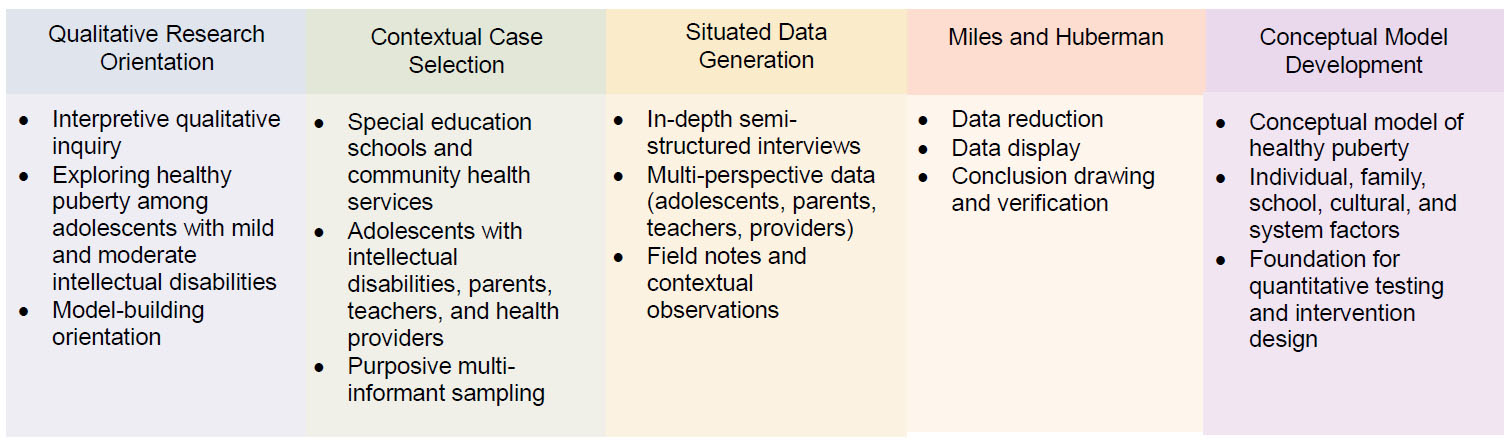
Stages of the qualitative research design.
2.2. Informants and Sampling
Informants were selected using purposive sampling based on their relevance to the research objectives and the principle of triangulation across multiple participant groups. The study involved: (1) adolescents with mild and moderate intellectual disabilities; (2) parents of adolescents with intellectual disabilities; (3) teachers engaged in the education and life-skills training of adolescents with intellectual disabilities; (4) stakeholders responsible for adolescent health programs; and (5) health-care providers implementing adolescent reproductive health programs at community health centers. Adolescents were recruited with parental accompaniment to ensure ethical safeguards and communicative support during interviews. The inclusion criteria for adolescent participants were: (1) aged between 14 and 18 years; (2) diagnosed with mild or moderate intellectual disability; (3) able to communicate in the Indonesian language; (4) in stable physical condition, cooperative, and willing to participate; and (5) residing in Batam City. Parents were qualified for the study if they were directly involved in caring for and supervising adolescents with intellectual disabilities and were willing to participate. Teachers were eligible to participate if they were directly involved in teaching adolescents with intellectual disabilities, had experience providing guidance on life skills, personal hygiene, or puberty-related issues, were able to communicate in Indonesian, and provided informed consent. Stakeholders and health-care providers were eligible if they: (1) were directly involved in adolescent health or reproductive health programming; (2) were able to communicate in the Indonesian language; (3) provided informed consent to participate; and (4) resided in Batam City.
A total of 20 individuals participated in the study, comprising eight adolescents with mild-to-moderate intellectual disabilities, eight parents or caregivers, one special education teacher, two primary healthcare providers, and one district-level coordinator of adolescent health programs. The adolescent participants, aged 14-18 years, were the primary informants regarding their experiences of puberty and self-care routines. The parent participants provided insights into communication practices, caregiving activities, and support mechanisms during puberty. The special education teacher provided information on school-based life-skills instruction, hygiene and self-care education, teaching strategies, available educational resources, and home-school collaboration. One key informant was the coordinator of the Adolescent Health Care Program (PKPR) at the Batam City Health Office. Two supporting informants were midwives at community health centers responsible for implementing the PKPR program.
2.3. Data Collection
Data were collected through semi-structured in-depth interviews, non-participant observations, and document review. Interviews were conducted face-to-face with adolescents with intellectual disabilities, parents, Teachers, district Health Office stakeholders, and health-care providers at community health centers. The interview with adolescents with moderate intellectual disabilities or communication difficulties was conducted by a parent or caregiver to provide emotional reassurance or communication support as needed. The accompanying person was still asked not to intervene too much during the interview process. The parents in this study also served as participants, with interviews conducted separately to provide additional information about their experiences and insights related to puberty and support practices. Interview guides were developed based on the study objectives and key conceptual domains, including experiences of puberty, reproductive health knowledge, self-care practices, beliefs and myths, parental communication, policy perspectives, service delivery practices, program implementation, coordination mechanisms, and perceived service gaps for adolescents with intellectual disabilities. All interviews were audio-recorded with participants’ consent. Observations were undertaken in home and school settings to capture adolescents’ self-care routines, contextual interactions, and forms of environmental support. Field notes documented setting characteristics, interactional dynamics, and non-verbal responses to enrich contextual interpretation. In addition, relevant literature, policy documents, and program reports related to adolescent reproductive health and disability inclusion were reviewed to contextualize program frameworks, service structures, and implementation gaps. All interviews were conducted in Indonesian, transcribed verbatim, and anonymized prior to analysis to ensure confidentiality.
2.4. Data Analysis
Data were analyzed using the qualitative data analysis approach proposed by Miles and Huberman [17], which involves an iterative process of data reduction, data display, and conclusion drawing and verification. This analytic framework was selected because it facilitates the systematic organization of complex qualitative data while supporting in-depth interpretive analysis across multiple participant groups.
During data reduction, interview transcripts and field notes were repeatedly reviewed to identify meaningful units, which were then condensed, coded, and categorized into themes related to puberty knowledge, self-care practices, beliefs, parental roles, and access to reproductive health services. The coded data were subsequently organized into matrices and thematic summaries to facilitate comparisons across participant groups, including adolescents with intellectual disabilities, parents, policymakers, and health-care providers. Patterns, similarities, and differences across informants were examined through narrative and visual data displays. Conclusions were drawn and verified through iterative review of transcripts, cross-checking with field notes, and comparison across participant groups to ensure analytic credibility. The analysis was guided by the PRECEDE framework to identify multi-level determinants of healthy puberty, resulting in the development of a conceptual model encompassing individual, interpersonal, and structural factors.
2.5. Trustworthiness and Rigor
Several strategies were employed to ensure trustworthiness and rigor. Credibility was enhanced through triangulation of data sources and methods, involving adolescents, parents, stakeholders, and healthcare providers, as well as interviews, observations, and document reviews. Member checking was conducted by presenting preliminary themes to selected participants to verify the accuracy and resonance of the interpretations. Transferability was addressed by providing detailed descriptions of the research context, participant characteristics, and findings, enabling readers to assess the applicability of the results to similar settings. Dependability was strengthened by maintaining an audit trail documenting data collection procedures, coding decisions, and analytic processes, which was subsequently reviewed by academic supervisors acting as external auditors. Confirmability was ensured through systematic documentation of transcripts, field notes, and analytic memos, as well as through independent review of selected transcripts and thematic interpretations to confirm that the findings were grounded in the data rather than influenced by researcher bias.
3. RESULTS AND DISCUSSION
3.1. Results
3.1.1. Respondents’ Characteristics
This study involved 19 informants representing adolescents with intellectual disabilities, health-care providers, and a district-level program coordinator (Table 1). Eight adolescent participants were aged 14-18 years and enrolled in Grades IX-X of special education schools, with five classified as having mild intellectual disabilities and three as having moderate intellectual disabilities. This distribution allowed exploration of puberty experiences across varying levels of cognitive functioning. Eight parents were also included to offer insights into caregiving practices, communication styles, and support during adolescents’ pubertal development. In addition, two primary health-care providers (diploma-level midwives) and one district adolescent health program coordinator (bachelor’s degree) were included to provide institutional and system-level perspectives.
| Code | Informant Category | Age (years) | Education Level | Participant Characteristics |
|---|---|---|---|---|
| A | Adolescent Health Care Program Coordinator (PKPR), District Health Office | 45 | Bachelor’s degree | - |
| I1 | Adolescent with intellectual disability | 15 | Grade IX, special education school | Mild intellectual disability |
| I2 | Adolescent with intellectual disability | 16 | Grade IX, special education school | Mild intellectual disability |
| I3 | Adolescent with intellectual disability | 16 | Grade IX, special education school | Mild intellectual disability |
| I4 | Adolescent with intellectual disability | 15 | Grade IX, special education school | Mild intellectual disability |
| I5 | Adolescent with intellectual disability | 18 | Grade X, special education school | Mild intellectual disability |
| I6 | Adolescent with intellectual disability | 17 | Grade X, special education school | Moderate intellectual disability |
| I7 | Adolescent with intellectual disability | 15 | Grade X, special education school | Moderate intellectual disability |
| I8 | Adolescent with intellectual disability | 14 | Grade IX, special education school | Moderate intellectual disability |
| M | Primary health-care provider (PKPR implementer, community health center) | 31 | Diploma in Midwifery | - |
| D | Primary health-care provider (PKPR implementer, community health center) | 35 | Diploma in Midwifery | - |
| P1 | Parent | 37 | Bachelor’s degree | Housewife |
| P2 | Parent | 39 | Senior High School Graduate | Housewife |
| P3 | Parent | 43 | Senior High School Graduate | Housewife |
| P4 | Parent | 41 | Senior High School Graduate | Housewife |
| P5 | Parent | 40 | Bachelor’s degree | Housewife |
| P6 | Parent | 49 | Senior High School Graduate | Housewife |
| P7 | Parent | 41 | Senior High School Graduate | Housewife |
| P8 | Parent | 45 | Senior High School Graduate | Housewife |
Source: Authors’ fieldwork data (2024).
3.1.2. Thematic Findings
3.1.2.1. Theme 1: Adolescents’ Understanding and Experiences of Puberty
Adolescents with mild and moderate intellectual disabilities demonstrated emerging yet incomplete understandings of puberty and reproductive health. Most participants recognized observable bodily changes, such as menstruation and nocturnal emissions; however, their knowledge was fragmented and predominantly experiential rather than conceptually grounded. Information about puberty was acquired primarily through personal experience and informal family communication, rather than through structured school-based instruction or health-service education. Consequently, participants tended to interpret puberty in terms of observable events, hygiene practices, and socially prescribed behaviors rather than comprehensive reproductive health concepts. Adolescents’ narratives reflected an experiential understanding of puberty, centered on physical maturation and reproductive capability. One participant described puberty as a stage of physical growth associated with the capacity for pregnancy: “When you grow up, you can get pregnant and have a baby… I have menstruated, and when I menstruate, my stomach hurts.” (I1, Mild intellectual disabilities)
Another participant associated puberty with menstruation and help-seeking behavior, yet demonstrated limited understanding of the underlying reproductive processes: “When a girl grows up, she will menstruate, and if she menstruates, she can get pregnant… If I feel unwell, I go to the health center.” (I2, Mild intellectual disabilities)
Male participants similarly conceptualized puberty through tangible physical experiences and religiously informed hygiene practices rather than biological explanations: “Puberty is when we grow up… sometimes we have wet dreams. If that happens, we have to take a full bath and clean ourselves.” (I5, Mild intellectual disabilities)
These accounts indicate that adolescents’ knowledge of puberty was largely shaped by lived experience and practical routines rather than structured reproductive health education. Understanding of reproductive anatomy and physiological processes was limited, and accurate biological terminology was seldom used. This finding suggests that many adolescents entered puberty without sufficient conceptual preparation, thereby increasing reliance on reactive learning once bodily changes had already occurred. Parents were identified as the primary source of information; however, the explanations provided were often partial and reactive. Several parents acknowledged limited knowledge and confidence in discussing puberty comprehensively, instead emphasizing practical warnings and protective guidance: “We honestly do not fully understand puberty and cannot explain it in detail to our daughter. We just tell her that if she menstruates, it means she has grown up and could become pregnant, and she should not get too close to boys.” (Parent)
Another parent similarly focused on general bodily changes rather than detailed reproductive explanations: “I don’t really understand puberty. I just tell my child that when they grow up, their body will change.” (Parent)
Teachers reported providing basic instruction on hygiene and self-care within life-skills curricula; however, they indicated the absence of formal guidelines for delivering structured puberty education to students with intellectual disabilities: “We do not have a specific guideline to teach this topic. We try to explain puberty based on our own understanding and the students’ abilities.” (Teacher)
Across informant groups, knowledge of puberty was predominantly experiential, fragmented, and conveyed reactively rather than proactively. Adolescents tended to rely on personal experiences to interpret pubertal changes, while parents and teachers reported limited preparedness to provide structured and comprehensive education. A cross-informant synthesis of these findings is presented in Table 2.
| Informant Group | Key Findings | Implications for Healthy Puberty |
|---|---|---|
| Adolescents | Demonstrated basic awareness of menstruation and nocturnal emissions, yet had limited understanding of underlying reproductive processes. Knowledge was primarily derived from personal experiences and informal family communication. | Limited conceptual understanding reduces preparedness for pubertal transitions and reinforces reliance on reactive rather than anticipatory learning. |
| Parents | Provided practical and protective guidance; however, many lacked comprehensive knowledge and confidence to engage in proactive discussions about puberty. | Communication patterns were predominantly reactive, potentially resulting in delayed, incomplete, or fragmented information. |
| Teachers | Delivered hygiene and self-care instruction within life-skills curricula but lacked standardized guidelines for comprehensive puberty education. | Inconsistent school-based instruction contributes to variability in adolescents’ preparedness for pubertal changes. |
| Overall Synthesis | Puberty-related knowledge across informants was fragmented, experiential, and minimally supported by structured educational frameworks. | Early, structured, and coordinated puberty education is required across family, school, and health sectors to promote healthy adolescent development. |
Source: Authors’ compilation (2025).
Beyond conceptual understanding of puberty, participants also described practical challenges related to self-care and functional preparedness during pubertal transition.
3.1.2.2. Theme 2: Self-care Practices and Functional Preparedness During Puberty
Adolescents with mild and moderate intellectual disabilities demonstrated varying levels of independence in managing personal hygiene during puberty. Most participants reported engaging in daily self-care routines, such as bathing, brushing their teeth, and changing clothes, independently or with minimal assistance. However, although practical routines were generally established, understanding of the biological rationale for maintaining reproductive hygiene remained limited. Self-care behaviors were typically acquired through repetition and direct instruction rather than through conceptual understanding of health and bodily processes. Consequently, adolescents’ preparedness for puberty relied heavily on external guidance from parents and teachers.
Several adolescents described their hygiene practices in concrete, procedural terms, indicating familiarity with routines but limited conceptual understanding. One female participant explained: “When I have my period, I wash my underwear myself, clean myself properly, and change my pad when I get home from school. I can bathe by myself and brush my teeth.” (I2, Mild intellectual disabilities)
Another participant emphasized bathing and ritual cleansing following a nocturnal emission: “If I have a wet dream, I take a full bath, pour water over my head and body, and clean myself before praying.” (I5, Mild intellectual disabilities)
These accounts suggest that adolescents had acquired practical self-care skills but often understood them primarily as routines to follow rather than as practices related to reproductive health and hygiene. Knowledge of why these practices were necessary remained limited, and many adolescents relied on repetition and supervision to maintain consistency. Parents played a central role in introducing and reinforcing hygiene practices, frequently emphasizing routine and independence in daily activities. However, parental instruction tended to prioritize procedural guidance rather than explanations of underlying health concepts. One parent noted:
“We train our child to bathe and keep clean every day. We teach her how to clean herself and use sanitary pads, but we mostly focus on the routine.” (P1, parent)
Teachers similarly reported that self-care instruction was embedded within life-skills education and delivered through practical demonstrations and repeated practice: “We teach life skills such as bathing, brushing teeth, and changing clothes. We also guide students on how to use sanitary pads or clean themselves after a wet dream through direct practice.” (Teacher)
Although practical instruction at school was considered effective, teachers emphasized that consistency depended on reinforcement at home and coordination with parents. Without sustained support across settings, adolescents’ self-care practices risked becoming inconsistent or superficial. Overall, adolescents demonstrated emerging competence in managing personal hygiene during puberty; however, their preparedness was primarily functional rather than conceptual. Self-care practices were learned through modeling, repetition, and supervision rather than through a comprehensive understanding of reproductive health. These findings indicate that strengthening visual learning strategies, structured instruction, and home-school collaboration may enhance adolescents’ independence and preparedness during puberty. A synthesis of multi-informant perspectives on self-care practices is presented in Table 3.
| Informant Group | Key Findings | Interpretation |
|---|---|---|
| Adolescents with intellectual disabilities | Basic hygiene routines (bathing, menstrual care, cleansing after nocturnal emissions) are largely established. Levels of independence vary according to functional ability and environmental support. Understanding of the importance of these practices for reproductive health remains limited. | Self-care is primarily procedural and experience-based. Adolescents can perform routines but often lack conceptual understanding of bodily changes and health implications. |
| Parents | Parents emphasize routine cleanliness and provide direct instruction and supervision. Guidance focuses on practical actions (e.g., bathing, changing pads) rather than explaining biological or reproductive health rationales. Some communication barriers and discomfort in discussing sexuality persist. | Parenting practices support habit formation but may not sufficiently build health literacy. Limited explanatory communication may result in reliance on reminders rather than internalized understanding. |
| Teachers | Schools deliver life-skills education through demonstration, repetition, and visual strategies. Teachers provide practical instruction on hygiene and puberty-related care. However, continuity of practice depends on parental reinforcement at home. | School-based instruction is effective for skill acquisition but requires stronger home-school alignment. Integrated visual and structured teaching approaches can serve as entry points for reproductive health education. |
| Cross-informant synthesis | Self-care competence is emerging but uneven. Adolescents possess routine hygiene skills, yet their conceptual understanding of reproductive health remains fragmented. Support systems across family and school are insufficiently coordinated. | Strengthening visual education, explanatory communication, and consistent home-school collaboration is critical to improving preparedness and self-care competence during puberty. |
Source: Authors’ compilation (2025).
3.1.2.3. Theme 3: Beliefs, Myths, and Culturally Mediated Meanings of Puberty
Across informants, beliefs about puberty were predominantly shaped by religious teachings, family traditions, and culturally embedded norms rather than by biomedical knowledge. Adolescents’ understanding of menstruation and nocturnal emissions often combined hygiene practices with moral or ritual interpretations. While some beliefs reinforced positive hygiene behaviors, others reflected partial or non-scientific understandings of reproductive health.
Several adolescents described rules associated with menstruation and nocturnal emissions that were framed as obligations of cleanliness or ritual purity rather than as health-based practices. For example, one adolescent stated: “Not allowed to drink iced drinks during menstruation.” (I1, Mild intellectual disabilities)
Another emphasized ritual cleansing following nocturnal emission: “Must clean myself first, wash my hair, then pray.” (I5, Mild intellectual disabilities)
Similarly, adolescents frequently associated bodily changes with religious obligations: “If you have a wet dream, you must take a full bath before praying.” (I4, Mild intellectual disabilities)
These accounts indicate that hygiene-related behaviors were often learned through religious instruction or family norms rather than through structured reproductive health education. While such teachings may promote cleanliness and self-regulation, they can also limit adolescents’ understanding of the biological processes underlying puberty. Parents’ narratives revealed similar patterns. Many framed puberty primarily through religious and moral guidance, emphasizing ritual cleanliness and modesty. One parent explained: “When she menstruates, we make sure she cleans herself properly and takes a full bath after it ends.” Another parent noted: “After a wet dream, he must bathe and purify himself before praying.”
Although these practices support hygiene routines, they were rarely accompanied by explanations of reproductive anatomy, hormonal changes, or related health considerations. Consequently, adolescents’ knowledge of puberty remained grounded in normative and moral instruction rather than integrated health literacy. Teachers, in contrast, reported efforts to minimize the spread of myths and provide more science-informed explanations. One teacher described an inclusive and culturally sensitive approach: “We do not teach traditional taboos or myths. We emphasize hygiene, privacy, and the naturalness of these changes. If families hold certain beliefs, we try to bridge them with medical explanations.”
This suggests that schools may serve as mediating spaces where cultural beliefs and scientific knowledge can be integrated. However, teachers also acknowledged that without consistent parental engagement, school-based efforts alone are insufficient to reshape deeply rooted norms.
Taken together, these findings indicate that beliefs and myths play a dual role. On one hand, they reinforce hygiene routines and moral boundaries; on the other, they may constrain comprehensive understanding of reproductive health. The persistence of culturally mediated meanings underscores the need for culturally responsive yet evidence-based puberty education that aligns family values with health literacy. A synthesis of cross-informant perspectives on belief systems and their implications for puberty preparedness is presented in Table 4.
| Informant Group | Key Findings on Beliefs and Myths | Interpretive Summary |
|---|---|---|
| Adolescents with intellectual disabilities | Puberty-related beliefs were largely derived from family traditions and religious practices. Hygiene behaviours (e.g., bathing after menstruation or nocturnal emission) were strongly associated with ritual purity. Some adolescents mentioned specific taboos (e.g., avoiding certain foods during menstruation). | Beliefs functioned as behavioural guides for hygiene and modesty but were not consistently linked to biomedical understanding of reproductive health. Knowledge was experiential and norm-driven rather than conceptually grounded. |
| Parents | Parents primarily framed puberty through religious, moral, and cleanliness-oriented guidance. Explanations emphasised ritual bathing, modest behaviour, and avoidance of inappropriate physical contact. Few parents explicitly connected these practices to reproductive health knowledge or anatomy. | Family norms and religious values shaped adolescents’ understanding of puberty. However, the absence of explicit health-based explanations may limit adolescents’ reproductive health literacy and reinforce partial or symbolic understandings. |
| Teachers | Teachers reported avoiding traditional myths and instead emphasising hygiene, privacy, and the naturalness of bodily changes. They attempted to provide science-informed explanations while remaining sensitive to family beliefs and cultural norms. | Schools act as mediating spaces between cultural beliefs and biomedical knowledge. However, without consistent collaboration with families, teachers’ efforts to integrate scientific understanding into puberty education remain constrained. |
| Cross-informant synthesis | Beliefs about puberty are strongly mediated by religion, family traditions, and cultural norms. While these beliefs may reinforce hygiene practices and behavioural boundaries, they do not consistently support a comprehensive understanding of reproductive health. | Culturally responsive yet evidence-based puberty education is needed to bridge normative beliefs with scientific knowledge. Integrating family values with health literacy may improve adolescents’ preparedness for puberty and reduce misconceptions. |
Source: Authors’ compilation (2025).
3.1.2.4. Theme 4: Parental Roles in Puberty Education and Protection
Across interviews, parents emerged as the primary source of information and behavioral guidance for adolescents with intellectual disabilities. However, the content of the communication was often partial and preventive, framed more around safety and modesty than around a comprehensive understanding of reproductive health. Many adolescents reported that parents emphasized bodily privacy, hygiene practices, and behavioral restrictions. Explanations about puberty were frequently delivered as warnings or rules rather than as structured, developmentally appropriate education. One adolescent described parental guidance centered on bodily boundaries and hygiene routines: “Mom taught me to change pads… not to touch private parts, not to show my body in front of others… I was told to stay clean and take care of my body.” (I2, Mild intellectual disabilities)
Another adolescent similarly highlighted that instructions were primarily behavioral in nature: “My mother tells me to bathe, not to open my clothes in front of people, and to stay healthy.” (I4, Mild intellectual disabilities)
Parents themselves acknowledged experiencing difficulties in discussing puberty openly and comprehensively. Communication was often constrained by embarrassment, limited knowledge, or uncertainty regarding how to tailor explanations to adolescents with intellectual disabilities. One parent explained: “We only explain basic things, like keeping clean and not touching others… we have not explained puberty in detail.” (P4, Parent)
Another parent noted: “We give general guidance, but we are not confident explaining everything about puberty and reproductive health.” (P3, Parent)
Teachers confirmed that parental involvement is essential but uneven. While some parents actively reinforce hygiene routines and safety rules at home, others provide minimal or delayed explanations. Educators reported attempting to complement parental guidance through gradual instruction, visual aids, and repetitive learning strategies. As one teacher stated: “We provide information gradually according to students’ readiness and use visual and repetitive methods. However, collaboration with parents is still limited.” (Teacher)
Overall, the findings indicate that parents occupy a central yet constrained role in puberty education for adolescents with intellectual disabilities (Table 5). Communication tends to prioritize protection and modesty over conceptual understanding, resulting in fragmented knowledge of bodily changes and reproductive health. Strengthening parental capacity, confidence, and collaboration with schools and health providers appears essential to ensure consistent, developmentally appropriate, and inclusive puberty education.
| Informant Group | Key Findings | Implications |
|---|---|---|
| Adolescents | Parents were the primary source of information, particularly regarding hygiene, bodily privacy, and behavioural restrictions. Guidance often focused on rules (e.g., not exposing the body, maintaining cleanliness) rather than conceptual explanations about puberty and reproductive health. | Puberty-related communication remains protective rather than explanatory, potentially limiting adolescents’ understanding of bodily changes and self-protection strategies. |
| Parents | Many parents reported limited confidence and knowledge in discussing puberty and sexuality. Communication tended to be partial, reactive, and shaped by embarrassment or cultural sensitivity. Information was frequently delivered as general advice or prohibitions rather than structured education. | Parent-focused education and communication training are needed to strengthen their role as primary educators and to support proactive, developmentally appropriate puberty education. |
| Teachers | Teachers provided gradual and adaptive instruction on personal hygiene, private body awareness, and self-protection using visual and repetitive methods. However, they reported limited training and insufficient collaboration with parents and health services. | Cross-sector collaboration and targeted teacher training are required to ensure consistent, structured, and inclusive puberty education. |
| Overall Synthesis | Communication about puberty across home and school settings remains fragmented and inconsistent. Protective messages are present, but comprehensive and coordinated education is limited. | Strengthening home-school partnerships and improving parental and teacher capacity are critical for delivering coherent and inclusive puberty education. |
Source: Authors’ compilation (2025).
3.1.2.5. Theme 5: Health-system Support and Program Gaps for Adolescents with Intellectual Disabilities
The findings indicate that reproductive health services for adolescents with intellectual disabilities were largely non-specific and embedded within general adolescent health programs. Although adolescents with disabilities were formally included within the target population, implementation did not adequately address their specific developmental and communication needs. A key informant from the district health office stated, “There is an adolescent reproductive health program, and each primary health center must have a youth-friendly service room. The program targets all adolescents aged 12-18, but there is no specific program for adolescents with disabilities.” (A, Key informant)
Health providers similarly confirmed that existing services primarily targeted adolescents in general and were not adapted to the needs of those with intellectual disabilities:
“We have never conducted specific activities for adolescents with disabilities. Most adolescent reproductive health activities are delivered through youth posyandu or routine clinic services.” (M, Health provider)
Another provider highlighted structural constraints, particularly the absence of dedicated funding: “Adolescent reproductive health activities are combined with nutrition or maternal programs because there is no specific budget. For adolescents with disabilities, there has not been a dedicated program.” (D, Health provider)
Although the PKPR framework was institutionally established, its implementation remained generic, with limited technical guidance and resources to support disability-responsive programming. Consequently, adolescents with intellectual disabilities were recognized as part of the service population but remained underserved in practice. These findings suggest that structural constraints, particularly the absence of specific guidelines, dedicated funding, and program adaptation, limit the health system's capacity to deliver inclusive puberty and reproductive health education. A cross-informant synthesis of health-system factors influencing puberty education for adolescents with intellectual disabilities is presented in Table 6.
| Informant Group | Key Findings | Implications |
|---|---|---|
| Health providers | Adolescent reproductive health services were delivered through general programs such as PKPR and youth posyandu without adaptation for adolescents with intellectual disabilities. Activities were frequently integrated into other programs due to the absence of dedicated funding. | Services are inclusive in principle but not adaptive in practice, thereby limiting accessibility for adolescents with intellectual disabilities. |
| Policy stakeholders | Adolescents with disabilities were formally included in policy targets; however, specific technical guidelines and monitoring mechanisms were not available. Implementation relied on general adolescent health structures. | Policy recognition has not translated into operational guidance, resulting in implementation gaps. |
| System constraints | Limited funding, absence of disability-specific educational modules, and lack of trained personnel restricted program innovation. Collaboration with schools primarily focused on immunization rather than puberty education. | Structural investment and strengthened intersectoral coordination are required to develop disability-responsive adolescent reproductive health services. |
| Overall synthesis | The health system acknowledged adolescents with intellectual disabilities but did not yet provide tailored reproductive health education or services. | Strengthened policy directives, adequate funding allocation, and program adaptation are essential to support healthy puberty among adolescents with intellectual disabilities. |
Source: Authors’ compilation (2025).
3.2. Incorporating Qualitative Themes within the PRECEDE Framework
The thematic analysis of themes 1 through 5 is further interpreted using the PRECEDE model to identify levels that may influence the puberty process in adolescents with intellectual disabilities. In the PRECEDE health puberty model, there are three components: predisposing factors, enabling factors, and reinforcing factors. First, predisposing factors are those that influence adolescents' understanding and readiness to face puberty. Therefore, predisposing factors include limited puberty knowledge, myths and beliefs, cultural taboos, cognitive limitations, attitudes, health status, and self-care ability. Second, enabling factors are those that support or limit adolescents' practical readiness for health puberty, consisting of self-care training, health services, source availability, access to information, and attitudes. Third, reinforcing factors are those that strengthen or weaken self-care behaviors and adolescents' adjustment processes during puberty. Consequently, in this study, reinforcing factors include parent communication, teacher support, family norms, home-school collaborations, and health workers. This analytical integration forms the basis for developing the conceptual model presented in Fig. (2).
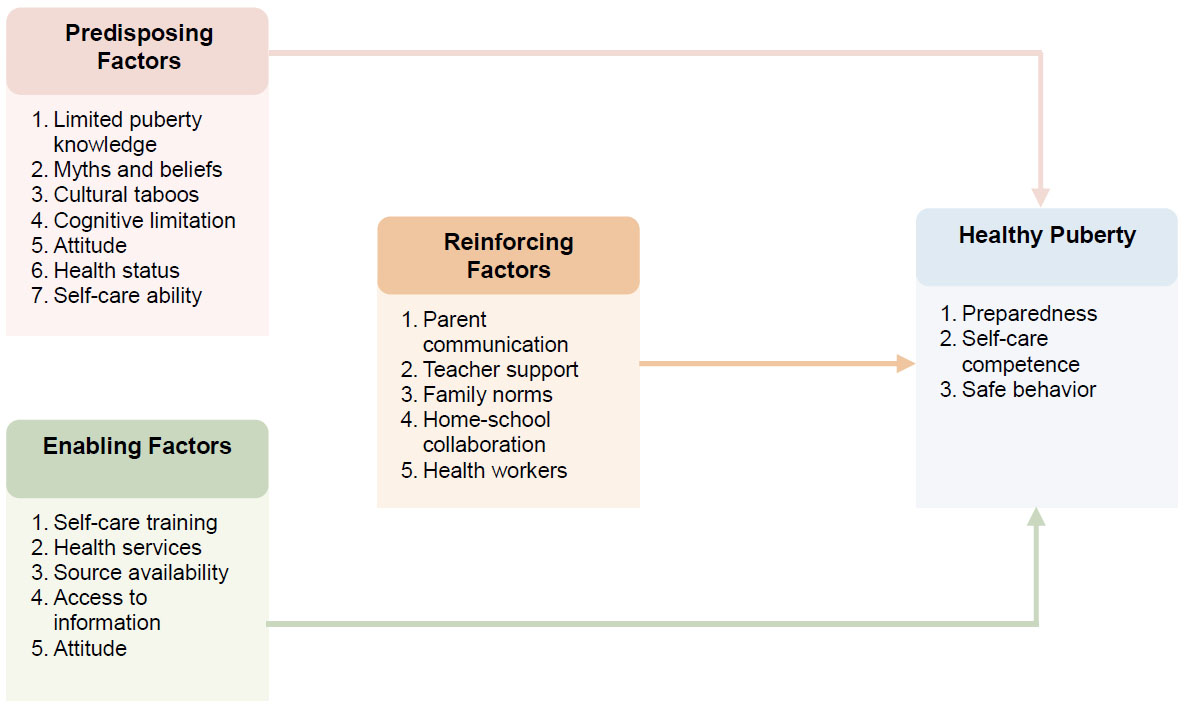
PRECEDE-based conceptual model of healthy puberty among adolescents with intellectual disabilities.
As illustrated in Fig. (2), these interacting factors collectively influence adolescents’ preparedness, self-care competence, and ability to navigate puberty safely. The proposed PRECEDE-based conceptual model provides a theoretically grounded framework for understanding how multi-level determinants converge to shape healthy puberty outcomes. It also offers a foundation for future quantitative validation and intervention development.
4. DISCUSSION
Adolescents with mild and moderate intellectual disabilities in this study demonstrated emerging yet fragmented understandings of puberty, largely shaped by lived experience rather than structured education. Knowledge of menstruation, nocturnal emissions, and bodily changes was often practical and situational. Adolescents recognized events such as menstruation or nocturnal emission without fully understanding the underlying biological processes [18, 19]. This finding reinforces prior evidence that sexuality-related knowledge among individuals with intellectual disabilities tends to be concrete and experience-based rather than conceptually grounded [20]. These findings show that limited understanding stems from cognitive limitations and gaps in the timing and structure of puberty education. Recent evidence indicates that adolescents with disabilities often have restricted access to developmentally appropriate reproductive health education due to inaccessible curricula, inadequate teacher training, and a lack of disability-sensitive adaptations in education [21]. Adolescents often encounter bodily changes before receiving adequate explanation or anticipatory guidance, suggesting that puberty is experienced as a reactive process rather than a supported developmental transition [22-24]. This has broader implications, as delayed or fragmented understanding may increase confusion, anxiety, and vulnerability during puberty, particularly in navigating hygiene, social boundaries, and safety.
From a PRECEDE perspective [16], the findings illustrate how multiple determinants interact to shape healthy puberty outcomes. Predisposing factors included limited reproductive health knowledge, persistent myths and cultural taboos, and cognitive limitations affecting information processing. These factors influenced adolescents’ interpretations of bodily changes and shaped their readiness to engage in self-care behaviors. Previous research shows adolescents with disabilities often struggle to access accurate reproductive health information due to sociocultural stigma, inadequate sexuality education, and limited disability-sensitive educational support, which may hinder their understanding of puberty and adaptive self-care practices [21, 25, 26]. Knowledge was primarily obtained from family members through practical and normative approaches, often accompanied by prohibitions, rather than through structured and systematic sexuality education [27]. This pattern highlights the continued reliance on informal knowledge transmission, which may reinforce partial or non-scientific understandings of puberty. Enabling factors were reflected in the availability of practical hygiene training and self-care instruction, particularly through school-based life-skills programs and visual learning strategies [28]. While these approaches supported the development of functional skills, their effectiveness was limited by inconsistency across home and school environments. The absence of standardized curricula and structured instructional guidelines suggests that enabling mechanisms remain fragmented and dependent on individual initiative rather than system-level design. Reinforcing factors were primarily situated within family communication and teacher support. Parents served as the primary sources of information and behavioral guidance, yet many reported discomfort or limited knowledge when discussing sexuality and puberty [29]. This finding aligns with broader evidence that parent- adolescent communication about sexual and reproductive health is often constrained by Parent concerns, low confidence in talking about sexuality, and the need for more educational and professional support to handle sexual development effectively [30]. Teachers provided practical instruction but often lacked standardized guidelines and specialized training, limiting their ability to deliver comprehensive and developmentally appropriate education. Similar insights revealed that teachers value comprehensive sexuality education for adolescents with intellectual disabilities. However, they highlight the importance of involving families and receiving support from specialized professionals to effectively address sexual development appropriately [31]. At the system level, adolescent reproductive health programs formally included adolescents with disabilities but were not consistently adapted to their specific needs. Funding limitations, clear guidelines, and outreach strategies constrained effective implementation. Collectively, these findings demonstrate that healthy puberty outcomes are shaped by a dynamic interplay of individual understanding, family practices, institutional support, cultural norms, and system-level readiness, rather than by isolated factors.
Building on these findings, this study integrates the identified determinants into a PRECEDE-based conceptual model of healthy puberty among adolescents with intellectual disabilities [16]. The model synthesizes how fragmented knowledge, cultural beliefs, family communication patterns, school-based practices, and systemic constraints interact to influence adolescents’ preparedness and self-care competence during puberty. Predisposing factors shape how adolescents interpret bodily changes; enabling factors support the development of practical competencies; and reinforcing factors strengthen behavioral consistency and guidance over time. At the same time, the absence of disability-responsive reproductive health services limits access to structured education and sustained support.
The broader significance of this study lies in demonstrating that puberty preparedness among adolescents with intellectual disabilities is a multi-level issue that requires coordinated responses across family, educational, healthcare, and policy systems. Improving outcomes cannot rely solely on increasing individual knowledge, but must also address gaps in family communication, educational practices, and health-system capacity. This perspective is particularly relevant in low- and middle-income settings, where structural constraints and cultural sensitivities may further limit access to inclusive reproductive health education. From a practical standpoint, the findings suggest several key implications. First, puberty education for adolescents with intellectual disabilities should be introduced earlier and delivered through structured, developmentally appropriate approaches that incorporate visual materials, practical demonstrations, and repeated reinforcement. Second, parents require targeted training and support to enhance their confidence and capacity to communicate effectively about puberty and reproductive health. Evidence from a cluster randomized controlled trial indicates that group-based education can improve mothers’ awareness, attitudes, and self-efficacy regarding the sexual health care of adolescent girls with intellectual disabilities [32]. Strengthening home-school collaboration is essential to ensure consistent messaging and reinforcement across settings. Third, schools require clearer curricular guidance and professional development to equip teachers with competencies for inclusive puberty education. Finally, at the system level, adolescent reproductive health programs should adopt disability-responsive guidelines, allocate dedicated resources, and implement targeted outreach strategies to ensure that adolescents with intellectual disabilities are not only included in policy but effectively served in practice. The findings of this study may serve as a foundational reference for planning future interventions, especially for programs such as adolescent reproductive health initiatives, school-based puberty education programs, disability-inclusive health promotion programs, and PKPR services and programs. Additionally, these findings can inform the formulation of policies aimed at ensuring inclusive health services for adolescents with disabilities disabilities.
CONCLUSION
This study provides an in-depth qualitative exploration of puberty experiences among adolescents with mild and moderate intellectual disabilities and identifies multilevel determinants shaping healthy puberty across family, school, cultural, and health-system contexts. The findings indicate that adolescents possess emerging but fragmented knowledge of puberty, largely derived from personal experiences and informal family explanations rather than structured education. Self-care practices such as menstrual hygiene management or responses to nocturnal emissions are often performed routinely, yet without a clear understanding of the underlying biological processes. Cultural beliefs, religious norms, and sexuality-related taboos further influence how adolescents interpret puberty and access information. Parents and teachers function as primary sources of guidance; however, both groups report limited knowledge, discomfort discussing sexuality, and insufficient access to structured educational resources. At the systemic level, adolescent reproductive health programs formally include adolescents with disabilities but remain largely non-adaptive, with limited guidelines, professional training, and dedicated resources. Together, these factors highlight that healthy puberty among adolescents with intellectual disabilities is shaped by the interaction of individual understanding, family communication, school support, cultural norms, and institutional preparedness.
STUDY LIMITATIONS
Several limitations should be acknowledged. The study involved a relatively small sample from a single urban context, which may limit transferability to other sociocultural settings. Teacher perspectives were represented indirectly through available informants and may not fully reflect the diversity of school practices. As a qualitative study, the findings emphasize contextual depth rather than statistical generalizability.
RECOMMENDATIONS
Future research should expand this line of inquiry by including larger, more diverse samples across regions and incorporating more comprehensive perspectives from teachers, policymakers, and health professionals. Quantitative studies are necessary to test the relationships among the identified determinants and to validate the proposed conceptual model. Intervention-based research should also assess integrated puberty education programs that actively involve adolescents, parents, schools, and health services. Strengthening cross-sector collaboration and developing disability-responsive guidelines and educational resources will be essential to support healthy puberty among adolescents with intellectual disabilities.
AUTHORS’ CONTRIBUTIONS
The authors confirm contribution to the paper as follows: N.J.M., H.D., A.M., and A.Y.: Study conception and design; N.J.M. and H.D.: Data collection; N.J.M.: Analysis and interpretation of results; N.J.M., H.D., A.M., and A.Y.: Draft manuscript. All authors reviewed the results and approved the final version of the manuscript.
LIST OF ABBREVIATIONS
| RQ | = Research Question |
| PRECEDE framework | = Predisposing, Reinforcing, and Enabling Constructs in Educational/Environmental Diagnosis and Evaluation |
ETHICS APPROVAL AND CONSENT TO PARTICIPATE
Ethical approval for this study was obtained from the Research Ethics Committee of the Faculty of Medicine, Universitas Andalas, Padang, Indonesia (Approval No. 514/UN.16.2/KEP-FK/2024).
HUMAN AND ANIMAL RIGHTS
All human research procedures followed were in accordance with the ethical standards of the committee responsible for human experimentation (institutional and national), and with the Helsinki Declaration of 1975, as revised in 2013.
CONSENT FOR PUBLICATION
Written informed consent was obtained from all adult participants. For adolescents with intellectual disabilities, assent was obtained alongside written consent from their parents or legal guardians.
AVAILABILITY OF DATA AND MATERIALS
The data supporting the findings of the article will be available from the corresponding author [J.M] upon reasonable request.
ACKNOWLEDGEMENTS
Declared none.